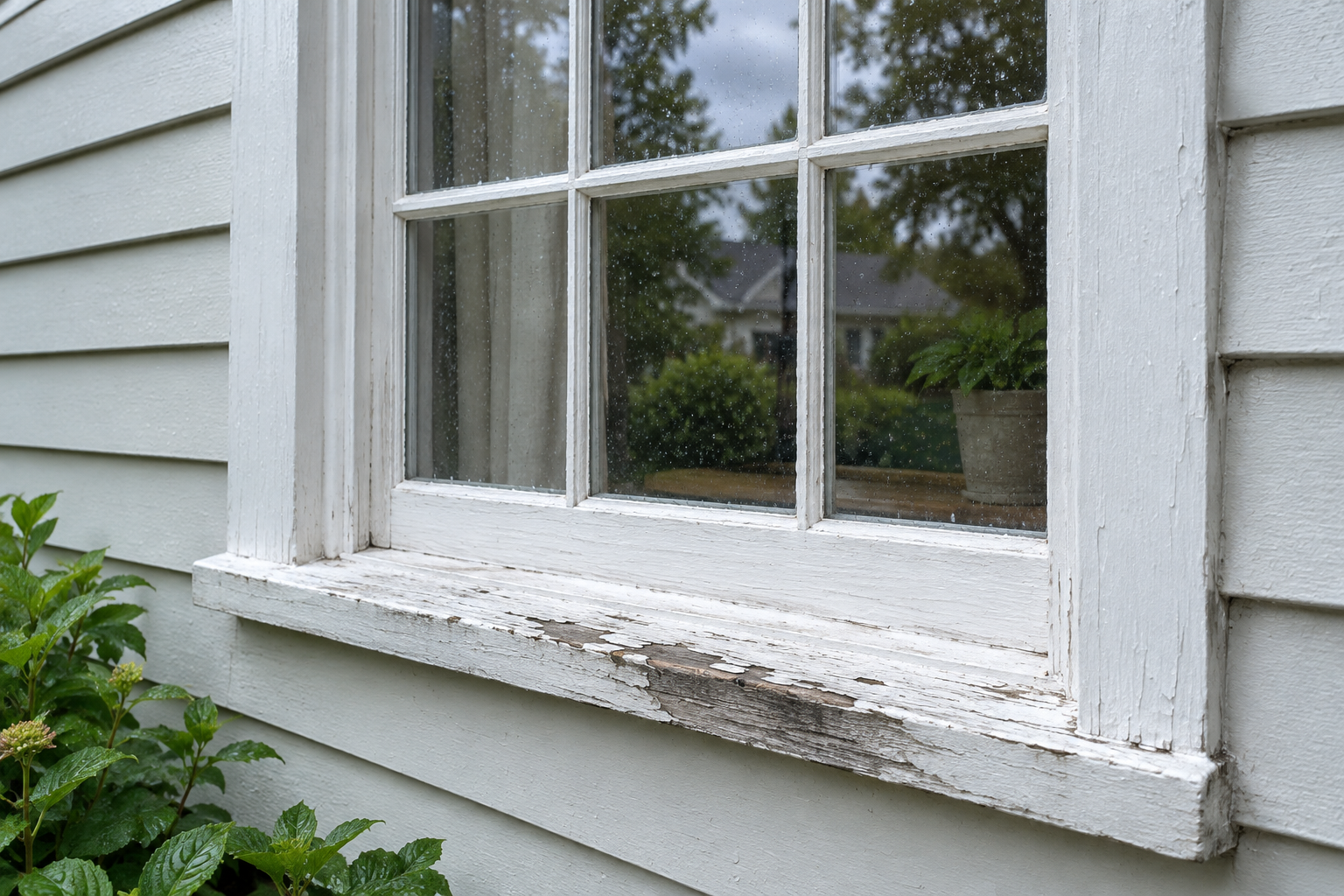
Rotted Window Sill or Frame: Repair vs. Replacement
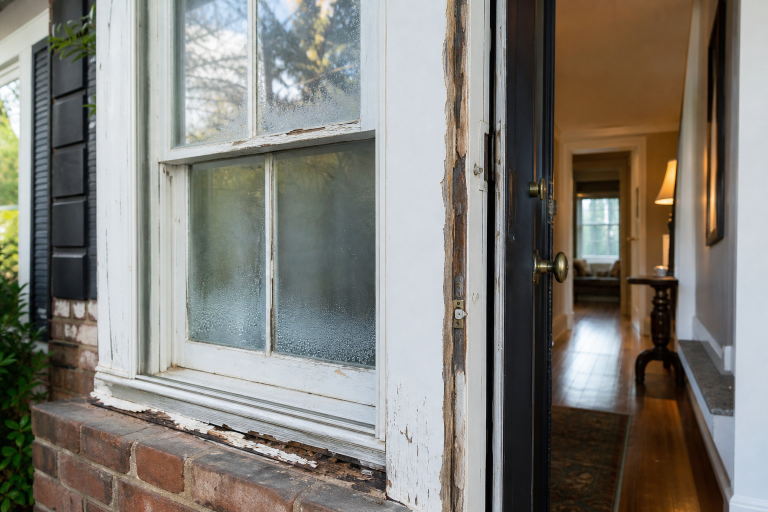
A soft window sill, peeling paint, or darkened wood can point to a moisture problem that needs more than a cosmetic patch. The decision is usually less about the visible spot and more about how far water has traveled behind the trim. You may be able to repair a small, dry area of decay. A weakened frame or recurring leak usually calls for a larger fix.
When can a rotted window sill be repaired?
A localized patch can make sense when decay is limited to an accessible part of the sill and the surrounding frame remains firm, dry, and properly supported. The USDA Forest Products Laboratory’s Wood Handbook explains that fungi need moisture, oxygen, a suitable temperature, and wood as a food source.
Press gently around the painted wood with a screwdriver only to identify soft areas, not to excavate the opening. Sound wood resists the point. Rotten wood can feel spongy or crumble into dark, damp fibers. Check the lower corners, where water often sits, and inspect the interior trim for staining or paint that has bubbled away from the wall.
Small areas can often be repaired when the damage stops well short of the window jamb, which is the vertical side piece that helps hold the unit square. A qualified technician may remove the decayed section, stabilize remaining sound material where appropriate, fit a wood or composite sill patch, and restore the exterior water-shedding details. The repair needs a sloped outer surface so rain moves away from the house.
When does frame rot call for full window replacement?
Full-frame replacement is usually the best choice when decay reaches the jamb, rough opening, or wall materials around the unit. The rough opening is the framed hole in the wall that supports the window. If that structure has decayed, the installer may need to repair it as an insert window relies on a solid foundation.
A window that sticks, has uneven gaps around the sash, or shows cracking at the inside corners can signal movement or a distorted opening. Those signs do not prove structural damage on their own. They do mean you should ask for the trim to come off so the provider can inspect the framing, insulation, and flashing before promising a surface repair.
Water can enter through failed caulk, a missing drip cap, cracked exterior cladding, or a roof or gutter problem above the opening. ASTM International provides guidance on standard practices for installing exterior windows and doors, addresses integration of the unit with flashing and surrounding weather-resistive barriers. In plain terms, replacement has to manage water at the wall, not merely seal the visible edge with caulk.
This is where a low quote can become expensive. A contractor who offers to cover soft wood with aluminum wrap without opening the affected area may leave the wet framing hidden. Ask what will be removed for inspection and what happens if rot extends beyond the first exposed board. Get that allowance and hourly rate in writing.
What does rotted window sill or frame repair cost?
Angi’s 2025 window repair cost guide lists a national range of $180 to $610 for window repairs, while its scope varies widely by defect and location. A small sill repair may fall within that range. Opening a wall, replacing framing, rebuilding exterior trim, or installing a new full-frame window can move the cost well beyond it.
For perspective, Remodeling magazine’s 2025 Cost vs. Value Report lists a national average of $21,091 for a vinyl window replacement project involving 10 windows. That is roughly $2,109 per opening when divided evenly, but it is a project average, not a quote for one rotted window. Local labor rates, window size, finish work, and concealed water damage can significantly effect the final price.
Use those figures as a budget estimate, not a promised price. A provider cannot price hidden framing accurately before exposing it. You should receive a base scope for the known work and a clear process for approving added work if the opening reveals more damage.
Should you choose an insert or a full-frame window?
An insert replacement can use an existing frame, while a full-frame replacement removes the old unit down to the rough opening. If rot is limited to exterior trim or a replaceable sill board, an insert may still be viable after the surrounding wood is repaired. If the old jamb is soft, out of square, or wet behind the casing, do not let an insert conceal the problem. Read more about the decision in this guide to insert versus full-frame window replacement.
Replacement windows should carry a National Fenestration Rating Council label when you are comparing energy performance. NFRC explains that its label reports ratings such as U-factor, which measures how readily a window transfers heat, and solar heat gain coefficient.
What should you ask before approving the work?
A complete quote should explain what the provider has found, what will be opened, what will be replaced and how the repaired area will shed water afterward. A line item that says “repair rotted wood” is too broad. It does not tell you whether the price covers trim, sill, framing, flashing, paint, or disposal.
- Ask which parts are decayed: exterior sill, trim, jamb, rough framing, or wall sheathing.
- Ask how the crew will trace and correct the water entry point before closing the opening.
- Ask whether the price includes a sill pan, flashing integration, exterior trim, interior finish repair, and paint.
- Ask what written warranty covers labor and what conditions could void the window manufacturer’s warranty.
Ask for photographs after the trim comes off. They document the condition that justified any change order. They also make it easier to compare competing scopes without relying on broad phrases such as “full repair.”
Older painted windows need another question. The EPA’s Renovation, Repair and Painting Rule requires EPA-certified firms to follow lead-safe work practices when they disturb painted surfaces in most pre-1978 homes. Confirm the home’s construction year and ask how the quote handles containment and cleanup.
How can you prevent new rot around replacement windows?
Start by watching the window during a steady rain. Look for overflowing gutters, water striking the opening from a roof valley, or a drip edge that ends short of the trim. A clean bead of caulk cannot compensate for water that repeatedly runs behind siding.
Keep exterior sealant joints in usable condition, but avoid sealing drainage paths built into some window designs. The U.S. Department of Energy notes that weatherstripping and caulk are common air-sealing measures around windows. They belong at appropriate gaps, not across weep holes that let water drain from the unit.
Inside the house, condensation on glass deserves attention because water can collect on the lower sash and sill. Lower indoor humidity or improve ventilation according to the window maker’s guidance. If only one opening stays wet, have the installer check the window’s drainage details and fit.
FAQ
Can wood filler repair a rotted window sill?
Wood filler can finish a small, stable repair after all decayed material is removed and the wood is dry. It cannot support a loose frame or stop a leak behind the siding. Use it only as part of a defined repair scope, not as a cover over soft material.
How do you know if rot has reached the wall?
Soft jambs, interior staining, recurring water marks, or a window that no longer operates smoothly justify opening the trim for inspection. Only an exposed view of the rough opening can confirm the condition of concealed framing and sheathing.
Can you replace only the exterior window sill?
Yes, a provider can replace only the sill when the adjoining jambs, wall framing, and window unit remain sound. The new piece still needs proper slope, flashing details, and a fix for the source of water.
Is a rotted window frame an emergency?
A small dry patch is usually a repair issue rather than an emergency. Call promptly if the window feels loose, the opening has visible structural movement, or active water enters during rain. Those conditions need professional assessment before the damage spreads.
If you have soft wood or unexplained staining around a window, request a written assessment that separates a limited sill repair from full-frame replacement work. Please call a listed provider for a free, no-obligation discussion.