Window Replacement Cost: What Homeowners Pay in 2026
Window replacement cost depends less on a single price per window than on what the contractor must remove, repair, flash, finish, and haul away. The 2024 Remodeling Cost vs. Value Report lists national-average project costs from $21,355 for a vinyl window replacement project to $25,799 for a wood window replacement project. Those figures are useful benchmarks, but they are not a local bid and should not be treated as one.

Call for a free estimate:
The report’s projects use a defined scope, rather than an assortment of unrelated window sizes and conditions. Your price can move substantially when openings are oversized, upper-story access is difficult, exterior trim needs rebuilding, or the house requires full-frame replacement. A written scope is therefore more useful than a contractor’s per-window price.
What does window replacement usually cost?
$21,355 to $25,799 is the national project-cost range in Remodeling magazine’s 2024 report for its defined vinyl and wood replacement-window projects. It gives homeowners a consistent starting point for judging a whole-house proposal, especially when a quote covers several standard double-hung openings.
The same report should not be used to divide its project total into a universal installed price per window. Its modeled projects include removal of existing units, installation work, exterior treatment, and a particular count and type of windows. A single large picture window, a custom shape, or one opening with concealed water damage has a different labor profile from a group of accessible standard openings.
For a 2026 purchase, ask each bidder to state the number, style, size range, frame material, glass package, and installation method covered by the total. Then compare the totals only after confirming that the scopes match. A lower quote may simply exclude interior casing, exterior cladding, disposal, screens, hardware, paint touch-up, or repairs found after removal.
Taxes, permit fees, regional labor costs, and access are also quote-specific. An estimate that says only “windows installed” leaves too much room for a later disagreement about what the price includes.
Which parts of the job change the final price?
The installation strategy and frame condition can create a large difference between otherwise similar proposals. A replacement unit set into an existing frame is typically less costly, because it reuses material already present. A full-frame job removes the old frame and exposes the surrounding rough opening, which can show damaged wood, missing flashing, or trim work that was hidden before. Review the visible signs and tradeoffs in this guide to insert versus full-frame window replacement before accepting either strategy as a the ‘best choice.’
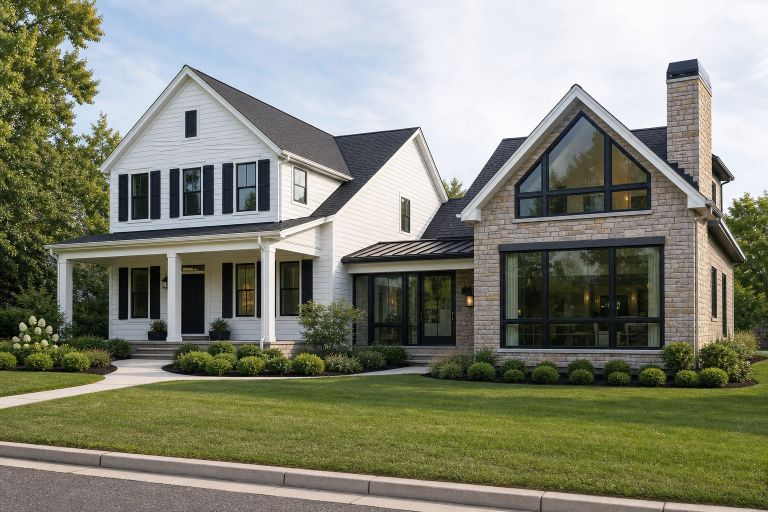
Window style also changes labor and product cost. Large fixed units need careful handling and may require two or more workers. Casement and awning windows use operating hardware. Bay and bow assemblies can involve structural support and exterior roofing details. Grilles, specialty glass, divided-lite patterns, custom colors, and nonstandard shapes are separate specifications, not cosmetic details that can be assumed to be included.
Floor height and site access belong in this calculation as well. Upper floors, steep landscaping, masonry surrounds, and limited room for ladders or equipment affect the time and protection needed for the work. These conditions do not make a quote unreasonable by themselves, but they should be clearly defined in the scope rather than appearing later as a vague extra charge.
When is a less expensive insert replacement the sensible choice?
An insert can be the practical lower-cost option when the existing window frame is square, solid, and dry, and when leaving the existing trim and frame in place does not hide a known defect. It replaces the operating portions of the window while retaining the original frame structure.
However, that option may have a tradeoff. When a new unit fits inside the existing frame it usually makes the glass area smaller than with a full-frame replacement. For many homeowners that reduction is acceptable, but it deserves extra consideration for rooms where daylight, views, or egress dimensions matter.
Full-frame replacement is worth pricing when rot, water staining, distorted frames, failed exterior details, or deteriorated sill areas are present. Covering a compromised opening with a new insert may make the finished work look complete while leaving the cause of damage unaddressed. The needed repair may only become clear after the original window is removed, so the contract should explain how concealed conditions will be documented, approved, and priced.
Do not pay for full-frame work merely because it is presented as an automatic upgrade. Ask the contractor to identify the condition that requires it and show how the proposed scope corrects that condition.
How do frame and glass choices affect the quote?
Frame material and glass performance should be selected for the opening and climate, then compared as named specifications rather than broad sales labels. The U.S. Department of Energy’s Energy Saver guidance on windows identifies low-emissivity coatings, insulated glazing, gas fills, frames, and installation as parts of overall window performance. A premium glass package cannot compensate for a poorly detailed opening.
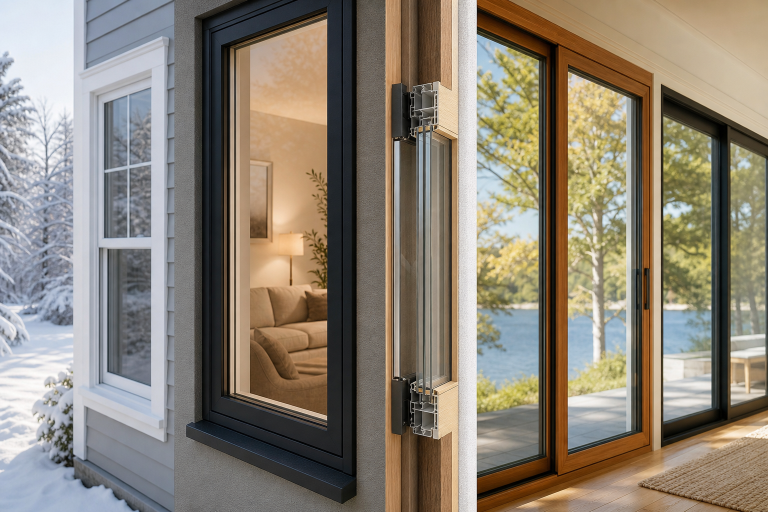
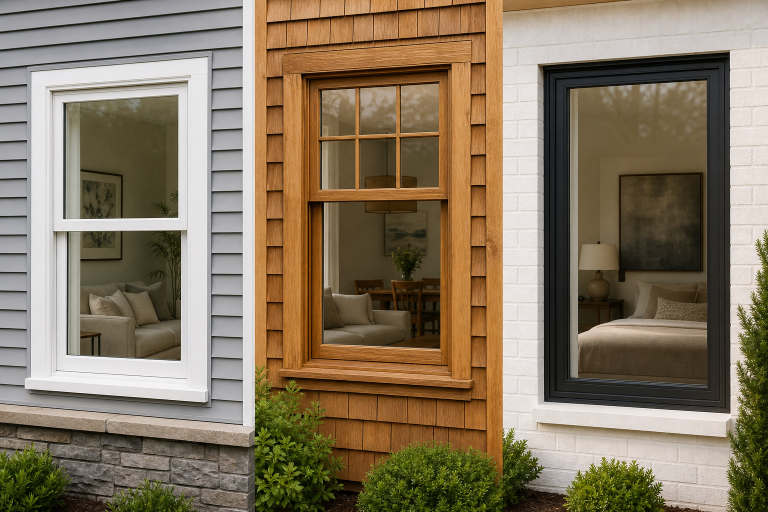
Vinyl, wood, fiberglass, and composite frames differ in appearance, maintenance needs, available colors, dimensions, and product lines. The practical question is whether the quote identifies the exact series and configuration. “Energy-efficient vinyl window” does not tell you the frame depth, reinforcement, glass construction, or hardware included.
Use the label values for a direct comparison. The National Fenestration Rating Council energy-performance label reports U-factor, a measure of heat flow, and solar heat gain coefficient, which describes how much solar heat passes through. It can also show visible transmittance and air leakage information when rated. Compare like-for-like sizes and options, because values can change with glass type and configuration.
A lower U-factor or a different solar heat gain coefficient is not automatically the right answer in every location or orientation. Get the exact NFRC values written into the proposal, then ask why that glass package suits the home’s climate, sun exposure, and priorities.
What should a complete window replacement quote include?
A complete proposal makes the finished result, exclusions, and change-order process clear before work begins. It should be specific enough that two bids can be compared line by line, not merely by their bottom-line totals.
- The manufacturer, product series, window style, dimensions, color, grid pattern, hardware finish, and screen type.
- The exact glass package and NFRC performance values for the quoted configuration.
- Whether the job is insert or full-frame replacement, plus details for trim, sill pans, flashing, insulation, sealants, and interior finishes.
- Removal and disposal of old windows, protection of floors and landscaping, cleanup, and who handles painting or staining.
- Permit responsibility, anticipated fees if known, warranty documents, payment schedule, project timing, and the written process for concealed damage or other changes.
The installation details deserve the same attention as the product name. ASTM International’s standard practice for installation of exterior windows, doors, and skylights addresses the integration of windows with surrounding wall systems. Ask how the proposed work manages water at the sill and ties into the exterior wall, particularly where siding or trim will be disturbed.
Call for a free estimate:
Vague warranty language is another common problem. Separate the product warranty from the contractor’s labor warranty. Read what each covers, who administers it, how long coverage lasts, and whether labor to remove and reinstall a failed unit is included.
Do permits and older paint add to the budget?
Local requirements can add permit cost, review time, or inspection steps, so verify them with the building department that has authority over your address before signing. Rules can differ based on the type of replacement, whether the opening changes, and local code adoption. This homeowner guide to window permit requirements explains the questions to bring to that conversation.
Homes built before 1978 need additional consideration before sanding, cutting, or other work disturbs painted surfaces. The EPA Renovation, Repair and Painting Program sets requirements for renovation work that disturbs lead-based paint in most pre-1978 homes and child-occupied facilities. Ask the bidder how the project will be handled under applicable EPA and local rules, and include that work in the estimate if required.
How can you compare window replacement bids fairly?
Three written proposals built around the same requested specifications give you the clearest comparison. Send each company the same list of styles, colors, installation approach, finish expectations, and known opening concerns. If one bidder proposes a different approach, ask for the reason and a separate price for the alternative.
Evaluate the scope before calculating a price difference. A bid that includes full-frame removal, exterior repair, and finishing is not directly comparable to one that inserts a unit into the existing frame and excludes repairs. The cheaper proposal may be the better fit when the existing openings are sound, but only if it actually includes the work you expect.
Keep all verbal promises out of the decision until they appear in writing. This includes lead time, color, glass package, permit handling, cleanup, warranty labor, and the price of any required repair. Clear documentation reduces the chance that a reasonable question turns into a costly change order.
FAQ
Is it cheaper to replace all windows at once?
A larger order may reduce repeated mobilization and trim work, but the total still depends on the number and condition of openings. Replace a smaller group first when only certain windows have failed or when the budget does not support a properly scoped whole-house project.
Does window replacement include exterior trim?
Only when the proposal says it does. Some jobs retain existing trim, some cover it with new cladding, and some require removal and replacement, so the material, finish, and repair responsibility should be listed in the contract.
How long should a window replacement quote be valid?
The expiration date should be written on the proposal because product and labor pricing can change. If a quote is nearing expiration, ask whether the product specification and all included work remain the same before you authorize it.
Should you replace windows because of a draft?
Replacement may be warranted when the unit or frame has failed, but a draft can also come from worn weatherstripping, failed caulk, or gaps around trim. Identify the location and cause before choosing a full replacement scope.
For a project-specific decision, request written quotes that describe the opening condition and installation method, then use them to compare the work rather than the headline price alone. Please call a listed specialist for a free, no-obligation discussion.
Sources: Remodeling magazine, 2024 Cost vs. Value Report.