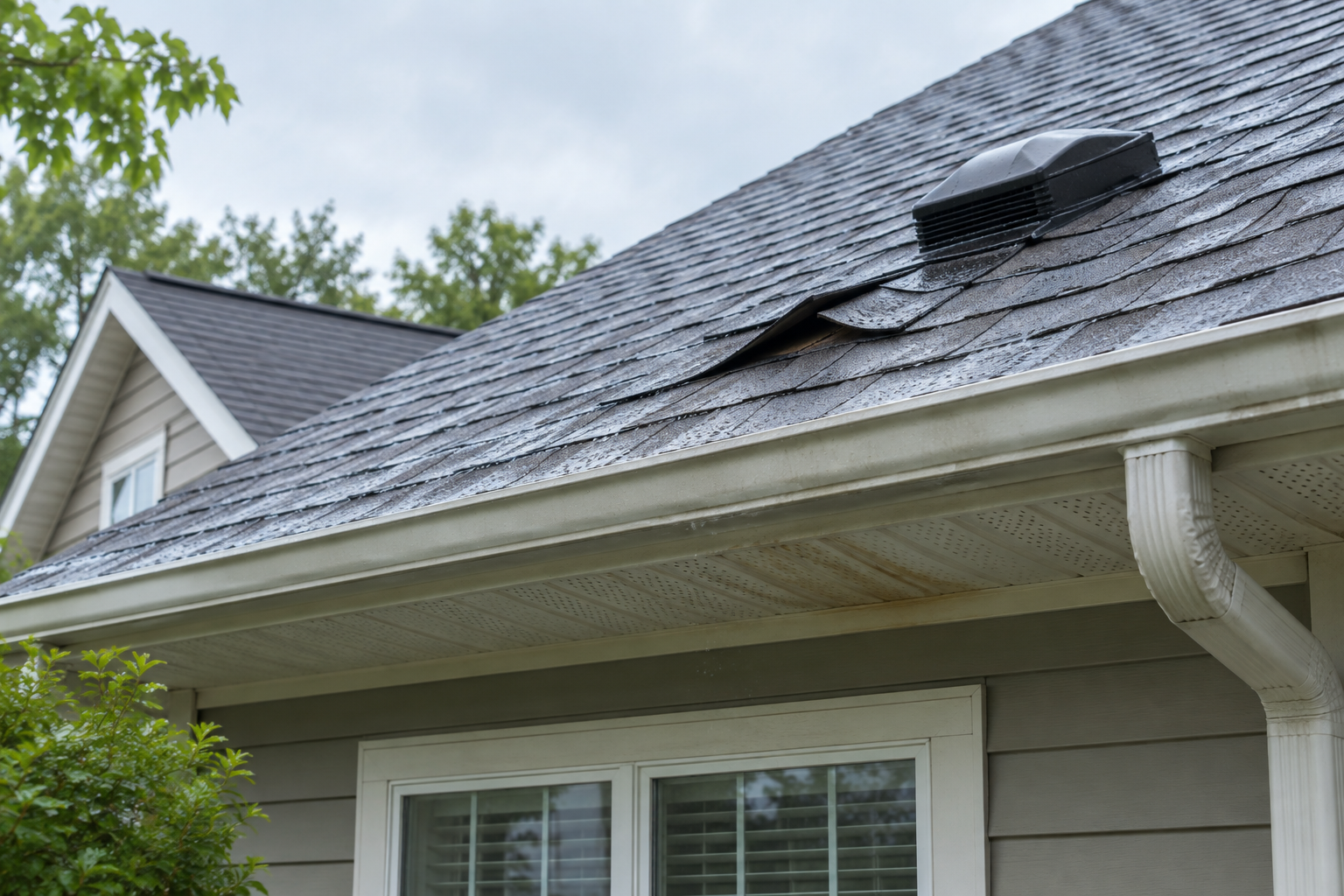
Why Ignoring Minor Roof Damage Can Become Costly
A loose shingle, cracked flashing seal, or roof penetration deserves attention because water can travel beyond the visible opening before it becomes obvious indoors. The first repair may be simple, but delay can expose roof decking, insulation, framing, and interior finishes to repeated moisture.

Call for a free estimate:
Angi’s 2025 Roof Repair Cost Guide places an isolated roof repair cost between $392 and $1,913. That range is a useful reminder that a contained repair and a larger water-damage scope are different jobs, even when the original issue looked minor.
Why can a small roof defect lead to a larger repair?
Water follows gravity and surfaces, so the point where a stain appears may be some distance from the point where rain entered. The National Roofing Contractors Association’s The NRCA Roofing Manual treats drainage, flashing, underlayment, and roof-covering details as connected parts of a weather-resisting system. A failure at a penetration or roof-to-wall transition can therefore allow water behind materials that still look acceptable from the ground.
Roof decking is especially consequential. Shingles and other roof coverings need a sound, properly prepared deck beneath them. GAF’s Asphaltic Shingle Application and Design Guide states that roof decks must be dry, smooth, and structurally sound before shingles are installed. Once recurring moisture compromises that base, a contractor may need to remove surrounding roofing to assess and replace affected sheathing rather than simply replace the visible shingle.
Wind-driven rain is one reason small openings deserve prompt assessment. It can be pushed under lifted edges, around vents, and into poorly sealed flashing areas. CertainTeed’s Landmark Shingle Installation Guide emphasizes specific fastening, flashing, and sealing details because shingles alone do not solve every vulnerable transition on a roof.
What damage can develop below the roof surface?
Moisture can affect materials hidden above ceilings and behind walls long before a major drip appears. The U.S. Environmental Protection Agency states in its Brief Guide to Mold, Moisture and Your Home that controlling moisture is the key to controlling mold, and that the moisture source should be fixed. For a home with a roof leak, that means solving the exterior entry point as well as addressing damp materials inside.
Wet insulation can lose its intended shape and may need replacement if it cannot dry properly. Wood framing and roof sheathing can also remain wet in enclosed spaces where air movement is limited. The real issue is not whether a stain is cosmetically small, it’s whether water has continued to enter during multiple storms and will remain a recurring problem.
Ceiling finishes often reveal the problem late. A stain, peeling paint, or softened drywall can reflect water that has already moved along the underside of the roof deck or a framing member. Interior patching before the source is identified risks covering evidence while the leak continues. Have a professional diagnose and repair the leak before patch and repainting.
Flashing and penetrations deserve close attention
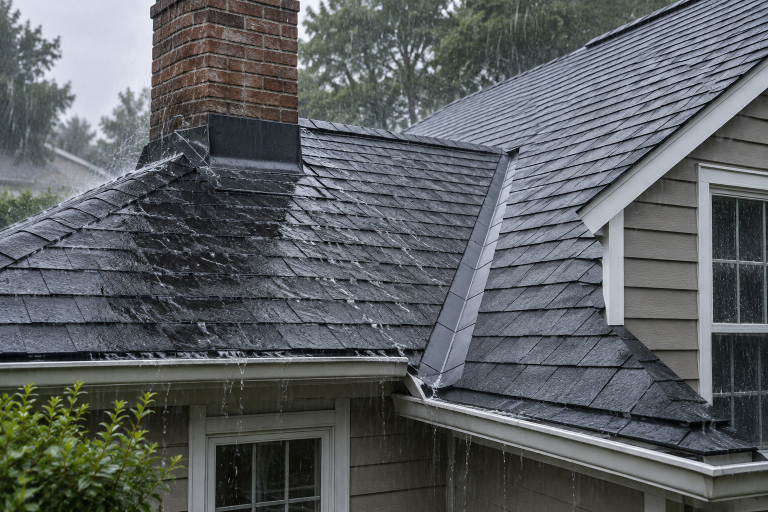
Chimneys, skylights, plumbing vents, sidewalls, valleys, and dormers interrupt the broad field of a roof. These areas rely on layered components that direct water back onto the roof surface. The Asphalt Roofing Manufacturers Association’s Residential Asphalt Roofing Manual identifies flashing as a critical part of a shingle-roof system, particularly at intersections and penetrations. A repair should identify which component failed rather than assume every leak requires a broad roof replacement.
When does minor roof damage become an insurance problem?
Documentation becomes harder when a homeowner waits until damage spreads or a weather event obscures the original condition. The Insurance Information Institute’s What Does Homeowners Insurance Cover? explains that coverage depends on the cause of loss and the policy’s terms, conditions, and exclusions. A policy is not a maintenance contract, so homeowners should read their own declarations page and policy language rather than assume that every leak-related expense will be covered.
Keep dated photos of the roof area, interior signs, storm-related debris, and written repair findings. This record can clarify the sequence of events if a claim is appropriate. It also gives a contractor a clearer starting point, particularly when a leak only occurs under particular wind or rainfall conditions.
Do not wait for a claim decision before taking reasonable steps to prevent additional damage when water is actively entering. Preserve damaged materials or photographs when practical, and follow the reporting and mitigation directions in the policy. An insurer or licensed roofing professional can explain the next appropriate step for the specific situation. Please call a listed specialist for a free, no-obligation discussion.
How should you decide between a repair and replacement?
A localized repair is often the sensible option when the roof covering is otherwise serviceable and the defect is confined to a defined area. Replacement becomes a more realistic discussion when inspection finds widespread material deterioration, recurring leaks in separate locations, extensive deck damage, or a roof near the end of its expected service life.
Ask for the finding in writing. A useful inspection description identifies the observed defect, the affected roof area, the proposed repair materials, and whether the contractor expects to uncover concealed decking damage after removing roofing. Vague language such as “repair as needed” leaves too much of the scope undefined and can lead to unexpected costs.
For broader context, see roof replacement warning signs and the difference between a spot repair and full replacement. The more expensive choice is not automatically the better one. If the issue is failed flashing at one penetration and surrounding materials remain sound, a focused repair may address the actual issue.
Compare scopes, not just totals
Two proposals with very different totals may not cover the same work. One may include removal and replacement of damaged decking if found, while another may quote only surface materials. One may include disposal, protection of landscaping, and interior moisture evaluation, while another leaves those items unaddressed.
- What specific defect did the inspection identify?
- Which materials will be removed, repaired, or replaced?
- How will the contractor handle damaged decking discovered after tear-off?
- Does the written scope include flashing, underlayment, fasteners, and sealants where needed?
- What workmanship coverage applies, and what documentation is required to maintain any material warranty?
Warranty language is worth reading before work begins. Material warranties generally address manufacturing defects under stated conditions, while workmanship coverage addresses installation work only if the contractor provides it. Roof warranty terms explained outlines the distinction and the details to confirm in writing.
Which signs call for a prompt professional roof assessment?
Active water entry, sagging roof areas, or damage around a chimney, skylight, or vent call for prompt evaluation because these conditions can involve concealed materials or structural components. Avoid walking on a potentially damaged roof or entering an attic where wet materials appear unstable. A qualified roofing professional can inspect the roof safely and determine whether temporary protection, repair, or a wider scope is appropriate.
- Water dripping or appearing after rain, snowmelt, or wind-driven storms
- A new ceiling stain, bubbling paint, or damp insulation in an accessible attic area
- Missing, torn, curled, or lifted shingles after a storm
- Loose metal flashing or visible gaps around roof penetrations
- Sagging sheathing, a soft-looking roof plane, or daylight visible from the attic
Call for a free estimate:
Condensation, plumbing leaks, and ventilation problems can also introduce moisture in attic or ceiling areas. The inspection should trace the moisture path instead of treating every indoor stain as proof of a roof failure.
FAQ
Can one missing shingle cause a roof leak?
Yes, a missing shingle can expose underlayment and fastening areas to weather, especially when wind drives rain beneath adjacent courses. The actual leak risk depends on the roof’s slope, underlayment condition, nearby flashing, and exposure, so an inspection should determine whether the surrounding shingles and deck are intact.
Should a small roof leak be repaired before interior staining is fixed?
Yes, the exterior moisture source should be identified and corrected before cosmetic interior work begins. EPA moisture guidance supports fixing the source first, then evaluating whether ceiling materials and insulation have dried adequately or require repair.
Will a roof warranty cover storm or leak damage?
Usually, a material warranty and an insurance policy address different issues. Review the exact warranty and policy documents because eligibility depends on the stated cause, exclusions, installation requirements, maintenance conditions, and any separate workmanship coverage.
How soon should a roofer inspect suspected minor damage?
Arrange an assessment promptly after you see active leakage, displaced materials, or a new indoor moisture sign. Early evaluation can define a limited repair before repeated weather exposure affects concealed components.
If you have noticed a roof change or interior moisture sign, request a written assessment and a clearly itemized quote that addresses the suspected source rather than only the visible symptom. Please call a listed specialist for a free, no-obligation discussion.
Sources: Angi, 2025 Roof Repair Cost Guide; National Roofing Contractors Association, The NRCA Roofing Manual; GAF, Asphaltic Shingle Application and Design Guide; CertainTeed, Landmark Shingle Installation Guide; Asphalt Roofing Manufacturers Association, Residential Asphalt Roofing Manual; Insurance Information Institute, What Does Homeowners Insurance Cover?.