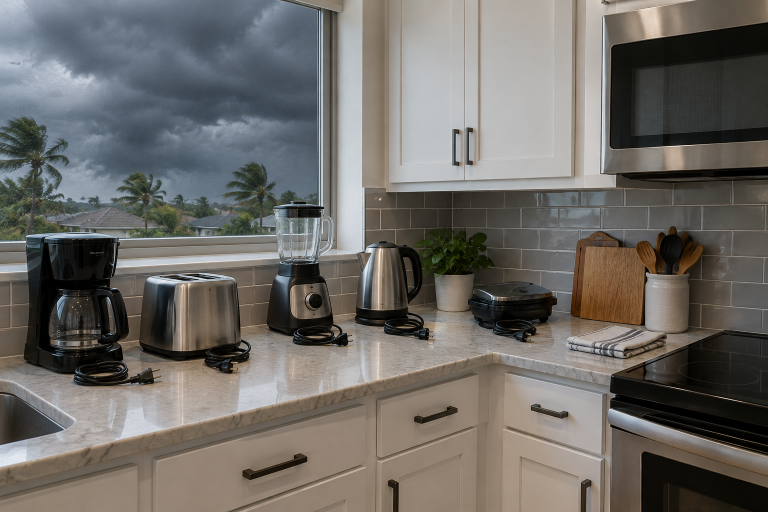
When Power Fails During a Storm: FDA Food Safety Rules.
A storm-related outage turns refrigerator and freezer space into a time-and-temperature problem. Food can remain safe for a limited period if appliance doors stay closed, but the decision changes once cold food warms above safe holding temperatures. The typical priority is to protect the cold air you have, track the outage, and discard food when federal guidance says its safety can no longer be established.

Call for a free estimate:
The FDA’s Food Safety During Power Outages guidance says an unopened refrigerator will keep food cold for about four hours. A full freezer can hold its temperature for about 48 hours, while a half-full freezer holds it for about 24 hours, provided its door remains closed. Those are estimates, not a guarantee for every kitchen fridge. An appliance that was already warm, a door opened repeatedly, a loose gasket, or a warm room can shorten the useful window.
What should you do when the power goes out?
Keep refrigerator and freezer doors shut, then record the outage time before deciding what supplies to use. Each time a fridge is open it exchanges cold interior air for warmer room air, which reduces the time available to protect refrigerated food.
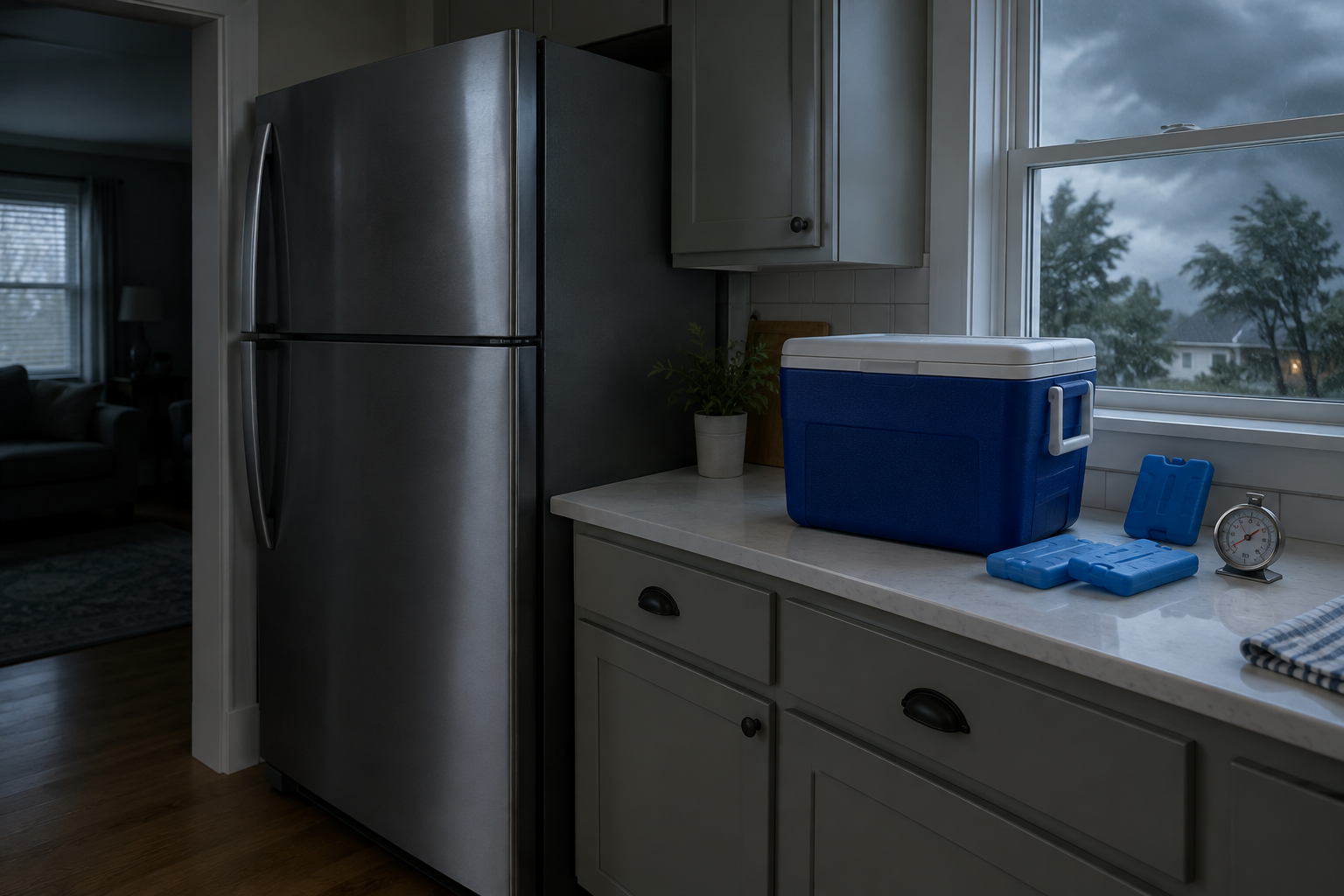
Gather a cooler, ice, frozen gel packs, and an appliance thermometer if you have them, but do not open either appliance simply to inspect it. The FDA advises having appliance thermometers in the refrigerator and freezer because they show whether the appliance is holding the intended temperature before, during, and after an outage.
Use a cooler for food you expect to need during the outage, rather than treating the refrigerator as a pantry. Put ice or frozen packs around the food and keep the cooler closed. This approach prevents repeated refrigerator-door openings while preserving the colder compartment for food you are not using immediately.
- Write down the time power stopped and, later, the time it returned.
- Keep a refrigerator at 40°F or below and a freezer at 0°F or below when power is available.
- Keep one cooler for items you plan to eat soon, if you have enough ice to maintain a cold environment.
- Do not move food between appliances without a reason, since handling and open doors add heat.
How long will refrigerated food stay safe without power?
Four hours is the FDA’s benchmark for an unopened refrigerator, after which perishable refrigerated food might need to be discarded if it has been above 40°F for two hours or longer. That includes foods such as meat, poultry, fish, eggs, milk, cooked leftovers, and cut produce.
The clock is especially useful when the outage lasts longer than expected. If the refrigerator stayed closed for less than four hours, the agency’s guidance generally treats the food as safe. Once that window has passed, a thermometer reading and the time the food spent warm determine the next decision.
Do not rely on smell, appearance, or a small taste to decide whether questionable refrigerated food is usable. FDA guidance specifically says not to taste food to determine its safety. A container can look normal after an unsafe temperature exposure.
Items that do not normally require refrigeration may be a separate matter. Shelf-stable unopened foods, whole uncut produce, and similar pantry items are not governed by the same refrigerator timing rule. Check the product label and keep them away from floodwater or other contamination.
When in doubt, the lower-risk decision is usually to discard the uncertain perishable item rather than risk serving it. Replacing groceries is frustrating, but refrigeration cannot reverse time spent at an unsafe temperature.
Which foods belong in the discard pile after an outage?
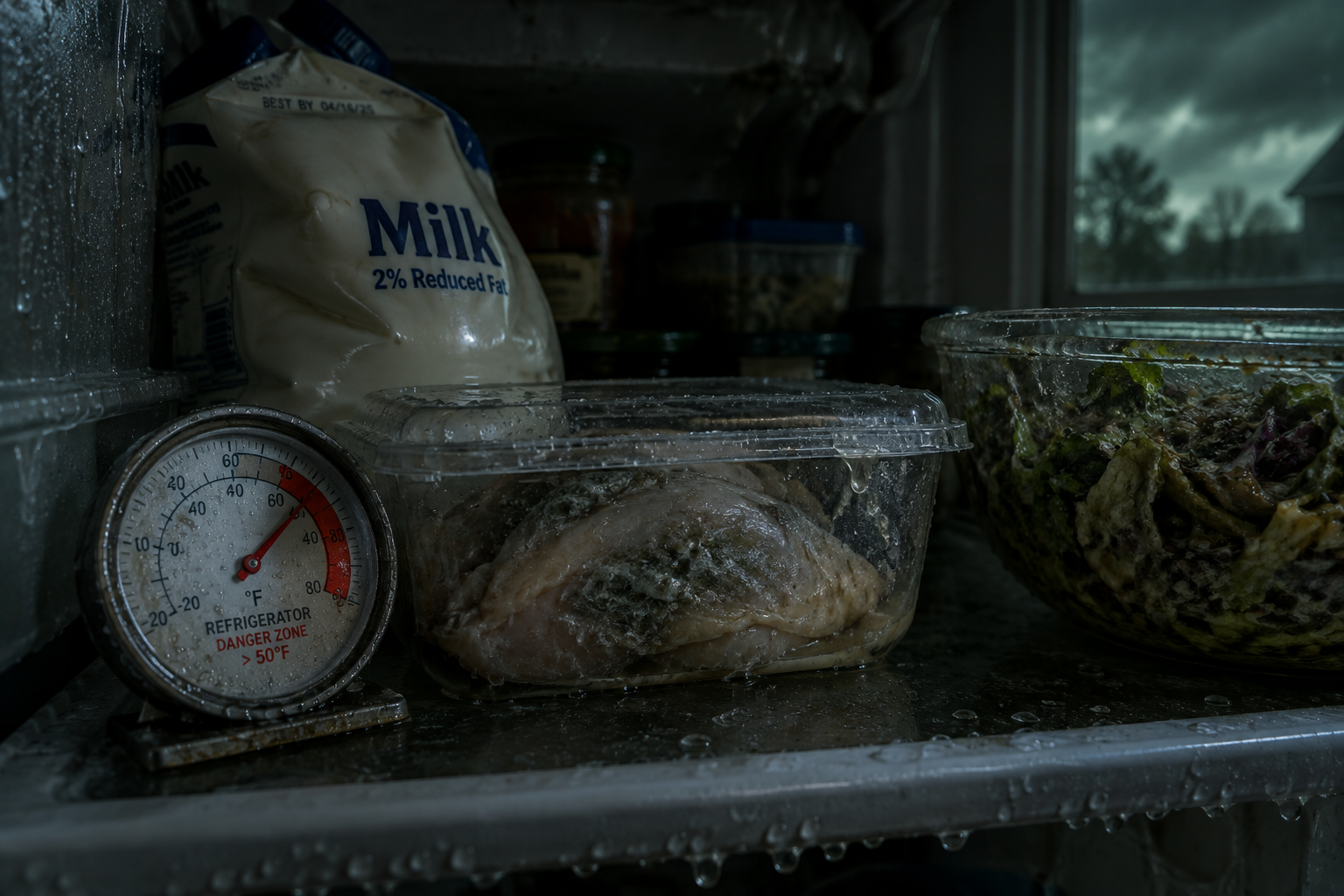
Perishable food that was warmer than 40°F for two hours or more should be thrown away under FDA guidance. Put the focus on foods that normally require refrigeration, not on whether the package is opened or sealed.
Refrigerated meat, poultry, seafood, milk, eggs, leftovers, soft cheeses, and cut fruits or vegetables are common examples. Prepared foods from a deli case and refrigerated ready-to-eat meals belong in the same decision group. A sealed package does not protect food from a prolonged warm temperature.
Some foods have different handling considerations. The FDA’s consumer guidance includes detailed discard lists for specific products, including particular condiments, cheeses, produce, and bakery items. If an item is unfamiliar or its storage instruction is unclear, use that list or discard it rather than making a guess.
Discarded food should go promptly into a bag or covered bin so it is not confused with food that remains safe. Clean refrigerator shelves, drawers, and reusable containers after removing food, especially if packages leaked. Restore the appliance to its normal cold setting and verify its temperature before restocking it.
When can frozen food be kept after a storm outage?
Food in a freezer can be kept or refrozen when it still has ice crystals or remains at 40°F or below, according to the FDA. The agency also notes that you may cook or refreeze those foods, although quality can decline after thawing and refreezing.
The U.S. Department of Agriculture Food Safety and Inspection Service gives the same basic direction: evaluate frozen food by temperature and remaining ice crystals rather than by whether it is fully rigid. A completely full freezer has more frozen mass, which is why it retains cold longer than a half-full unit when the door remains closed.
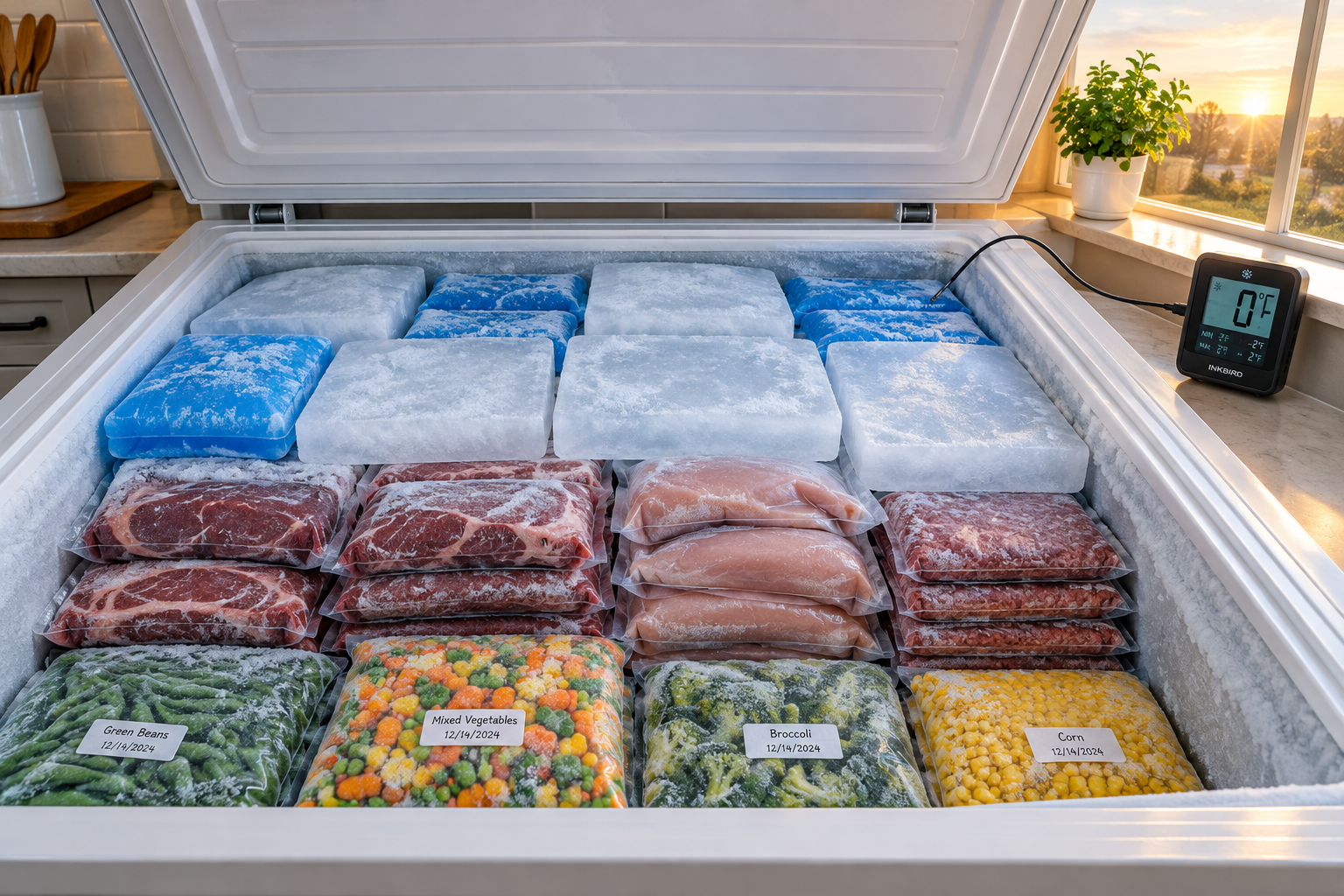
Marking packages with the date before returning them to the freezer can make later use easier to manage. Use foods with visible thawing or quality changes sooner after safe refreezing. That is a quality choice, not a substitute for the 40°F temperature limit.
Food that is fully thawed and has been warmer than 40°F for more than two hours should be discarded. Do not assume that cooking later resolves an unknown temperature history. If the freezer temperature is unknown and no ice crystals remain, the conservative decision is to dispose of perishable foods.
How can you prepare your refrigerator and freezer before severe weather?
A small amount of preparation gives you better temperature information and more cold storage time when an outage starts. The FDA recommends appliance thermometers, and a freezer thermometer is especially useful because the door can remain shut while you assess conditions later.
Call for a free estimate:
Freeze containers of water and keep gel packs ready before a forecasted storm. Those frozen items add thermal mass to a partly filled freezer and can be moved into a cooler if you need to protect a small amount of refrigerated food. Leave space in water containers because water expands when it freezes.
Organize the freezer so frequently used items are easy to reach before an outage, then resist opening it once power fails. Grouping foods in bags or bins can also reduce the time needed to remove items after power returns, although it does not change the federal time and temperature limits.
Keep the outage record simple
A note with the outage start time, appliance temperature if known, door openings, and restoration time is enough. This record is more useful than trying to reconstruct events from memory after a long night or a regional emergency.
Use ice as a short-term tool, not a reset button
Ice can maintain cold temperatures in a cooler when used promptly and in sufficient quantity. It cannot establish that food was safe before it was packed, and it cannot restore food that has already spent too long above 40°F.
What should you check after the electricity returns?
Check appliance temperatures first, then sort food according to the outage record and the federal temperature limits. Avoid rushing all food back into place before deciding what must be discarded, because that can mix uncertain items with safe ones.
Run the refrigerator and freezer until they return to their normal temperatures. If either appliance fails to cool, shows signs of damage, or trips electrical protection after the storm, leave food safety decisions based on the known outage timeline and arrange a qualified appliance or electrical assessment rather than attempting an unsafe repair.
For homeowners dealing with storm water near cooling equipment, Abodence’s AC flood safety checks before restarting HVAC explains why flood exposure requires a separate safety assessment.
If an appliance no longer maintains its normal temperature after power is restored, request an assessment so you can determine whether the issue is the appliance, its electrical supply, or storm damage.
FAQ
Can I eat food from a refrigerator after a four-hour power outage?
If the refrigerator remained closed and power was out for four hours or less, FDA guidance says the food is generally safe. Once the outage exceeds that window, discard perishable refrigerated food that has been above 40°F for two hours or more.
Can I refreeze meat that thawed in the freezer?
Yes, food that still contains ice crystals or is at 40°F or below may be refrozen or cooked under FDA guidance. Expect possible quality loss after refreezing, and discard food with an unknown warm exposure or food that exceeded 40°F for more than two hours.
Should I open the freezer to check whether food is still frozen?
No, keep the freezer closed during the outage whenever possible. A full closed freezer can maintain a safe temperature for about 48 hours, while opening the door lets cold air escape and reduces that holding time.
Is food safe if it smells normal after a power outage?
No, odor and appearance cannot establish that food is safe after a temperature failure. Follow the outage timeline, thermometer readings, and FDA discard guidance instead of tasting or smelling questionable perishable food.