Walk-In Shower Pros and Cons: A Homeowner Guide to Tubs vs. Showers
The pros and cons of a walk-in shower are easiest to judge when you look at how you actually use the bathroom, who lives in the home, and what the remodel needs to accomplish. For some households, a walk-in shower is the better daily-use upgrade. For others, keeping at least one traditional tub is the more practical choice for bathing children, future resale, or simple flexibility.

Call for a free estimate:
According to the U.S. Department of Housing and Urban Development, features such as a low or no-threshold shower entry support easier access and can help a home work better for people with changing mobility needs. That does not mean every bathroom should lose its tub. It means the decision should match the room and the household.
If you are weighing a conversion, Abodence also has a related guide on walk-in shower conversion cost.
What are the main pros and cons of a walk-in shower?
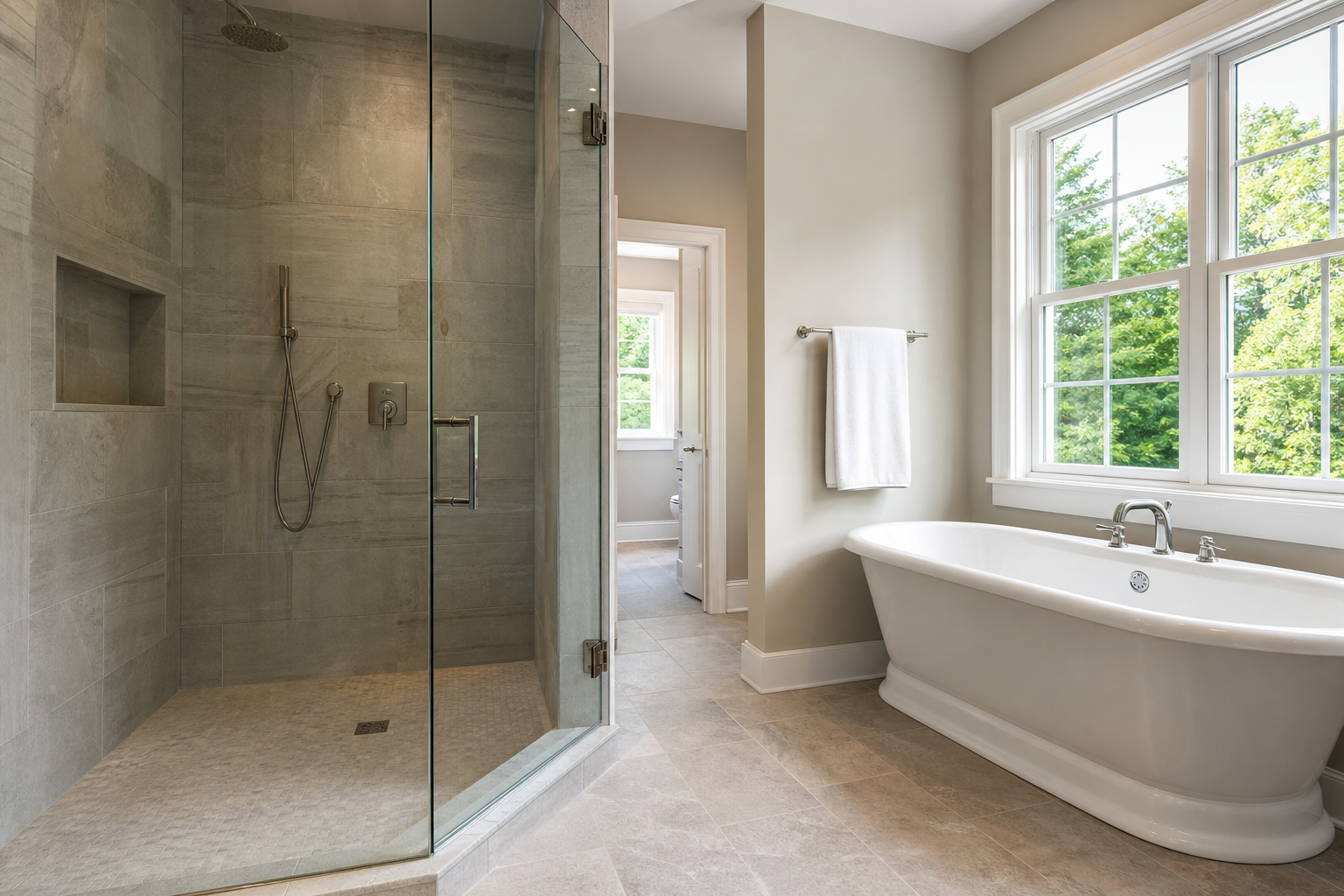
A walk-in shower usually gives you easier entry, a cleaner visual look, and more flexible sizing, while a traditional tub usually gives you better bathing versatility and may matter more to some buyers with young children.
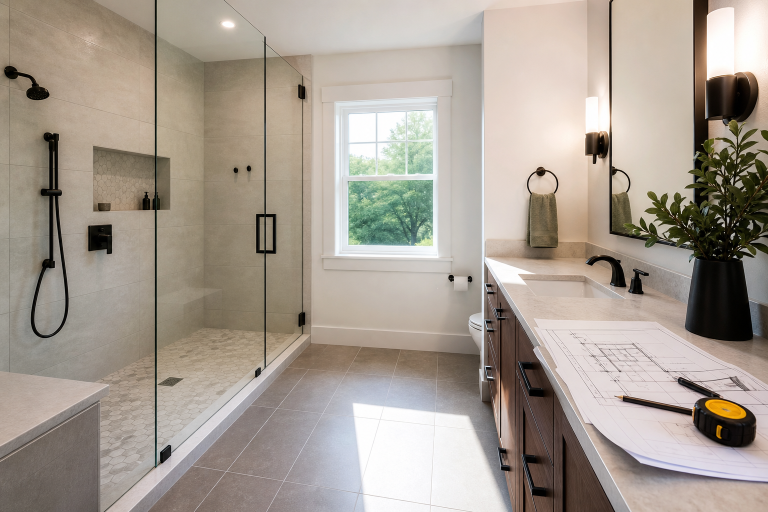
The biggest advantage is access. A tub forces you to step over a high edge. A walk-in shower can be designed with a low curb or no threshold at all, which aligns with accessible design guidance from HUD and the U.S. Access Board on transfer-type and roll-in shower layouts.
The biggest drawback is loss of function if the home ends up with no tub anywhere. That matters most in households with infants, small children, or owners who prefer soaking baths. It can also matter in resale conversations, especially in neighborhoods where buyers expect at least one tub in the house.
When is a traditional tub still the better choice?
A traditional tub is often the better fit when you need one bathroom to handle bathing children, occasional soaking, and broad household flexibility.
If the home has only one full bathroom, removing the only tub can narrow how that room works over time. Families with young kids often find a tub simpler for bathing and some pet owners also prefer a tub for washing dogs and other pets.
There is also a practical resale angle. The National Association of Home Builders has long included separate tub and shower setups, and full bathrooms are among the features many buyers value, though that does not translate into a rule that every bathroom must keep a tub. In a primary suite, the calculation can be different. If another bathroom elsewhere in the home still has a tub, converting the primary bath to a walk-in shower is often easier to justify because the house keeps both functions.
How do walk-in showers compare for accessibility?
For accessibility, a walk-in shower usually has the advantage because it can reduce stepping height and allow safer entry and exit when designed correctly.
HUD guidance and the U.S. Access Board both support features such as wider clearances, low thresholds, grab bar placement, and shower seating in accessible bathing spaces. Those features are much easier to incorporate into a shower than into a standard alcove tub.
Are walk-in showers easier to clean than tubs?
In many bathrooms, a walk-in shower is easier to clean because there is no tub deck or apron to scrub, but the result depends heavily on the glass, grout, and tile choices.
A simple shower with large-format tile, fewer grout joints, and limited metal trim usually takes less routine effort than a tub-shower combo with a shower curtain, ledges, and tight corners. By contrast, a frameless glass enclosure can look sharp and still demand frequent wiping if your water leaves mineral spots.
Material choice changes the maintenance picture. The Tile Council of North America publishes installation guidance showing that wet-area performance depends on proper substrate prep, waterproofing, movement joints, and material compatibility. In plain terms, easy cleaning starts with a shower that was built correctly, not just one that looks simple.
What usually adds maintenance
- Small mosaic tile with many grout joints
- Heavy glass panels that show spotting
- Deep niches and horizontal ledges that hold water
- Poor slope that lets water sit instead of draining
What usually reduces maintenance
- Larger tile or solid-surface wall panels
- Good ventilation and fast drying
- Minimal trim and fewer horizontal surfaces
- Clear, simple enclosure design
If moisture control is already a problem in the room, it is worth reading Abodence’s guide to moisture problems and ventilation fixes before finalizing finish choices.
How do cost and construction compare between a walk-in shower and a tub?
A basic replacement project can stay relatively contained, while a custom walk-in shower often costs more once waterproofing, glass, tile work, plumbing, and layout changes are included.
According to the 2024 Cost vs. Value Report from Remodeling, a midrange bathroom remodel has a national average cost that reflects how quickly tile labor, plumbing changes, and finish selections raise the budget. That source does not isolate every shower-versus-tub scenario, but it is a reliable reminder that bathroom work is driven by scope, not by one fixture choice alone.
In practical terms, swapping a tub for another tub or installing a prefabricated shower can be less expensive than building a fully tiled walk-in shower with custom glass. A curbless shower can add complexity because the floor structure, drain location, and waterproofing details may need more work. Manufacturer installation instructions from Schluter Systems and Wedi both make clear that slope, drain integration, and waterproof continuity are not optional details.
Call for a free estimate:
What should you compare before choosing tubs vs. showers?
The best comparison checklist is the one that keeps the project tied to use, not showroom appeal.
- Who uses this bathroom now: children, older adults, guests, or one primary user
- Whether another tub exists: keeping one tub elsewhere preserves flexibility
- Entry needs: low-threshold access matters more in some households than soaking depth
- Cleaning tolerance: glass and grout can change the day-to-day workload
- Layout limits: narrow rooms may favor one format over the other
- Project scope: cosmetic replacement costs less than moving drains or reframing
- Water containment: open shower designs need enough space and proper drainage
- Storage needs: niches, ledges, and linen storage should be planned early
A quote should also spell out waterproofing method, drain work, wall prep, and who is supplying the glass. Vague bathroom quotes are a common source of scope creep because the expensive parts are often hidden behind tile.
Which option makes more sense in different real-life situations?
The stronger choice depends on the room, the household, and whether the home already has another bathing option.
Primary bathroom with another tub elsewhere
A walk-in shower often makes sense in this setup because the house keeps at least one tub while the primary bath becomes easier to enter and more tailored to daily use.
Only full bathroom in the home
Keeping a tub is often the safer choice because it preserves the broadest function for current use and future buyers.
Older homeowner planning to age in place
A low-threshold or curbless shower can be the more practical long-term move, especially if the plan includes blocking for grab bars, a bench, and a handheld shower. The National Institute on Aging notes that bathroom modifications that reduce tripping and stepping barriers can support safer daily living at home.
Guest bath remodel on a tighter budget
A standard tub-shower combo or prefabricated shower may be the smarter value, depending on room size and who uses the space. Custom tile is not automatically the better answer.
What mistakes cause regret after a tub-to-shower decision?
One common mistake is choosing an open walk-in layout in a room that is too small to control splash. Another is focusing on tile and fixtures before confirming the waterproofing system and drain plan. The International Residential Code, as published by the International Code Council, includes requirements for shower lining, site-built shower receptors, and finished dam or threshold details that directly affect how the assembly performs.
Another frequent problem is assuming resale value is the same everywhere. A downtown condo, a suburban family house, and a one-level retirement home can point to different value assessments.
How should you decide between a walk-in shower and a traditional tub?
The practical decision is to match the fixture to the bathroom’s job, then confirm the construction scope before you sign a contract.
Choose a walk-in shower when easier entry, daily convenience, and a cleaner floor plan matter most, especially if another tub remains in the home. Keep or install a traditional tub when that bathroom needs to serve children, soaking, or all-purpose household use.
If the decision is close, preserving one tub somewhere in the house is often the simplest way to avoid regret while still modernizing another bathroom.
If you are comparing layouts, waterproofing methods, or conversion scope, getting a few detailed remodeling quotes can help clarify which option fits your bathroom best.
FAQ
Does a walk-in shower add value to a home?
A walk-in shower can add appeal, especially in a primary bathroom, but value depends on the local market and whether the home still has at least one tub. Buyer expectations vary by neighborhood and home type.
Is it a bad idea to remove the only bathtub in a house?
Removing the only tub can be a drawback if the home needs to serve young children or broad resale expectations. In a one-bath or family-oriented home, keeping a tub is often the more flexible choice.
Are curbless showers worth it?
Curbless showers can be worth it when easier access is the main goal and the room can be built with proper slope, drainage, and waterproofing. They usually require more planning than a standard shower base.
Which is cheaper, a walk-in shower or a bathtub?
A basic tub or prefabricated shower is often cheaper than a custom tiled walk-in shower with glass. Costs rise when the project includes drain relocation, structural floor work, or premium finishes.
What is easiest to maintain, a tub-shower combo or a walk-in shower?
A simple walk-in shower is often easier to maintain if it uses large wall panels or large-format tile and limited glass. High-maintenance finishes can erase that advantage quickly.
If you are considering a remodel, please call a listed specialist for a free, no-obligation discussion.
Call for a free estimate:
Sources: U.S. Department of Housing and Urban Development, U.S. Access Board, National Association of Home Builders, Tile Council of North America, Remodeling Cost vs. Value Report 2024, Schluter Systems, wedi, International Code Council, National Institute on Aging