Understanding Roof Hail Damage that Your Insurance May Cover
Roof hail damage can be covered by homeowners insurance, but coverage usually depends on one basic issue: whether the storm caused sudden, direct physical damage that your policy treats as a covered peril.

Call for a free estimate:
That sounds simple. In practice, claims often turn on documentation, timing, policy language, and whether the marks on the roof are true hail impacts or ordinary wear. If you are trying to figure out whether your insurer is likely to pay, the most useful approach is to understand what adjusters, policy forms, and roofing standards actually focus on.
Most standard homeowner forms published by the Insurance Services Office typically cover direct physical loss to the dwelling unless the loss is excluded. The National Association of Insurance Commissioners also explains that homeowners policies commonly cover damage from wind and hail, while deductibles, exclusions, and settlement terms vary by policy and state. In other words, hail is often covered, but the details matter.
A roof with only age-related granule loss or long-term deterioration may lead to a denial even after a storm is dated and identified. By contrast, a roof with documented impact damage to shingles, soft metals, and related exterior components has a much stronger claim to insurance coverage.
What does insurance usually cover for roof hail damage?
Most homeowners policies cover sudden storm-caused damage to the roof structure or roof covering, subject to the deductible, policy exclusions, and the settlement terms in your contract.
According to the National Association of Insurance Commissioners, standard homeowners insurance commonly covers damage caused by wind and hail, but insurers may apply separate deductibles or policy limitations. That means your first check is not the weather report. It is your declarations page and policy wording in your insurance agreement.
Coverage often extends beyond shingles alone. If the same hail event damaged ridge caps, vents, flashing, gutters, skylights, or metal roof accessories, those items may also be part of the claim if they are listed and documented. The same logic can apply to collateral exterior damage such as dented downspouts or broken window screens when it supports the storm narrative.
Settlement also matters. Some policies pay replacement cost if you meet the policy conditions, while others pay actual cash value, which subtracts depreciation. The Insurance Information Institute explains that replacement cost and actual cash value are different claim methods, and that difference can change your out-of-pocket cost substantially.
Older roofs can be more complicated. Some insurers use roof age schedules, cosmetic damage endorsements, or percentage deductibles in hail-prone areas. Those are policy-specific limits, not universal rules.
Which roof hail damage signs make a claim stronger?
The strongest claims usually show clear impact evidence across multiple roof components, tied to a known storm date and supported by prompt documentation.
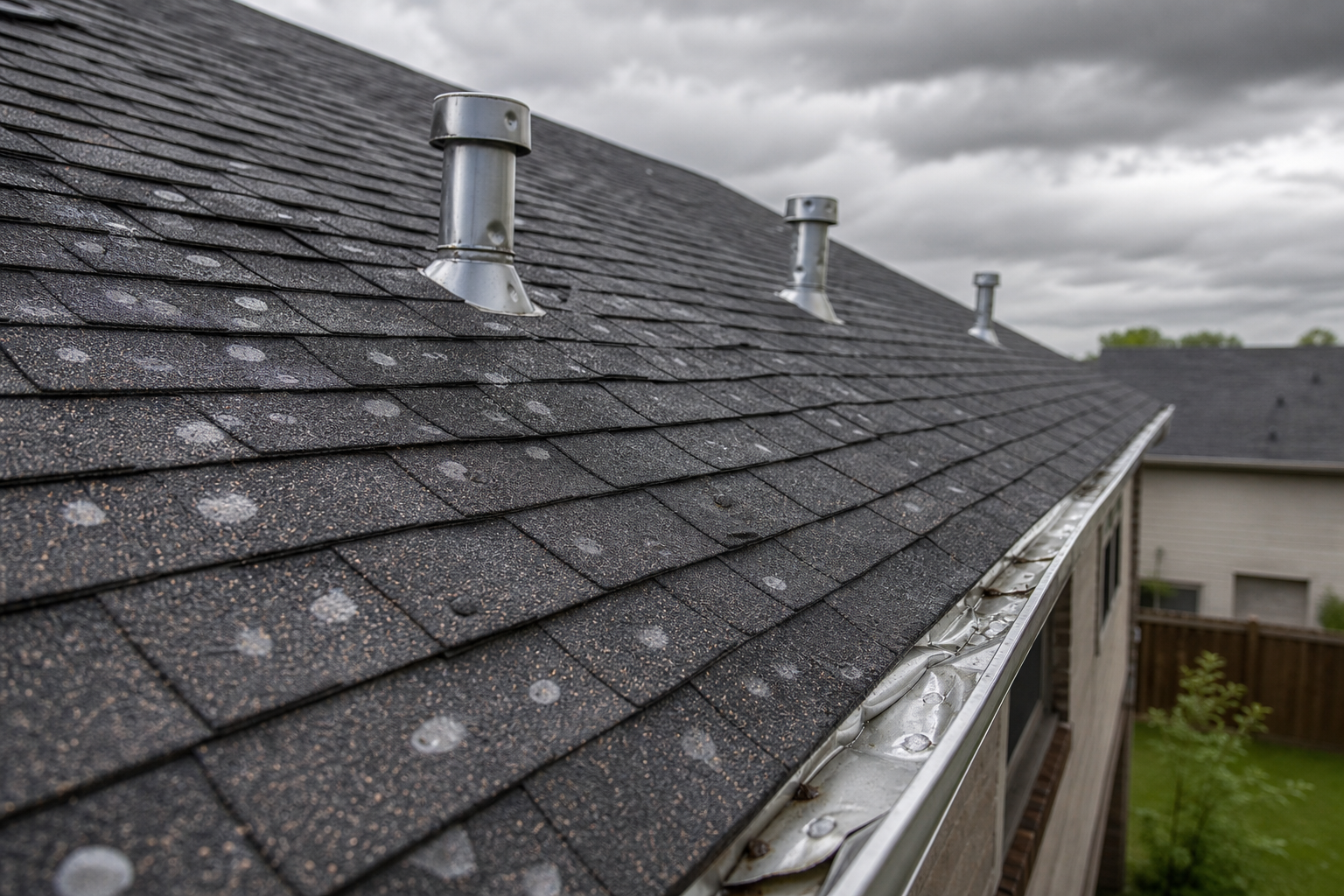
Bruised or fractured asphalt shingles
Impact marks on asphalt shingles often matter most when they show functional damage rather than surface scuffing. The Asphalt Roofing Manufacturers Association, in its guidance on hail damage assessment, distinguishes between normal aging and hail-caused bruising, puncture, or fracture that can shorten the roof covering’s service life or water-shedding ability.
On laminated or three-tab shingles, contractors and adjusters often look for displaced granules with a dark impact point, a soft bruise, or cracking that indicates the mat was affected. A few random marks may not support a full replacement. Repeated impacts across large areas are more persuasive.
Dents on soft metals
Dented roof vents, metal flashing, gutters, downspouts, and valley metal often help show that hail of damaging size actually struck the property.
Those items do not prove every shingle was functionally damaged, but they can support the storm date and impact direction. Many roofing inspections note soft-metal hits because they are easier to identify consistently than subtle shingle bruises.
Damage to accessory components
Broken skylight glazing, cracked vent caps, damaged chimney caps, and torn window screens can strengthen the overall loss picture when they line up with the same storm event.
The key is consistency. If the roof, gutters, and other exposed components all show fresh impact-related damage, the claim is easier to connect to hail rather than age.
Granule loss with fresh impact characteristics
Fresh hail-related granule loss usually looks different from uniform aging because it appears as more defined strike areas rather than broad, even wear across the whole roof plane. That distinction matters because insurers routinely deny claims when the roof condition appears to be maintenance-related or simply old.
What signs usually do not lead to coverage?
Wear, deterioration, and old installation problems usually do not qualify for a covered hail claim, even if a storm happened recently.
According to the Insurance Information Institute, homeowners insurance generally covers sudden accidental damage from covered perils, but not losses caused by wear and tear, neglect, or poor maintenance. If the roof was already brittle, curling, poorly ventilated, or near the end of its service life, the insurer may argue the storm did not create the condition you are claiming.
Common weak points in a claim include:
Call for a free estimate:
- Uniform granule loss from age
- Blistering that predates the storm
- Thermal cracking unrelated to impact
- Mechanical damage from foot traffic or tools
- Leaks caused by old flashing failure rather than hail
- Prior repairs that were incomplete or poorly matched
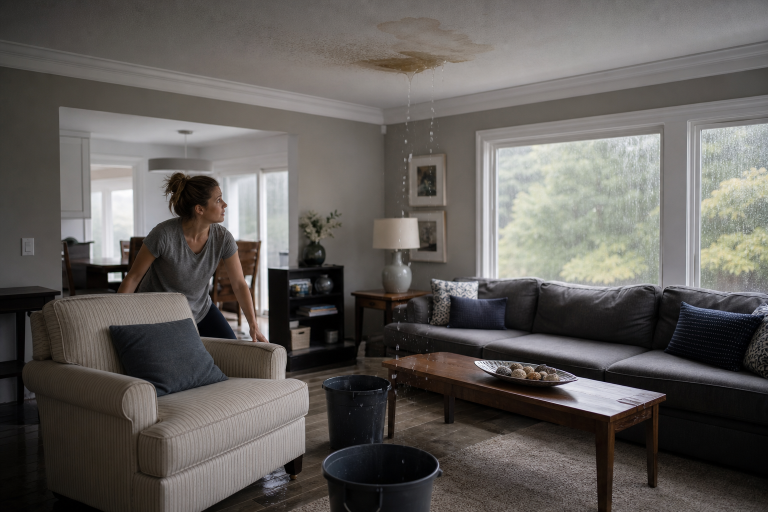
If your roof leak started after a storm, that alone does not prove hail damage. A roof can leak after heavy rain because an older weak spot finally failed. For related guidance on immediate leak response, see urgent roof leak steps before damage gets worse.
How do adjusters decide whether hail damage is functional or cosmetic?
Adjusters usually focus on whether the storm changed the roof’s ability to shed water or shortened the material’s expected service life in a measurable way.
Functional damage is the category that most often supports payment for repair or replacement. On asphalt shingles, that can mean bruising, puncture, tearing, or fracture. On metal components, the answer depends more on the policy language. Some policies or endorsements limit payment for cosmetic marring if appearance changed but performance did not.
According to FEMA, property owners should document storm damage thoroughly before cleanup or permanent repairs when it is safe to do so. In a hail claim, that documentation helps show whether the issue is cosmetic or broader storm-caused damage across the roofing system.
Insurers also look for pattern. True hail events usually leave evidence on slopes that faced the storm, on soft metals, and sometimes on other site features such as fences or HVAC condenser fins. A roof report that identifies only a few questionable marks without a broader pattern can be harder to defend.
What should you document before filing a roof hail damage claim?
Clear, dated evidence collected early gives the insurer a better record and gives you a better chance of challenging a weak adjustment.
Start with the basics. Save the storm date, local weather reports, photos of the roof from the yard, close-up photos of visible exterior impacts, and any interior signs of water entry. If a contractor inspects the roof, ask for a written report with marked test areas, photos, and a line-item summary of damaged components.
A practical documentation file usually includes:
- Date and approximate time of the storm
- Photos of shingles, vents, flashing, gutters, and downspouts
- Photos of collateral damage such as screens or skylights
- Interior water staining if present
- A copy of the policy declarations page
- Any temporary mitigation invoices
- A contractor inspection report with photo labels
Keep your records organized by date. Claim disputes often become disputes about sequence, especially when the roof already had age-related wear. If the roof is older, pull any prior inspection reports or closing documents you have. Those can help show what condition existed before the storm.
When should you call a roofer, and what should you ask?
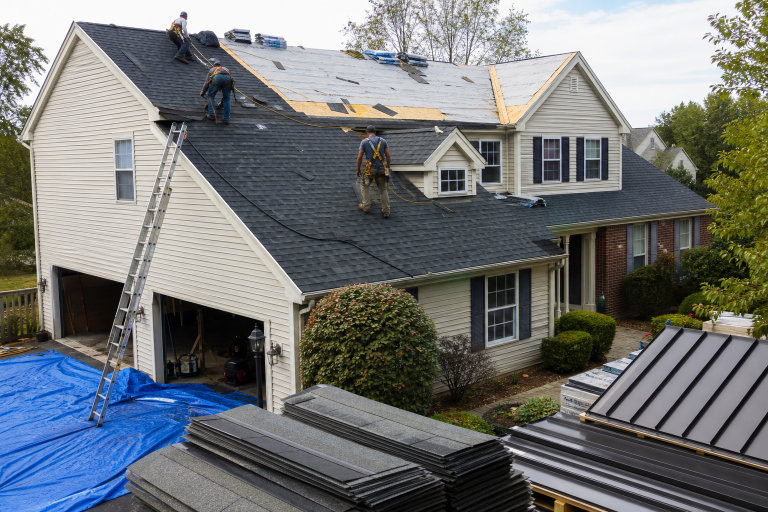
A prompt professional inspection is the right move after a hail event because a roofer can document storm-related conditions without turning the visit into a rushed sales pitch.
This is a safety issue as much as an insurance issue. The Occupational Safety and Health Administration explains that roof work exposes workers to serious fall hazards. For a homeowner, that means avoiding self-inspection on the roof and using a qualified roofing contractor instead.
Ask for specifics, not conclusions. A useful roof inspection should identify the roof type, approximate age, visible impact areas, accessory damage, repairability concerns, and whether the contractor believes the damage impacts functionality. It should also separate storm findings from wear, prior repairs, or installation defects.
Good questions to ask include:
- Which components show storm-related damage, and which do not?
- Are the marks consistent with hail impact or with age and foot traffic?
- Is the damage repairable, or does the roof need partial or full replacement?
- Will the inspection report include photos and slope-by-slope notes?
- Did you check soft metals and other exterior components for matching impact evidence?
- Do you see any signs of older problems that may affect the claim?
Be careful with vague promises that the roof is automatically covered. No contractor can guarantee claim approval before the insurer reviews the loss and the policy.
If you need a broader review of roof materials and how they age differently, see roofing materials compared. Material type affects how hail damage appears and how repairable it may be.
Can matching rules and local law affect a hail claim?
State rules and policy endorsements can affect whether an insurer pays only for the directly damaged area or for a larger scope needed to achieve a reasonably uniform repair.
Some states have matching requirements or claim practices that matter when replacement shingles are discontinued or the repaired section would be visibly inconsistent. The National Association of Insurance Commissioners notes that claim handling rules vary by state, which is why local policy interpretation can differ even when the storm facts look similar.
Call for a free estimate:
Building code can also expand the scope. If local code requires related work during reroofing, the policy may respond only if it includes ordinance or law coverage. Without that endorsement, code-triggered upgrades may become a homeowner cost. This is one reason to read the estimate line by line. A low initial scope can miss items that are necessary for a code-compliant roof system.
Warranty issues can matter too. If a partial repair would conflict with manufacturer installation requirements or reduce warranty protection, that may become part of the discussion. For a plain-language review, see roof warranty terms explained.
What common mistakes can hurt a roof damage claim?
Late reporting, weak photos, and signing vague contractor paperwork are among the most common problems that reduce leverage in a hail claim.
One frequent mistake is waiting too long. Policies often require prompt notice, and visible conditions can change with weather, foot traffic, and temporary patching. Another is authorizing permanent repairs before the insurer documents the loss, unless emergency work was needed to prevent further damage.
Paperwork causes trouble too. Some contractor agreements include broad assignment language, cancellation penalties, or open-ended scope terms. A homeowner should know exactly what was signed before the claim moves forward.
What happens if the insurer denies or underpays the claim?
A denied or underpaid claim is often challenged by asking for the written basis, comparing it to the policy language, and submitting better documentation from a qualified roofing inspection.
Request the denial or partial payment explanation in writing if you do not already have it. Then compare the insurer’s stated reason with the policy terms, the adjuster photos, and your contractor’s report. If the dispute is about storm causation, more detailed photo evidence and a better slope-by-slope assessment may help. If the dispute is about scope, a line-item estimate that identifies each damaged component is often more useful than a short replacement proposal.
State insurance departments generally provide consumer complaint information and claim-handling resources, although they do not decide every factual dispute for you. If the dollar amount is large or the policy language is unclear, a licensed public adjuster or coverage attorney may be appropriate, depending on your state and situation.
FAQ
Will insurance cover an old roof if hail damaged it?
Coverage can still apply to an older roof if the storm caused direct physical damage, but the payout may be reduced by depreciation or limited by policy terms tied to roof age.
Do dents in gutters prove roof hail damage?
Dented gutters can support the storm history, but they do not prove the shingles have functional damage that requires replacement.
How long do you have to file a hail damage claim?
The deadline depends on your policy and state rules, but prompt notice is usually required, so filing soon after discovery is the safer course.
Should you let a roofer meet the insurance adjuster?
A contractor can help point out documented storm damage during the inspection, but the useful role is factual support, not making coverage promises on the insurer’s behalf.
Is interior leaking required for a hail claim to be covered?
A roof can qualify without an active interior leak if the storm caused covered physical damage to the roofing system.
If you are sorting through a recent storm inspection or need help with a current problem, please call one of the listed specialists for a free, no-obligation discussion.
Sources: Insurance Services Office HO 00 03 Homeowners 3 Special Form, Asphalt Roofing Manufacturers Association hail damage guidance, Insurance Information Institute roof damage guidance