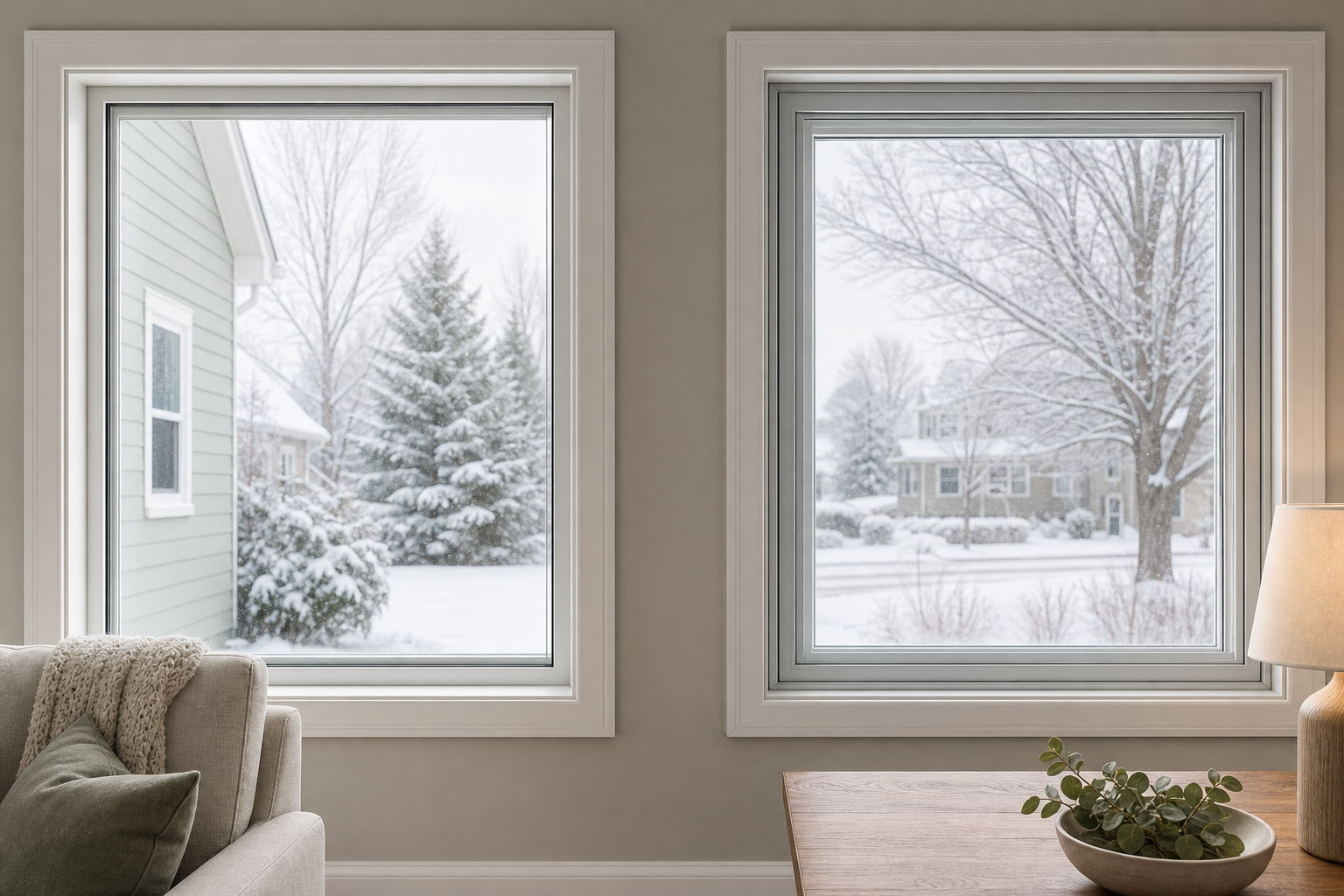
Triple-Pane Windows and Energy Bills: Benefits & Risks for Homeowners
Triple-pane windows can lower energy bills, but the size of the savings depends more on climate, window performance ratings, and the condition of the rest of your home than on pane count alone.

Call for a free estimate:
Double-pane windows are already standard in many replacement projects because they insulate far better than older single-pane units. Triple-pane windows add another layer of glass and another sealed gas space, which can further reduce heat transfer. In cold climates, that extra performance can be meaningful. In milder climates, the energy savings may be modest enough that the upgrade cost takes much longer to earn back.
The right choice is not about buying the most expensive window package. It is about matching the window to your climate, your comfort problems, and the performance numbers on the label.
According to ENERGY STAR, the key ratings for window efficiency include U-factor, which measures how well a window prevents heat from escaping, and solar heat gain coefficient, or SHGC, which measures how much solar radiation comes through the glass. Those ratings matter more than pane count by itself.
Do triple-pane windows really lower energy bills?
Yes, they can reduce heating and cooling costs when the window has a lower U-factor and the home is in a climate where that added insulation matters.
The National Fenestration Rating Council, through its published rating system for windows, doors, and skylights, uses standardized labels so homeowners can compare U-factor, SHGC, visible transmittance, and air leakage across products. Those labels are the practical way to judge likely energy performance rather than assuming every triple-pane product is automatically better in every situation.
For a heating-dominated climate, lower U-factor is often the main reason triple-pane windows can trim utility use. In an environment that demands more cooling, the better choice may be a well-designed double-pane window with an appropriate SHGC for sun control. A weaker frame, poor installation, or the wrong glass package can erase much of the benefit you expected from the third pane.
Air sealing also matters. According to the U.S. Department of Energy on air sealing, uncontrolled air leaks in the building shell can waste energy and reduce comfort. If your home has major leakage around the attic, rim joists, or older doors, fixing those areas may produce a better return than paying extra for triple-pane glass alone.
How are double-pane and triple-pane windows actually different?
The basic difference is one extra layer of glass and one extra sealed space, which improves insulation and often changes weight, cost, and sound performance.
Double-pane windows have two panes of glass separated by a spacer, usually with air or an inert gas such as argon between them. Triple-pane windows add a third pane and a second sealed gap. Many premium products also pair that design with low-emissivity, or low-E, coatings that reflect heat energy while still allowing visible light through.
According to Andersen product literature for insulated glass options, low-E coatings and gas fills are central parts of modern energy-efficient window design, not optional details after the fact. That means a high-performing double-pane window can outperform a lower-grade triple-pane unit if the coatings, spacers, frame, and air leakage numbers are better.
Weight is one of the practical tradeoffs. Triple-pane sashes are heavier, which can affect hardware choices and frame engineering. That does not make them a bad option. It does mean the whole window system matters, not just the glass count in a sales brochure.
Which window ratings matter more than pane count?
U-factor, SHGC, air leakage, and the climate-zone recommendation matter more than the number of panes if your goal is lower utility bills.
Pane count is easy to market because it sounds simple. A homeowner comparing windows should look first at the NFRC label and then at the ENERGY STAR climate guidance for the region where the home is located.
U-factor
Lower numbers mean less heat transfer through the window assembly. In colder regions, this is often the rating that separates a merely decent window from one that can noticeably improve winter comfort near the glass.
Solar heat gain coefficient
Lower SHGC means less solar heat enters the home. In hot and sunny climates, that can reduce cooling demand. In colder climates, some homes benefit from a different balance, especially on sun-exposed elevations.
Air leakage
Lower air leakage ratings indicate a tighter window assembly. Draft complaints are often tied as much to leakage as to glass insulation.
Frame material and spacer design
The frame and edge spacer affect overall thermal performance. If you are comparing materials, this article on window frame materials can provide insight on the benefits of various materials and how they can support an energy efficient strategy.
When do triple-pane windows make the most sense?
Homes in cold or very cold climates benefit the most when the upgrade targets heat loss, cold-window discomfort, and condensation risk on interior glass.
ENERGY STAR divides the U.S. into climate zones for window selection, and those zone-based recommendations are the right starting point for deciding whether triple-pane performance is likely to pay off. In northern climates, the jump to a lower U-factor can be more valuable because the home spends more of the year resisting indoor heat loss.
Call for a free estimate:
Comfort can matter as much as utility savings. Interior glass that stays warmer in winter can make rooms near windows feel less chilly, even if the thermostat setting does not change. That is a real benefit for homes with large glass areas, exposed views, or rooms where people sit close to the windows.
Triple-pane windows may also be worth a closer look if you are already replacing failing units with broken seals, damaged frames, or persistent condensation issues tied to poor window performance. If permit questions are part of the project, this guide to window permit requirements can help you understand what may trigger local review.
When is double-pane the smarter buy?
A good double-pane window is often the smarter buy in mixed or mild climates, or when other home upgrades would save more energy first.
This is where many homeowners can avoid overspending. If your current windows are older but the bigger energy losses are coming from attic air leaks, poor insulation levels, or an aging HVAC system, triple-pane glass may not be the first place to put the budget. The U.S. Department of Energy and ENERGY STAR both emphasize whole-home efficiency rather than treating one product as a stand-alone fix.
In many southern and mixed climates, a double-pane unit with the right SHGC and low air leakage can be the better value. The monthly bill reduction from triple-pane may be real but small. If the price jump is substantial, the payback period can stretch out well beyond what a homeowner expects.
Noise is another area where assumptions can mislead. Triple-pane can help with sound control, but glass thickness variation and the overall window assembly often matter more than simply adding a third pane. If noise is the main complaint, ask for acoustic performance details rather than assuming triple-pane is automatically the best answer.
How much more do triple-pane windows cost?
Expect triple-pane windows to cost more than comparable double-pane units, often by hundreds of dollars per window depending on size, frame material, and brand line.
For broad project pricing, the 2024 Remodeling magazine Cost vs. Value Report places a vinyl window replacement project at a national average cost of $21,264 and a wood window replacement project at $25,799. That source does not isolate triple-pane upgrades, but it is a stronger benchmark for whole-project replacement costs than lead-generation estimates. Manufacturer pricing sheets and dealer quotes typically show triple-pane as a premium glass package rather than a separate window category.
Marvin product configuration materials and dealer literature indicate that final pricing varies by frame series, glazing package, size, and regional distribution. In practice, the right way to compare cost is to request the same window line quoted in both double-pane and triple-pane versions, with the NFRC ratings shown on each quote. This side-by-side quote tells you two things at once: the real upgrade cost for your project and the actual performance gain you are buying.
Will the energy savings pay back the added cost?
Sometimes they will, but the payback is usually strongest in colder climates and weaker when the extra upfront cost is high or the home has bigger efficiency problems elsewhere.
There is no honest universal payback number. Utility rates differ by region. So do weather patterns, window orientation, shade, and how airtight the rest of the house is. A home with large older windows in a northern climate may see a meaningful long-term benefit from triple-pane. A smaller home in a mild climate may not.
According to the U.S. Department of Energy guidance on energy-efficient window attachments, products such as storm windows, cellular shades, and other window attachments can also improve window performance. That matters because some homes can address comfort and heat loss with a lower-cost strategy instead of moving straight to the highest-spec replacement window.
If your current windows are structurally sound, adding quality storm windows or improving air sealing may be the more practical move. If the windows already need replacement for age, damage, or failed seals, then comparing double-pane and triple-pane windows becomes a strategic consideration.
What should you ask for in a window quote?
A useful quote shows NFRC ratings, glass package details, installation scope, and warranty terms in writing.
Vague proposals are a common problem in window sales. A quote that says only “energy-efficient windows” does not tell you enough to compare options.
- NFRC label values for U-factor, SHGC, visible transmittance, and air leakage
- Glass package details, including low-E coating and gas fill
- Frame material and product line
- Full installation scope, including flashing, trim, and interior or exterior finish work
- Whether the quote is for insert replacement or full-frame replacement
- Written warranty terms for both product and labor
- The added price for triple-pane compared with the same window in double-pane form
Written scope matters as much as written price. A cheaper quote can look attractive until missing installation details drive up costs later in the project.
What is the practical choice for most homeowners?
Most homeowners should choose the window with the best verified performance for their climate and budget, which is often a strong double-pane unit and sometimes a triple-pane upgrade.
If you live in a cold climate, sit near large windows in winter, or plan to stay in the home for many years, triple-pane deserves a serious look. If you live in a milder region or your home still needs attic sealing, insulation work, or HVAC improvements, a well-specified double-pane window may be the better value.
For homeowners trying to lower overall energy waste before committing to window replacement, this guide to home energy audits can help you identify where large losses are happening first.
Call for a free estimate:
FAQ
Are triple-pane windows worth it in warm climates?
Usually the value is less clear in warm climates because solar control, air leakage, and shading often matter more than the extra insulating layer alone. A high-quality double-pane window with the right SHGC may deliver a better return.
Do triple-pane windows reduce outside noise?
They can help with noise, but the result depends on the full glass and frame design. Acoustic performance is not guaranteed by pane count alone, so ask for sound-control specifications if that is a priority.
Can double-pane windows still be energy efficient?
Yes, many double-pane windows are highly energy efficient when they have strong NFRC ratings, low-E coatings, low air leakage, and proper installation. In many homes, that is the most balanced choice.
Should you replace windows just to save energy?
Not always, because other upgrades may save more for less money if the existing windows are still in decent condition. Air sealing, insulation improvements, or window attachments can be more cost-effective first steps.
If you are comparing replacement options and want help sorting performance ratings, installation scope, and quote details, please call one of the listed specialists for a no-obligation discussion.
Sources: National Fenestration Rating Council, Andersen product literature, Remodeling magazine 2024 Cost vs. Value Report, Marvin product configuration materials and dealer literature