Tactical Outdoor Camera Placement: Effective Spots for Better Home Security
Ideal camera placement starts with coverage of the places an intruder is most likely to use when approaching your home: front and back doors, first-floor windows, the driveway, and side-yard paths. Good placement is less about adding more cameras and more about putting each one where it can capture a usable view without glare, weather issues, or obvious blind spots.
According to the U.S. Department of Justice, Office of Justice Programs, doors and windows are common residential entry points, which is why perimeter coverage should begin there rather than at decorative yard views or property corners that do not show how someone reaches the house. For internet-connected cameras, the Cybersecurity and Infrastructure Security Agency also advises securing home network devices with strong passwords, software updates, and safer router settings, because camera placement only helps if the system itself is protected.
This guide explains where outdoor cameras work well, where they often fail, and how to think about placement in a way that matches current manufacturer guidance and standard security practice.
Which outdoor camera locations usually matter most?
The highest-value spots are the main entry points and the routes that lead to them. In most homes, that means the front door, back door, driveway, garage area, and any side gate or walkway that lets someone approach without being seen from the street.
A front-door camera is the obvious first choice because it captures visitors, package activity, and direct approaches. A driveway camera comes next for many homes because it shows vehicles, garage access, and movement toward side doors. Back and side-yard cameras matter when those areas are hidden by fencing, landscaping, or the shape of the house.
According to the International Association of Certified Home Inspectors, side doors and garage-related access points deserve attention because they are often less visible than the front entrance. That does not make every side yard equally important. The useful question is simple: if someone wanted to avoid being seen, which path would they take? For many homes, the answer is not the front walk.
Where should a front door camera go?
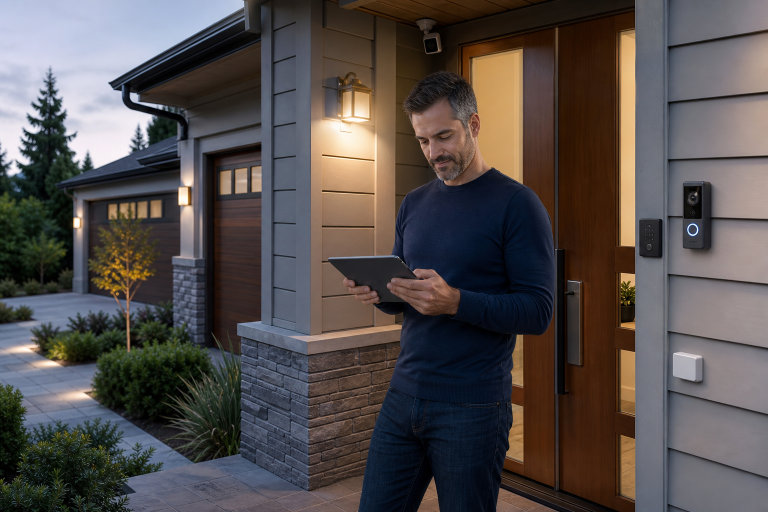
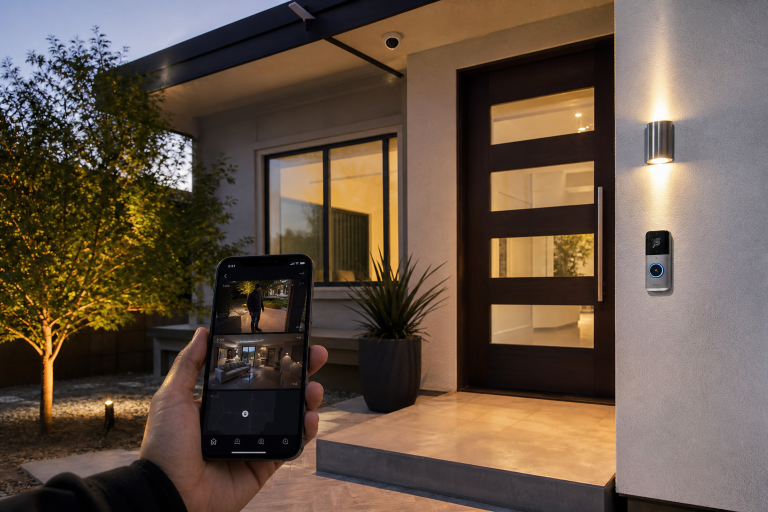
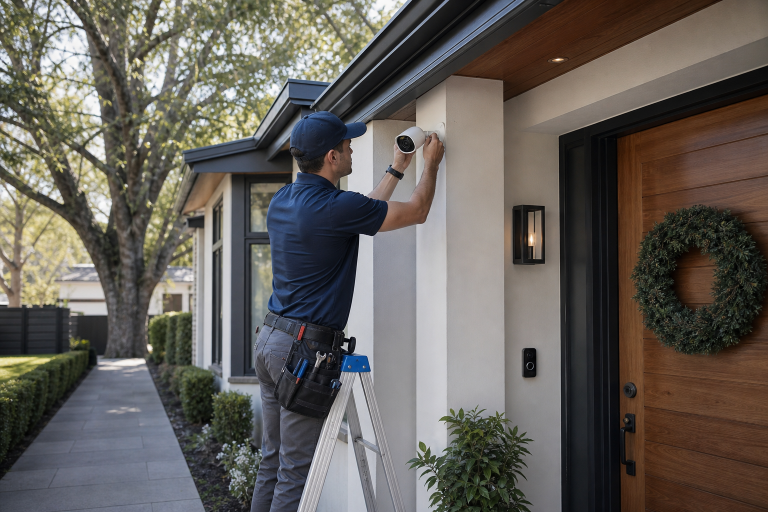
An effective front-door view is usually slightly above eye level and angled to capture the approach, the landing, and the area where a person would stand. That gives you a better chance of recording faces, packages, and hand movements at the door instead of only the top of a head or a distant sidewalk view.
Google Nest Help says doorbell cameras work best when mounted at about 4 feet from the ground, while many standard outdoor cameras are placed higher to widen the field of view. Those are different products with different jobs. A doorbell camera is meant for close-up interaction. A wider exterior camera is often better for showing the full approach to the entry.
Placement near a porch light can help at night, but only if the light does not create glare or wash out the image. Eufy Security support guidance and Ring installation guidance both stress avoiding direct backlighting and testing the live view before final mounting. If the camera faces a bright street, reflective storm door, or strong porch bulb, image quality can drop sharply even though the scene looks well lit to you.
If your front porch is deep or has columns, place the camera where those features do not block the angle to the steps or walkway. A camera that sees the doormat but not the approach is only doing part of the job.
What is the best place for driveway and garage cameras?
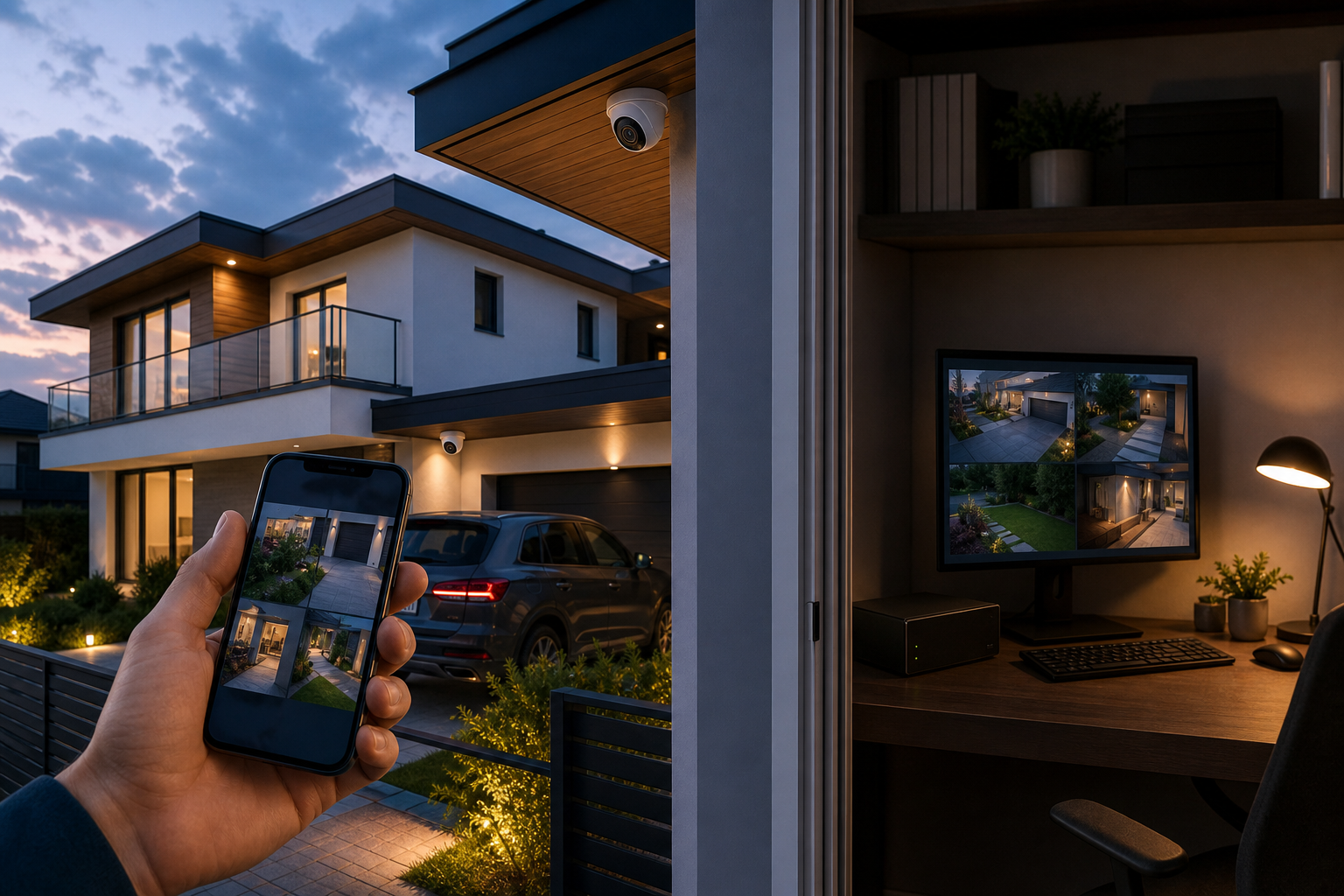
The best driveway coverage usually comes from a camera aimed diagonally across the drive rather than straight down from the garage peak. That angle can capture vehicles entering, people exiting, and movement toward garage doors or side entries with more usable detail.
Many homeowners mount a camera too high over the garage and end up with a broad scene but weak identification. Manufacturer field-of-view guidance from Arlo and Reolink both point to the same practical issue: wider is not always better if the subject is small in the frame. A lower side position, under an eave or on a corner of the garage, often creates a stronger view.
This is also where overlapping coverage helps. If the driveway camera can also see the path to a side gate or garage service door, one device may cover two risk areas. That can be better than buying another camera just to fill a gap created by poor angle selection.
If you want a closer look at budgeting and equipment tradeoffs, this camera installation cost guide can help you compare scope before you buy more hardware than you need.
How should you cover back doors and side yards?
The most effective back and side-yard cameras watch the approach path first and the door second. That usually means mounting the camera where it can see a gate, fence opening, or narrow walkway before someone reaches the entry itself.
Rear entries are often more private, which is exactly why they matter. A back-door camera should not be tucked so close to the door that it only records a person after they have already arrived. Give it enough offset to capture movement from the yard into the entry zone.
For side yards, narrow spaces can create strong camera views because people tend to move through them in a predictable line. The tradeoff is lighting and weather exposure. If sprinklers, dense shrubs, or direct afternoon sun hit that side of the house, placement may need to shift slightly to protect image quality and reduce false alerts.
ADT planning guidance and Lorex installation guidance both emphasize checking for obstructions that change with the season. Bushes that look harmless in winter can block half the frame in summer. The same goes for hanging plants, flags, and gates that swing into view.
How high should outdoor security cameras be mounted?
For many standard exterior cameras, a mounting height of roughly 8 to 10 feet is the common target because it helps reduce tampering while still keeping people large enough in frame for useful video. That range appears across installation guidance from brands such as Ring, Arlo, and Lorex, although the right height still depends on lens width and the area being covered.
Too low, and the camera can be bumped, blocked, or stolen more easily. Too high, and you may record hats, hood tops, and vehicle roofs instead of identifiable detail.
A doorbell camera is the main exception. Google Nest Help places that much lower, around 4 feet, because it is designed for close-range porch activity. Mixing up those two height strategies is a common reason homeowners get disappointing results.
Before drilling, test the view from a ladder or temporary mount. Most camera apps make this easy. A few minutes of testing can prevent a permanent placement that looks fine from the yard but fails in the live feed.
What common placement mistakes make cameras less effective?
The biggest mistakes are poor angles, bad lighting, and trying to cover too much with one camera. Those problems reduce image quality more than most homeowners expect.
- Mounting too high, which captures the tops of heads instead of faces.
- Pointing directly at bright lights, sunrise, sunset, or reflective surfaces.
- Aiming at a wide yard instead of the actual route to an entry point.
- Letting trees, shrubs, flags, or seasonal decor drift into the frame.
- Relying on one camera where overlapping views would cover a blind spot better.
- Installing Wi-Fi cameras far from the router without checking signal strength first.
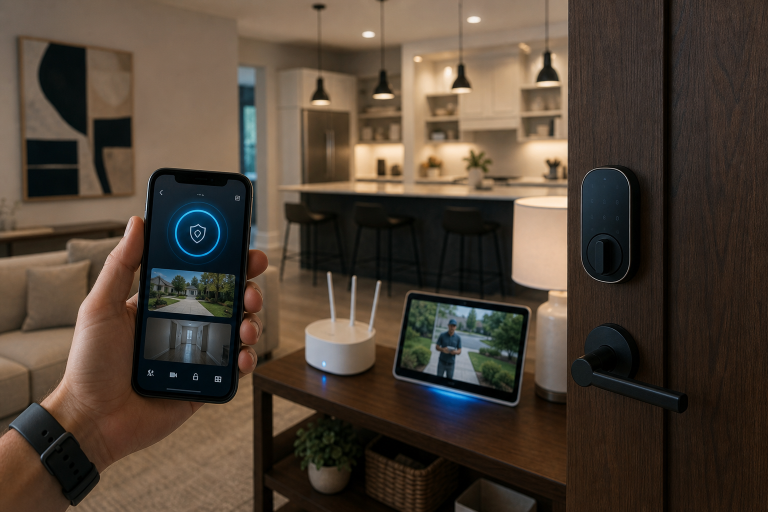
The network issue deserves special attention. CISA recommends placing connected home devices on a secure network with current software and strong credentials. If a camera repeatedly drops offline because the signal is weak at the mounting point, the problem is not really placement alone, but the result is the same: missing footage when you need it.
For broader digital risks tied to connected devices, this home security hacking prevention guide covers the basics in plain language.
Should outdoor cameras be visible or hidden?
Visible cameras usually make more practical sense for homeowners because they can deter casual trespassing and also make maintenance easier. A clearly seen camera near an entry often changes behavior before an incident happens.
Hidden placement has narrower uses. It may protect the device from tampering or preserve the look of the house, but concealment can also reduce the camera’s field of view or make cleaning and battery service harder. Some states and localities also have privacy rules about where recording is allowed, especially if neighboring property or audio capture is involved. The Federal Trade Commission advises consumers to understand privacy settings, data practices, and where devices record before installing them.
If you are deciding between visible and discreet placement after a recent incident, this guide to home security after a break-in is a useful next read.
How many outdoor cameras does a typical home need?
Many homes are well served by two to four outdoor cameras, but the right number depends on entry layout, not square footage alone. A compact house with a front door, back door, and attached garage may need fewer cameras than a smaller home with multiple side gates, deep setbacks, and heavy landscaping.
Start with the places where a person can approach unseen. Then check whether one camera can cover more than one route without losing detail. If it can, adding another device may not improve security much. If it cannot, forcing one camera to do everything usually leaves a blind spot somewhere important.
Manufacturer planning tools from Ring and Arlo consistently frame coverage as a map problem rather than a product-count problem. That is the right way to think about it. Draw the paths to your doors and ground-floor access points, then place cameras to watch those paths.
What should you check before finalizing camera placement?
A short pre-install review usually catches the issues that matter most: view angle, lighting, weather exposure, power, and network reliability. If any one of those is wrong, the camera may still work, but not well enough to rely on.
- Test the live view at the planned height and angle.
- Check the image in daytime and after dark.
- Walk the real approach paths to see whether a person stays in frame.
- Confirm that eaves, gutters, plants, and doors do not block the lens.
- Verify Wi-Fi strength or wiring reach at the exact mounting point.
- Review privacy zones and motion settings before leaving the install finished.
Pay attention to quote language if you are hiring the work out. Vague promises like “full coverage” or “best placement” are not enough. A useful proposal should identify each camera location and what area it is intended to capture.
FAQ
Where is the best place to put an outdoor security camera?
The best location is usually one that watches an entry approach rather than just the entry itself. For most homes, that means the front door, back door, driveway, garage area, or a side path that someone could use without being noticed.
How high should an outdoor security camera be?
About 8 to 10 feet is the common range for many standard exterior cameras, based on manufacturer installation guidance. Doorbell cameras are different and are typically mounted much lower, often around 4 feet, to capture close-up porch activity.
Should security cameras point at the street?
A partial street view can be useful if it also captures the route to your home, but a camera aimed mainly at passing traffic often wastes coverage. The more effective view is the one that shows how a person or vehicle moves from the street toward your entry points.
Is one outdoor camera enough for a house?
One camera can be enough for a small home with a simple layout, but many homes need at least two views to cover separate approach paths. The deciding factor is whether a single camera can record every important route without losing detail.
Do visible security cameras work better than hidden ones?
Visible cameras are often the more practical choice because they can discourage casual trespassing and are easier to maintain. Hidden cameras can make sense in limited situations, but they should not sacrifice image quality or create privacy problems.
If you want help planning coverage for your layout, getting a written assessment with exact camera locations is the clearest next step. Please call a listed specialist for a free, no-obligation discussion.
Sources: Google Nest Help, Ring installation guidance, Eufy Security support guidance, Arlo support guidance, Reolink support guidance, ADT planning guidance, Lorex installation guidance