The Fall Shift: Why Bugs Invade Your Home in Autumn
Cooler weather changes where many insects shelter, feed, and spend the winter. The result is a familiar autumn pattern: insects that were barely noticeable outdoors begin appearing at windows, doors, basements, attics, and kitchen edges.
Indoor sightings do not always mean an insect has established a breeding population inside. Penn State Extension’s Fall Invaders guidance explains that several common species enter buildings in late summer and fall because protected voids can provide an overwintering site. A house offers cracks, stable cover, and surfaces warmed by the sun, especially on its south and west sides.
Why do bugs come inside when autumn arrives?
Many fall invaders are looking for sheltered places to remain inactive through cold weather, rather than looking to live in your rooms year-round. Penn State Extension identifies boxelder bugs, multicolored Asian lady beetles, brown marmorated stink bugs, and western conifer seed bugs among the insects that commonly gather on buildings before moving into wall voids, attics, and other protected spaces.
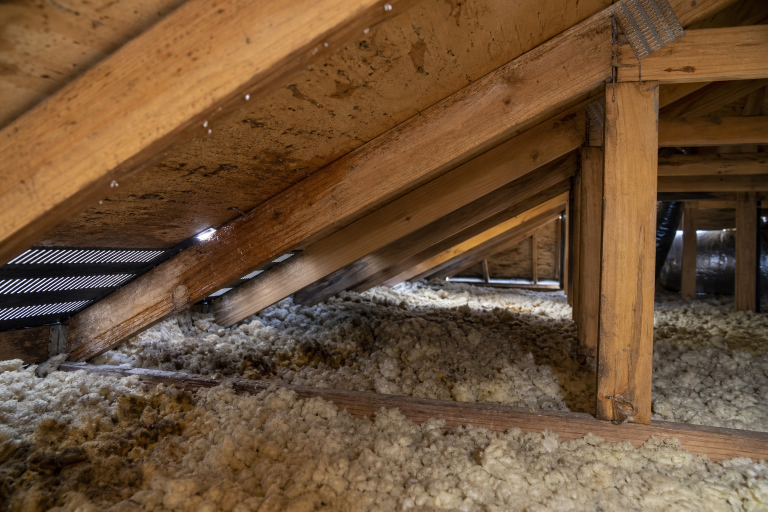
The timing is tied to seasonal cues, including shortening days and cooling temperatures. Insects that overwinter as adults often assemble on sunny exterior walls first, then use small gaps near trim, siding, utility lines, vents, windows, and doors to reach protected cavities. Once inside a wall or attic, they may remain out of sight until a warm spell causes them to become active and wander into living spaces.
A warm room is therefore often an accidental destination, not proof that the insect chose the home as a food source. Killing the few insects visible on a windowsill may reduce what you see that day, but it does not close the route that allowed others to enter the structure. Ants also have different patterns, often switching from sugar seeking to protein seeking in later summer and early autumn.
Which insects are most likely to show up indoors in fall?
The likely visitor depends on the region, nearby vegetation, and the openings in the building envelope. Penn State Extension describes the usual fall-invader group as nuisance pests that congregate outdoors before entering protected spaces. Their presence can be frustrating, but the real question is where they gained access.
- Brown marmorated stink bugs often cluster on sunlit exterior walls and may appear around windows or light fixtures after entering wall spaces.
- Multicolored Asian lady beetles gather in large numbers on exposed building faces and can enter around windows, rooflines, and siding details.
- Boxelder bugs are especially associated with properties near boxelder, maple, or ash trees and can collect on warm outside walls.
- Western conifer seed bugs may enter homes to overwinter and are often noticed in upper rooms, attics, or near windows.
- Ants differ from these seasonal shelter seekers because an indoor trail usually points to access to food, moisture, or a route used by foraging workers.
Why can ant food trails change from sugar to protein?
A switch from sweet foods to savory, greasy, or protein-rich crumbs can reflect changing colony needs, but it is not a reliable fall rule for every ant species. The University of Kentucky Entomology fact sheet Ants notes that household ants may feed on sweets, fats, oils, insects, and other foods. What worker ants collect depends on the species and what the colony needs at that time.
Carbohydrates such as syrup, fruit residue, and sugary drinks provide readily available energy for foraging workers. Protein and fat sources, including pet food, meat residue, dead insects, and grease, can be carried back to support brood and colony needs. When a colony’s demand changes, a bait or food that drew activity last month may get little attention now.
That variation is why a homeowner should avoid assuming that one food preference identifies an ant or solves the source of the problem. An ant trail reveals a travel route. It does not, by itself, identify the colony location, the species, or whether a nest is outdoors, under a slab, inside a wall void, or near a moisture source.
What a visible ant trail tells you
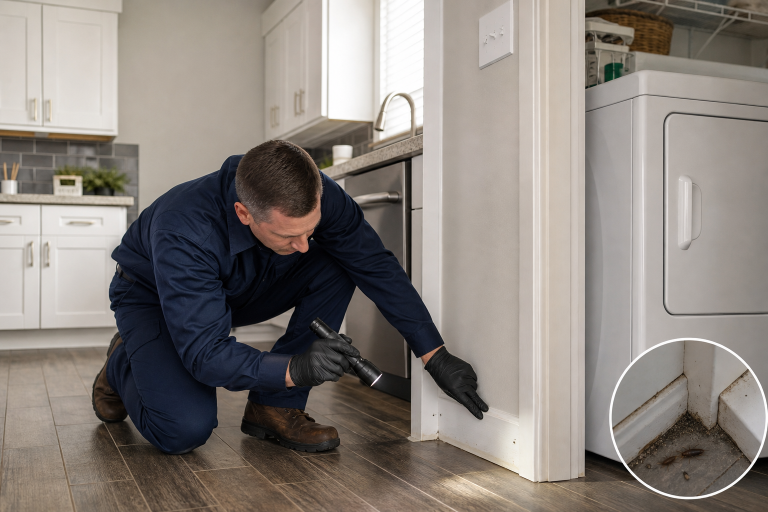
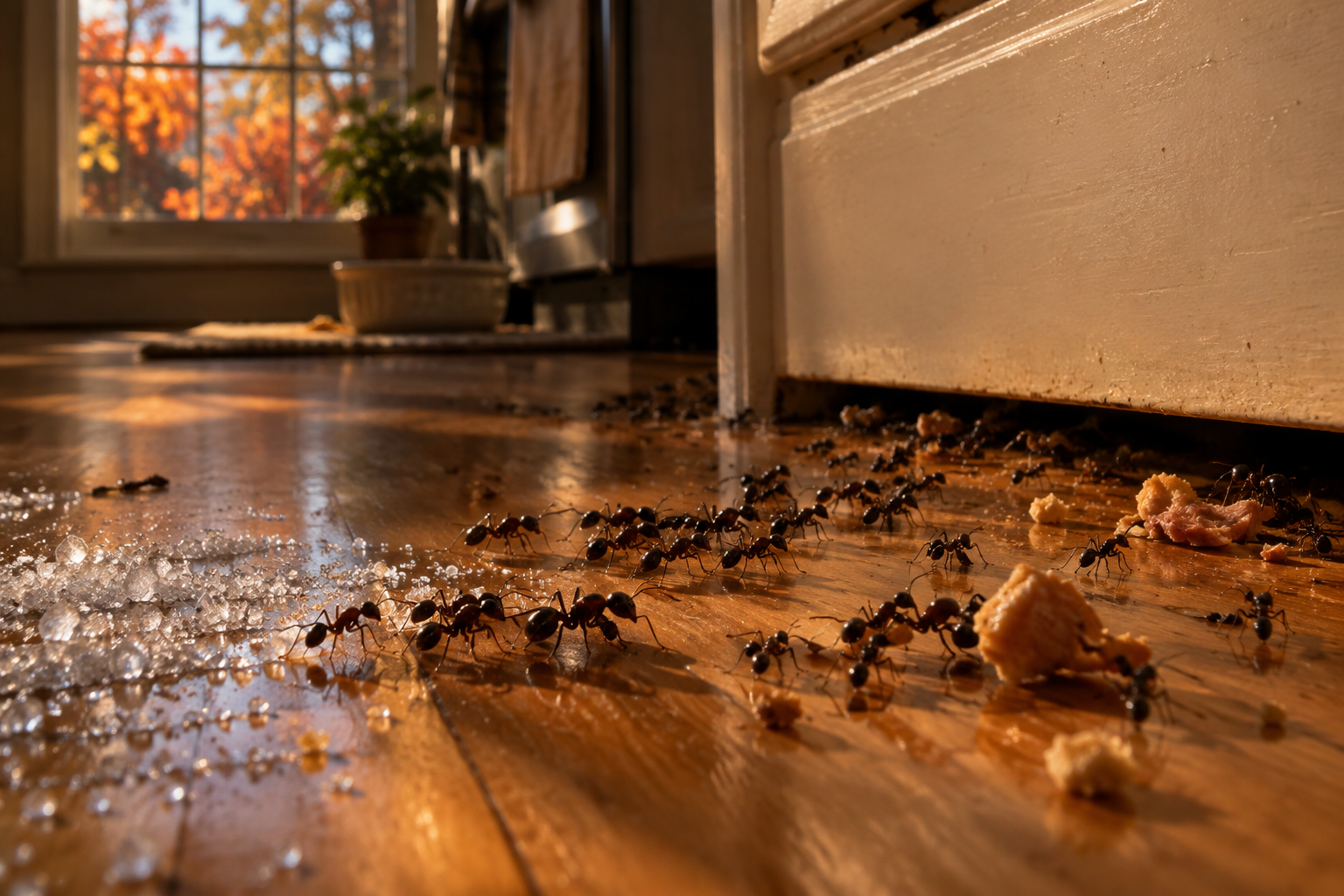
Ant workers use chemical trail signals to recruit other workers to a resource, according to University of Kentucky Entomology. A distinct line along a baseboard, counter edge, pipe opening, or window frame is useful evidence because it narrows the inspection to a route and nearby entry points.
Start with sanitation and access rather than repeatedly spraying the line. Store food in closed containers, remove pet-food residue after feeding when practical, clean spills, and look for gaps where pipes, cables, or trim meet the wall. If the trail returns after cleaning, the recurring route is the issue to address. Try a vinager and water mix, it typically masks the chemical trail left behind by worker ants. However, if you have baited a location don’t clean the chemical trail left by worker ants as the bait will be harder to consistently find.
For a closer look at lower-impact approaches and their limits, see Abodence’s guide to eco-friendly pest control.
What openings let autumn pests get into a house?
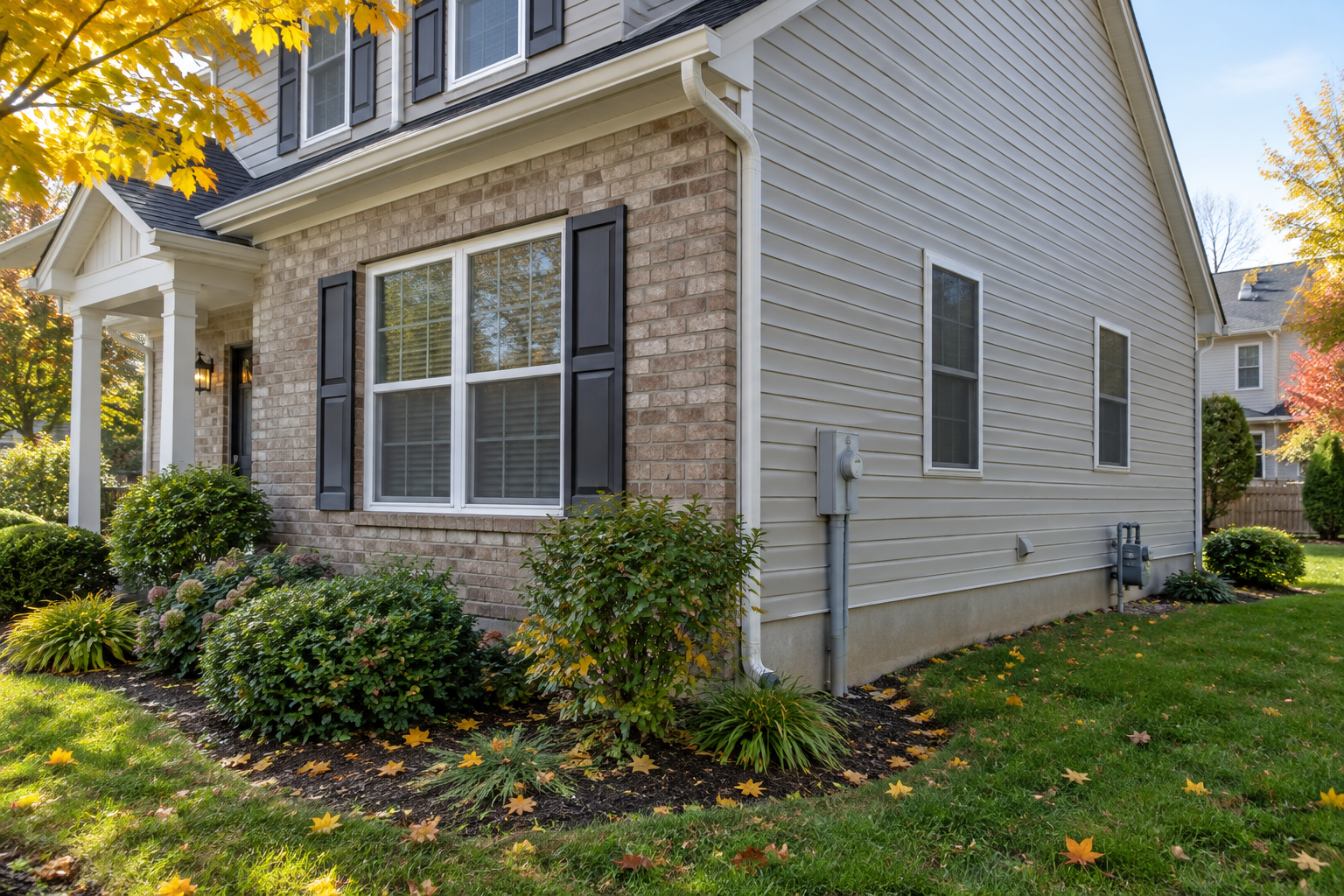
Small gaps at the building exterior are the usual access points. North Carolina State Extension’s Pest-Proofing Your Home guidance points homeowners to cracks in foundations and siding, openings around utility penetrations, damaged screens, gaps around doors and windows, and unsealed vents.
Focus on the transition points where two materials meet. Foundation-to-siding joints, window and door trim, hose bibs, dryer vents, cable entries, attic vents, garage-door edges, and roofline penetrations are more useful places to inspect than broad, intact wall surfaces. Gaps may be easy to miss because they sit behind shrubs, under decks, or above eye level.
Weathering can turn a previously tight detail into an entry route. Caulk can split or pull away, door sweeps can wear down, and screens can tear. Repairing a specific gap with caulk or a new seal is often more useful than treating an entire room after insects have already entered.
What prevention steps make the biggest difference before winter?
Exclusion, sanitation, and routine observation form the practical strategy for indoor pest prevention. The U.S. Environmental Protection Agency’s Integrated Pest Management principles place prevention and monitoring ahead of routine pesticide use, with control decisions based on the pest and the setting.
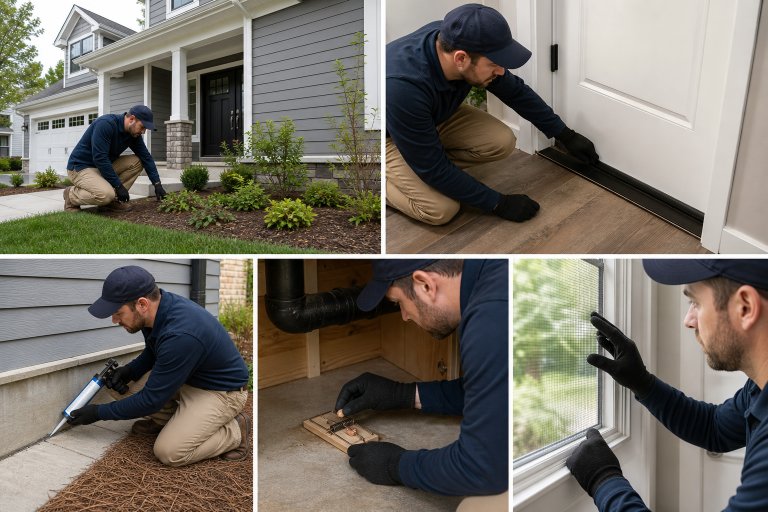
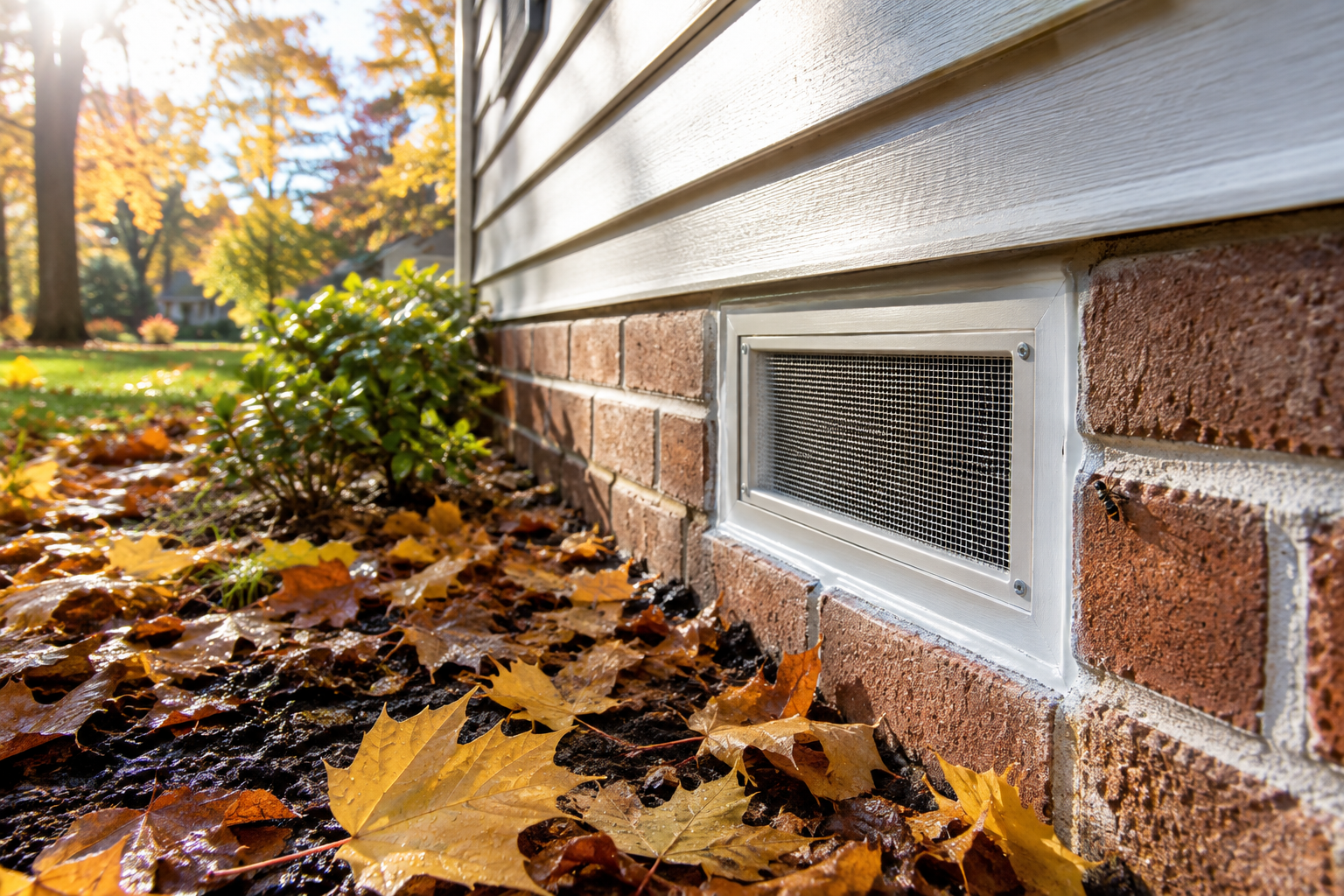
- Inspect exterior gaps in daylight. Check where utilities enter, where trim meets siding, and where doors, windows, foundation details, and vents connect to the structure.
- Repair damaged exclusion materials. Replace torn screens, renew failed sealant where appropriate, and correct worn sweeps or weatherstripping that leave a visible gap.
- Keep food sources contained. Clean crumbs, grease, and drink spills promptly, store dry goods in sealed containers, and avoid leaving accessible pet food debris overnight.
- Reduce exterior harborage. Keep fallen leaves, stacked materials, and dense vegetation from sitting directly against the foundation where practical.
- Track what recurs. Note the insect, room, season, and location. Repeated activity in one area is more useful to a pest professional than a general report that bugs are appearing indoors.
Screening and sealing are generally the simpler starting points to prevent fall invaders. Broad indoor pesticide application does not fix a gap in the siding or a failed door sweep, and it can make it harder to tell whether exclusion work solved the problem.
When is professional pest help worth considering?
Recurring activity from a consistent location, a large seasonal influx, or insects emerging from inaccessible wall and attic spaces are reasonable reasons to ask for a targeted assessment. A qualified provider can identify the insect, inspect the relevant exterior features, and explain whether the condition is seasonal entry, an indoor infestation, or a problem connected to moisture or structural gaps.
Ask for the proposed scope in writing. A useful assessment separates inspection, exclusion repairs, sanitation recommendations, monitoring, and any pesticide application. Vague promises to “treat the whole house” provide little information about which openings will be addressed or what result the treatment is intended to achieve.
Carpenter ants deserve separate attention when there are repeated sightings indoors or signs of activity near damp or damaged wood. Their presence should not be assumed to mean structural damage, but Abodence’s carpenter ant warning-sign guide explains the observations that justify a closer inspection.
FAQ
Do bugs enter homes in fall because they are cold?
Many species enter protected building spaces to overwinter, according to Penn State Extension, rather than simply seeking a warmer room. Wall voids, attics, and similar spaces offer cover from outdoor conditions, while indoor rooms may be reached later by accident.
Why are ants suddenly ignoring sugar bait or sweet spills?
Changing food interest can happen because ant workers collect different resources as colony needs and available foods change. University of Kentucky Entomology describes household ants as feeders on several food types, so a shift toward protein or grease does not identify one species or prove that autumn alone caused the change.
Can sealing gaps stop insects that are already inside walls?
Sealing exterior routes can prevent additional insects from entering, but insects already in protected voids may still emerge during warm periods. North Carolina State Extension’s pest-proofing guidance supports exclusion as a preventive measure, while the remaining indoor sightings may decline as the overwintering period ends.
Should a homeowner use indoor spray for every fall insect sighting?
Routine indoor spraying is rarely the first problem to solve when seasonal insects are entering through gaps. EPA integrated pest management guidance prioritizes prevention and monitoring, so identifying the entry route and correcting it is usually the more durable response.
If fall insects keep returning after basic cleaning and visible-gap repairs, request a targeted pest assessment that identifies the insect and the entry points before agreeing to a broader treatment plan. For a free, no-obligation discussion please call a listed specialist.
Sources: Penn State Extension, Fall Invaders; University of Kentucky Entomology, Ants; North Carolina State Extension, Pest-Proofing Your Home.