Window Replacement Warning Signs: Tactical Reasons That Guide Replacement
Window replacement warning signs usually show up as drafts, sticking, rot, broken seals, water intrusion, or locks that no longer work reliably. Those symptoms do not all mean the same thing, and some call for repair rather than full replacement. The useful question is whether the problem is limited to weatherstripping, hardware, or caulk, or whether the sash, frame, glass unit, or door slab itself has reached the point where replacement is the more practical fix.

Call for a free estimate:
According to the U.S. Department of Energy, air leaks around windows can often be reduced with caulk and weatherstripping, while upgrades or replacement may make sense when existing units are single-pane, badly damaged, or beyond effective repair. That distinction matters because a draft alone is not enough evidence to buy all new windows.
For doors, the same logic applies. A loose sweep or worn threshold can be a repair issue. A warped slab, soft frame, failed lock area, or recurring water damage usually points to replacement.
What are the clearest window replacement warning signs?
Visible damage, failed operation, and moisture problems are the strongest signs that a window is nearing the end of its useful service life. Cosmetic wear is one thing. Structural deterioration is another.
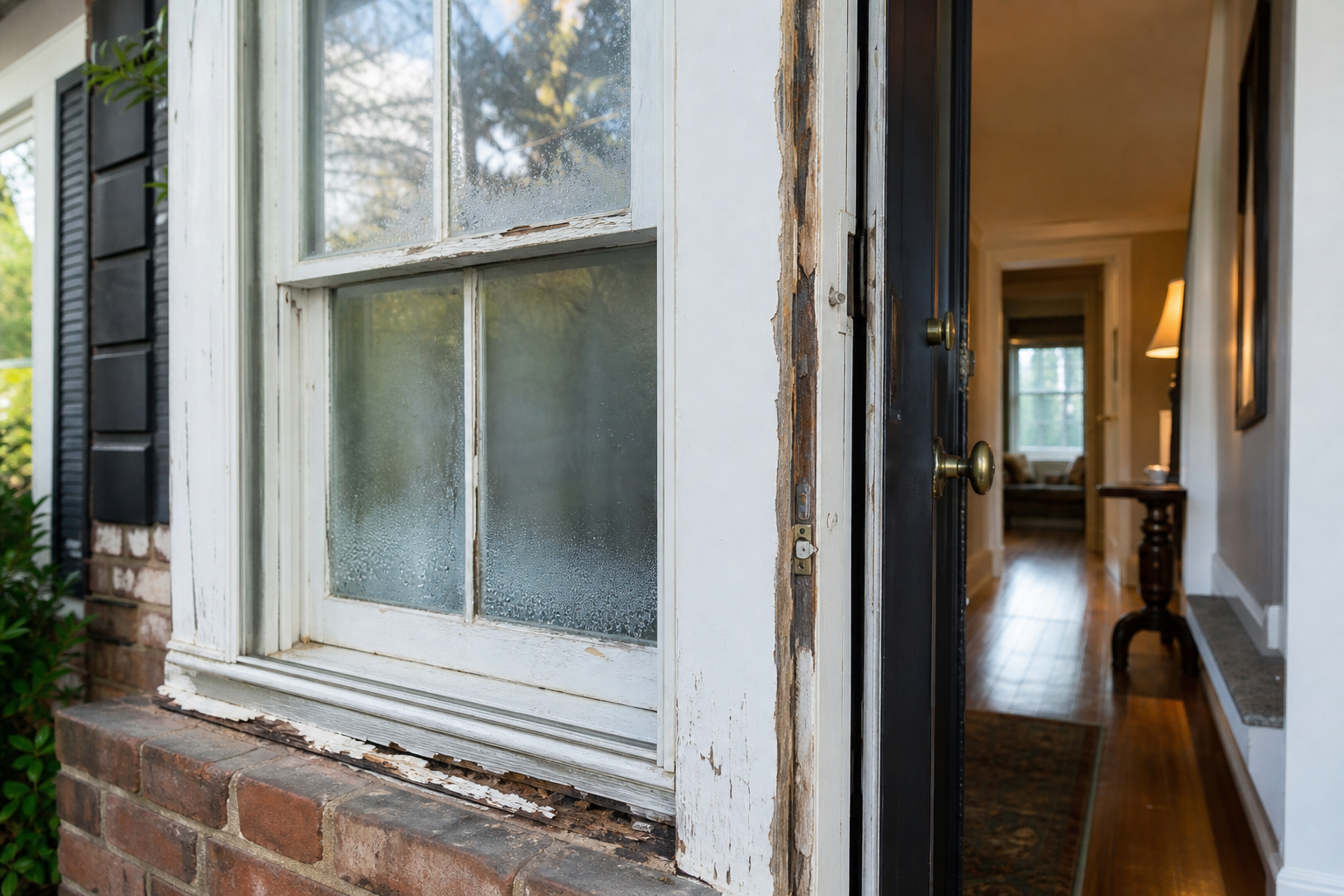
One of the clearest signs is rot in a wood sash or frame. The U.S. Environmental Protection Agency notes that disturbing painted surfaces in pre-1978 homes can create lead-related hazards, so older painted windows with peeling, damaged components should be evaluated carefully before repair work begins. If the wood is soft, crumbling, or no longer holds fasteners, patching is often temporary.
Another major sign is a failed insulating glass unit. When you see persistent fog or moisture between panes, the sealed glass unit has typically lost its seal. The National Fenestration Rating Council treats the glass unit and frame as a system. Once the insulated glass fails, the window may still open, but its thermal performance and clarity are compromised.
Windows that no longer open, close, or lock correctly also deserve attention. The issue may be paint buildup, balance failure, frame movement, or sash distortion. If hardware repair restores smooth operation, full replacement may be unnecessary. If the sash is out of square or the frame has shifted enough that locking points no longer align, the problem is deeper.
According to installation guidance from the American Architectural Manufacturers Association, now part of FGIA, windows are part of a larger wall-water-management system. Recurring leaks can come from failed perimeter sealing, flashing defects, or the unit itself. If the same opening leaks after proper sealing repairs, replacement with corrected installation details may be the better path.
When is a draft a repair issue instead of a replacement issue?
Air leakage can often be fixed with a targeted repair when the frame and sash are still sound. The Department of Energy specifically recommends air-sealing measures such as caulk for fixed joints and weatherstripping for movable components before assuming full replacement is necessary.
If you feel air around the edges of an otherwise solid window, the likely culprits are worn weatherstripping, cracked caulk, or minor gaps where trim meets the wall. If the draft comes through the meeting rails, a visibly warped sash, or a frame that has separated at joints, the repair may not hold for long.
Doors follow a similar pattern. A simple sweep replacement can solve air leakage at the bottom edge. A bowed slab, rotted jamb, or threshold that no longer supports a weather-tight seal is a different category of problem.
Homeowners dealing mainly with air leakage may want to read this guide to drafty window repair before deciding on replacement.
How can you tell if moisture means the window or door is failing?
Condensation on the room side of glass does not automatically mean the unit has failed, but water between panes or repeated leakage at the opening is a stronger replacement signal. Indoor humidity can cause temporary surface condensation even on good windows.
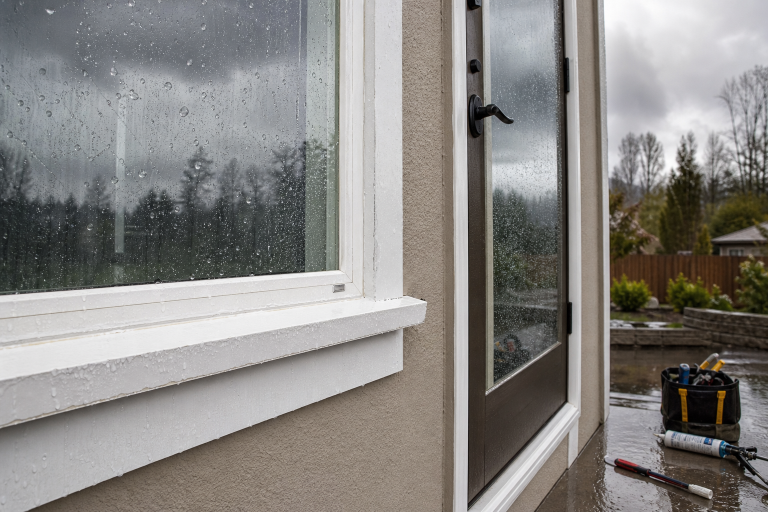
The more concerning signs are different. Fog trapped between panes usually indicates seal failure in insulated glass. Staining, bubbling paint, swollen trim, or soft drywall around the opening suggests water is getting where it should not. The U.S. Department of Energy explains that window performance depends on both the product and the installation, which is why moisture problems have to be traced to the unit, the surrounding flashing, or both.
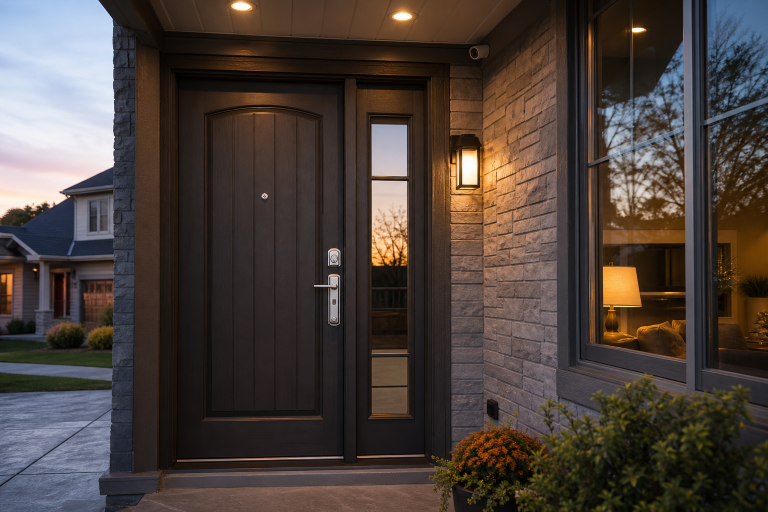
For exterior doors, darkened wood at the sill, soft jamb legs, or recurring puddling at the threshold are common warning signs. If the slab still fits and the damage is limited to a replaceable sweep or threshold cap, repair may be enough. If the frame is decayed or movement has opened gaps that keep returning, replacement is usually the cleaner fix.
What operating problems usually mean replacement is near?
Repeated sticking, sagging, or failure to latch often points to wear or distortion that goes beyond a simple repair. One hard-to-open window is a hardware problem until proven otherwise. Several windows with the same issue can suggest age-related failure across the house.
On double-hung windows, failed balances can make sashes drop or refuse to stay open. On casement windows, stripped operators or hinge wear can prevent smooth closing. The decision changes when the sash is warped, the corners have loosened, or the frame has shifted enough that replacement hardware will not solve alignment.
For doors, the warning signs include scraping at the floor, daylight at the latch side, latch bolts that miss the strike plate even after adjustment, and deadbolts that bind because the frame has moved. Seasonal movement can cause minor changes. Chronic misalignment that returns after repair usually means the opening or the door unit has degraded.
How do rot, corrosion, and material damage change the decision?
Structural material damage is one of the strongest reasons to replace rather than repair. Surface wear can be refinished. Deep deterioration usually cannot be reversed in a lasting way.
Wood windows and doors are especially vulnerable where paint has failed and water has reached end grain, joints, or sill areas. Once decay spreads into load-bearing or fastening areas, patches become short-term measures. Steel doors can rust at the bottom edge or around glazing frames. Fiberglass and vinyl can crack or deform, especially if the unit has been stressed by movement or poor installation.
Call for a free estimate:
If the damage is isolated to trim or brickmould, the window or door itself may still be serviceable. If the actual frame, sash, slab, or glazing system is compromised, replacement is usually more durable.
When do security problems mean a window or door should be replaced?
Locks that no longer engage securely, frames that have split at the hardware, and glass or sash damage near latching points are meaningful security concerns. Hardware-only failures can often be repaired. The surrounding material has to be sound for the repair to matter.
The International Residential Code, as published by the International Code Council, sets egress requirements for certain sleeping-room windows, and those requirements matter if an older unit has been painted shut, altered, or replaced improperly over time. A bedroom window that cannot open as intended is more than an inconvenience.
Entry doors deserve the same scrutiny. If the jamb is cracked where the strike plate mounts, if the lock area is crushed, or if the slab has warped enough to defeat the latch, replacement may be safer and more reliable than trying to reinforce failing material.
Homeowners focused on security details may also find this guide to strengthening doors and windows useful.
How do energy and comfort issues fit into the replacement decision?
Older single-pane units, damaged frames, and failed seals can all contribute to comfort problems, but comfort alone should be tied to a specific defect before you replace anything. Rooms that feel cold near the glass can result from poor window performance. They can also come from missing insulation, HVAC imbalance, or air leakage elsewhere.
ENERGY STAR states that certified replacement windows, doors, and skylights meet climate-specific performance criteria set by the program and can improve comfort and efficiency when replacing older, less efficient products. That does not mean every uncomfortable room needs new windows first. If the unit is in good condition and the main issue is perimeter leakage, targeted sealing may solve the problem for less.
What should a good replacement evaluation include?
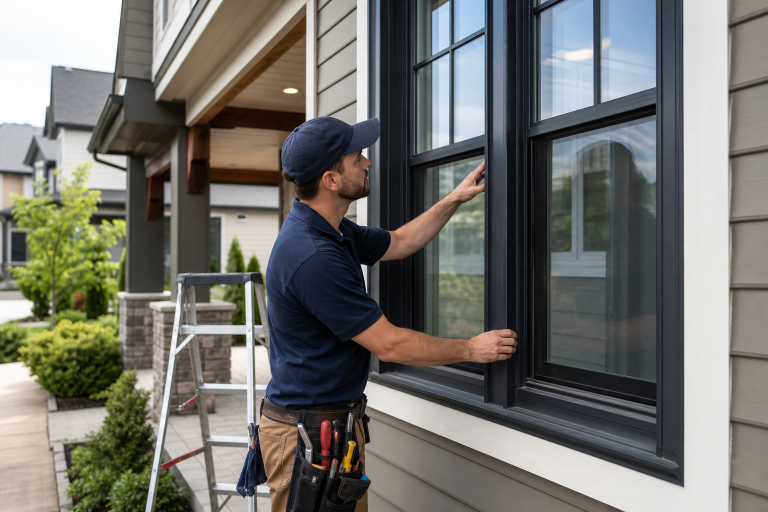
A useful evaluation should identify whether the failure is in the glass, sash, frame, hardware, or installation details, and it should explain why repair is or is not likely to last. Vague statements like “these are old” are not enough.
- Ask which specific component has failed: glass seal, balance, operator, sash, frame, threshold, jamb, or flashing.
- Ask whether a parts repair is still available and likely to hold.
- Ask whether the quote is for insert replacement or full-frame replacement, and why that scope fits the condition of the opening.
- Ask what visible signs support replacement, such as rot, out-of-square framing, failed insulated glass, or recurring leakage.
- Ask how interior and exterior trim, insulation, and flashing will be handled.
If you are comparing contractors, this installer vetting guide is a practical companion to the condition check itself.
FAQ
Can fog between window panes be repaired?
Sometimes the glass unit can be replaced without replacing the whole window, if the frame and sash are still in good condition and compatible replacement glass is available. If the sash or frame is also damaged, full replacement may be more practical.
Do drafty doors always need replacement?
Many drafty doors can be improved with a new sweep, weatherstripping, or threshold adjustment when the slab and frame are still sound. Replacement becomes more likely when warping, rot, or persistent misalignment prevents a reliable seal.
Is condensation on the inside of glass a sign of failure?
Interior surface condensation often points to indoor humidity conditions rather than a failed window. Moisture trapped between panes is the more reliable sign that the insulated glass seal has failed.
How do you know if a window leak is from installation or the window itself?
Recurring staining around the opening, failed perimeter sealant, and flashing problems often point to installation-related water management issues. Fog between panes or damage within the sash points more directly to the window unit itself, though both problems can exist at the same time.
When should a bedroom window be replaced for safety reasons?
A sleeping-room window should be evaluated promptly when it is painted shut, will not open fully, or no longer meets safe operation needs. Egress requirements under the residential code can make replacement necessary when repair will not restore proper function.
If you need help sorting out whether you are looking at a repair issue or a true replacement case, getting a written evaluation and quote from a qualified window and door professional is the practical next step. Please call a listed specialist for a free, no-obligation discussion.
Sources: National Fenestration Rating Council, FGIA, Pella published warranty terms, International Code Council, ENERGY STAR