Thermostat Benefits: The Upside of Upgrading Your HVAC Controls
Smart thermostats often provide better control over when your heating and cooling system runs, and for many homes that can mean lower energy use, steadier comfort, and fewer day-to-day adjustments at the wall.

Call for a free estimate:
A thermostat upgrade is often pitched as an automatic money saver. The more accurate answer is narrower and more useful. A smart or programmable thermostat can help when your schedule changes through the week, when the old thermostat is inaccurate or limited, or when your current settings are simply harder to manage than they should be. If your home already stays comfortable and you rarely change the temperature, the payoff may be smaller.
Smart controls matter, but they only work well when the equipment is properly sized, installed, and configured. If you are also weighing bigger HVAC decisions, Abodence has separate guides on choosing the right size HVAC unit and on variable-speed HVAC systems.
What are smart thermostat benefits?
The clearest advantages are scheduling, automatic temperature setbacks, remote access, and better visibility into system operation.
According to the U.S. Department of Energy, you can save as much as 10% a year on heating and cooling by turning your thermostat back 7 to 10 degrees Fahrenheit for 8 hours a day from its normal setting. That figure is tied to using setbacks correctly, not simply owning a newer thermostat. The same DOE guidance explains that programmable controls are most useful when they match your routine and are set up to reduce run time when you are asleep or away.
That is why a strong case for upgrading a thermostat is practical rather than flashy. A better thermostat makes an energy-saving routine easier to maintain and can reduce the need to remember schedules, change settings before bed, or return to a house that is too hot or too cold.
How can a smart or programmable thermostat reduce energy use?
Lower utility use usually comes from reducing unnecessary heating or cooling hours, not from making the equipment itself more efficient.
The ENERGY STAR smart thermostats program says certified smart thermostats are independently verified to save energy, with average savings of about 8% on heating and cooling, or roughly $50 per year. ENERGY STAR also notes that certified models must demonstrate savings through field data and meet usability and connectivity criteria.
A programmable thermostat can produce similar results if you actually use the schedule. A smart thermostat adds automation that can make that more realistic. Features such as occupancy-based changes, weather response, and phone-based control help some households stick with energy-saving settings that they would otherwise override or forget.
Still, the savings are not universal. Homes with someone present all day, households that already use disciplined manual changes, or systems that are rarely used may see less benefit.
When savings are more likely
Better results are more common when your home is empty for long parts of the day, when sleep schedules are consistent, or when family members often leave the thermostat at one setting around the clock. In those cases, automation closes the gap between what you meant to do and what actually happens.
When savings may be modest
Smaller gains are common if your temperature preferences stay nearly constant, if your climate is mild, or if a caregiver, remote worker, or pets keep the house occupied most of the time. The thermostat cannot create savings by itself if there is little run time to trim.
Are smart thermostat benefits mostly about convenience or comfort?
For many households, the day-to-day value is convenience first and comfort second, with energy savings following when the settings support it.
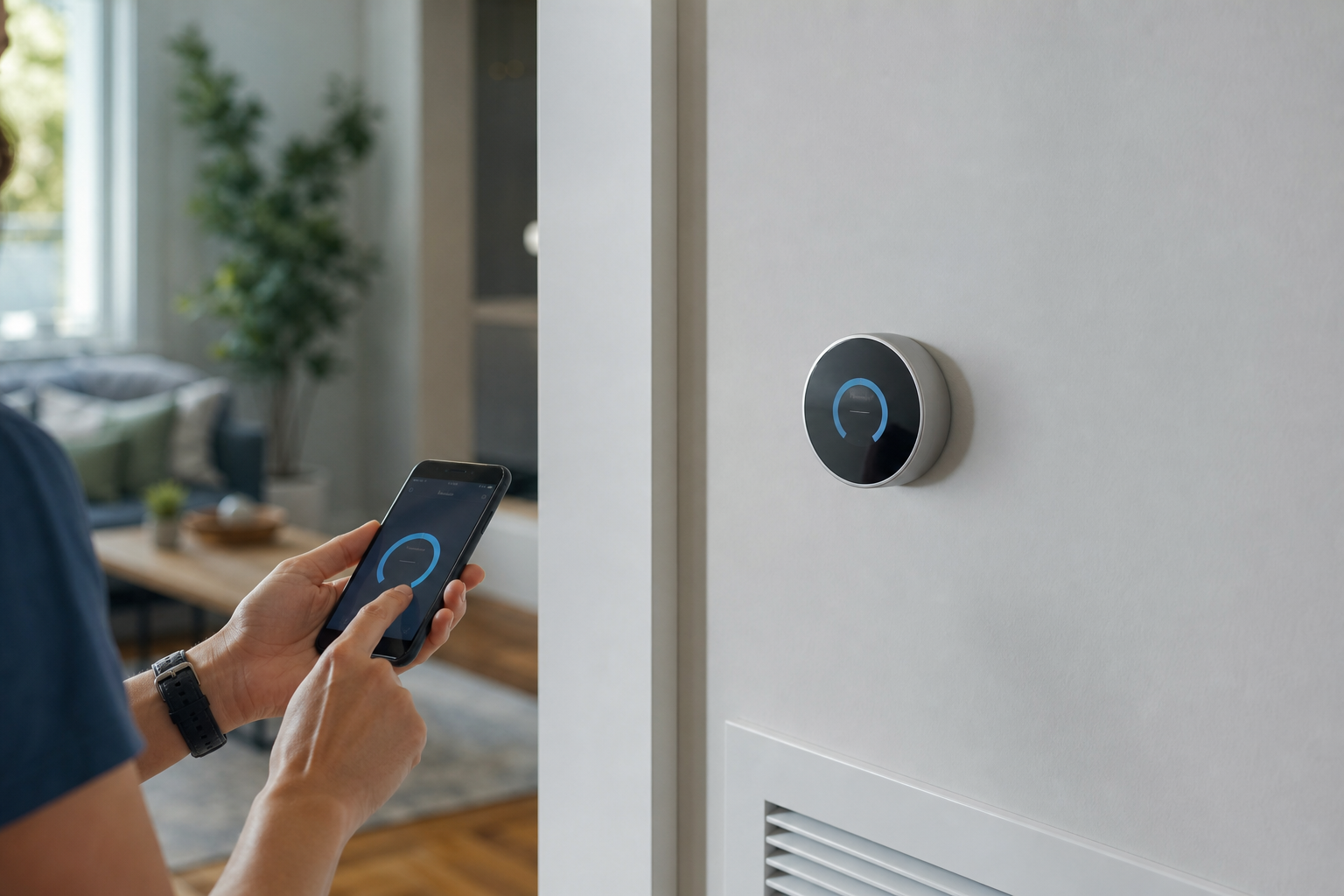
Remote control is the obvious example. If plans change, you can adjust the schedule from your phone instead of cooling or heating an empty house for hours. Some models also let you create temporary holds, vacation periods, and room-priority schedules without digging through a dense wall-menu interface.
Comfort can improve too, but the reason is often misunderstood. A thermostat does not increase the heating or cooling capacity of the equipment. What it can do is run the system in a more predictable way, reduce temperature swings caused by poor scheduling, and in some cases coordinate better with variable-speed or staged equipment so the home feels more even.
Which homes benefit most from a smart thermostat upgrade?
The best candidates are homes with changing schedules, high seasonal HVAC use, or an older thermostat that lacks flexible programming.
A home with two working adults, school schedules, and regular daytime vacancy is a strong fit. So is a household that travels often and wants an easier way to manage climate control. In colder or hotter regions, small control improvements can matter more because the system runs longer across the year.
Older single-stage systems can benefit from better scheduling just as much as newer equipment. On the other hand, homes with heat pumps, multi-stage systems, or variable-speed equipment may need a more careful thermostat match. The Air-Conditioning, Heating, and Refrigeration Institute, through AHRI system-matching guidance used across the trade, treats controls as part of a system rather than as a stand-alone gadget. In plain terms, compatibility matters.
What features matter when comparing smart thermostat benefits?
The more important features are compatibility, scheduling flexibility, clear energy reporting, and controls that you will actually use.
Start with system compatibility. A thermostat must match the type of HVAC equipment in the home, including whether you have a conventional furnace and AC setup, a heat pump, electric resistance backup heat, zoning, or multi-stage operation. The Consumer Reports thermostat buying guidance highlights compatibility and ease of use as primary selection factors, and that lines up with what manufacturer installation documents require.
Call for a free estimate:
After compatibility, look at how the schedule works. Some thermostats are best for fixed routines. Others are better for irregular weeks, geofencing, or occupancy sensing. A clean interface matters more than a long feature list if several people in the house will use it.
- System match: supports your exact heating and cooling setup
- Scheduling options: fixed schedule, flexible schedule, vacation mode, temporary holds
- Remote control: app access for changes away from home
- Energy reporting: run-time or trend data you can understand
- Sensor support: optional room sensors for homes with uneven temperatures
- Installer settings: accessible setup for staging, heat pump balance, and cycle behavior
Some features are nice to have, not essential. Voice assistant integration, broad smart-home links, and detailed automation routines are useful only if you will use them.
Can a smart thermostat help if your home has hot and cold spots?
It can help in some homes, but it will not fix duct design, insulation, airflow, or equipment sizing problems.
This is where sales language often gets fuzzy. If one bedroom is always warmer than the rest of the house, a thermostat with remote room sensors may improve how the system responds to occupied spaces. That can make comfort feel more balanced at certain times of day. It does not correct undersized duct runs, poor return air paths, leaky ducts, or a system that was selected without a proper load calculation.
According to the U.S. Department of Energy air ducts guidance, losses from forced-air duct systems can account for more than 30% of energy consumption for space conditioning, especially when ducts run through unconditioned spaces. In a house with duct problems, a thermostat upgrade may be worthwhile for control, but it should not be sold as the complete answer to uneven rooms.
If comfort problems are persistent, getting the system evaluated is the practical next step before spending more on accessories.
How much does it cost to upgrade to a smart or programmable thermostat?
According to Angi, roughly $100-300 for many programmable or entry smart models and about $250-500 or more installed for many smart thermostat projects is a realistic 2026 consumer range, depending on wiring, system type, and whether a new C-wire or adapter is needed.
For product pricing, manufacturer and major retailer listings in 2026 commonly place basic programmable thermostats near the low end and premium smart models above that. For installed pricing, Angi 2026 marketplace estimates commonly land in the mid-hundreds for straightforward swaps, with higher totals when compatibility issues or new wiring are involved. Those marketplace figures are useful for ballpark planning, but they are not a substitute for a written quote.
Ask for the installed price to spell out whether the thermostat itself is included, whether setup of app functions and schedules is included, and whether any wiring changes are expected. Vague quotes are common in small control upgrades because the hardware price is easy to show while the labor scope is left fuzzy.
Are there rebates or tax credits for smart thermostat upgrades?
Some homeowners can get utility rebates, but federal tax treatment depends on the specific product and program rules in effect for the year.
Many utility companies offer thermostat rebates through energy-efficiency programs, especially for ENERGY STAR certified models. Availability is local, and the amount can change during the year. The most reliable check is your utility or state energy program website before you buy.
Federal incentives are more limited and more conditional than many ads suggest. The IRS Energy Efficient Home Improvement Credit explains the current federal credit structure for qualifying home improvements. Thermostats are not a blanket qualifying item on their own under every scenario, so the safe approach is to verify the exact product category and documentation requirements before assuming a tax credit applies.
What mistakes do experts warn about with smart thermostat upgrades?
Some problems are buying features before checking compatibility, expecting the thermostat to solve system defects, and accepting a vague installation scope.
Those mistakes show up repeatedly in manufacturer support documents and trade guidance. A thermostat can only control what the HVAC system is capable of doing. If the wrong control logic is used on a heat pump, if staging is not configured correctly, or if occupancy features are set too aggressively for how you live, the result can be annoying rather than helpful.
- Skipping compatibility checks: especially risky with heat pumps, multi-stage systems, and proprietary communicating equipment
- Overbuying features: advanced automation has little value if nobody uses it
- Ignoring placement: a thermostat on a drafty wall or near direct sun can read the room poorly
- Assuming comfort issues are control issues: some problems belong to ductwork, insulation, or equipment sizing
- Accepting unclear quotes: setup, sensors, adapters, and wiring changes should be listed in writing
A simpler programmable thermostat is sometimes the better purchase. If you want dependable scheduling and nothing more, there is no rule that says a premium smart model is the right answer.
Should you choose a smart thermostat or a programmable thermostat?
A programmable thermostat is often enough if your routine is stable, while a smart thermostat makes more sense when your schedule changes often or remote control would solve a real problem.
Programmable models handle planned setbacks at a lower cost. Smart models add app control, occupancy logic, alerts, and often clearer setup. The choice comes down to how your household actually lives. A fixed-workweek household may do perfectly well with a simpler control. A home with rotating schedules, frequent travel, or multiple users tends to get more value from smart features.
If you are replacing HVAC equipment at the same time, ask the installer which thermostats are fully supported for that exact system. That is especially important with advanced equipment and communicating controls.
Call for a free estimate:
FAQ
Do smart thermostats always save money?
No. Savings are most likely when the thermostat reduces unnecessary run time through setbacks, scheduling, or occupancy features that fit how your household actually uses heating and cooling.
Is a smart thermostat worth it for an older HVAC system?
Yes, in many cases. Older single-stage systems can benefit from better scheduling and easier control, as long as the thermostat is compatible with the wiring and equipment type.
Can a programmable thermostat do the same job as a smart thermostat?
Yes, for homes with a consistent routine. A programmable model can deliver similar scheduling benefits if you set it correctly and leave the schedule in place.
Will a smart thermostat fix uneven temperatures in different rooms?
No, not by itself. Room sensors may improve how the system responds, but duct layout, insulation, airflow, and equipment sizing are often the underlying causes of hot and cold spots.
Do you need professional installation for a smart thermostat?
Not always, but professional installation is often the safer choice for heat pumps, multi-stage systems, or any setup where wiring and installer settings are unclear. The cost of a wrong setup can outweigh the savings from a DIY swap.
If you are comparing thermostat options or trying to decide whether a control upgrade will actually help your home, getting a written HVAC assessment can clarify the right next step without committing to a larger replacement project. Please call a listed specialist for a free, no-obligation discussion.
Sources: ecobee support and product documentation, Google Nest support and product documentation, Air-Conditioning, Heating, and Refrigeration Institute system-matching guidance, Consumer Reports thermostat buying guidance, Angi 2026 thermostat installation cost estimates