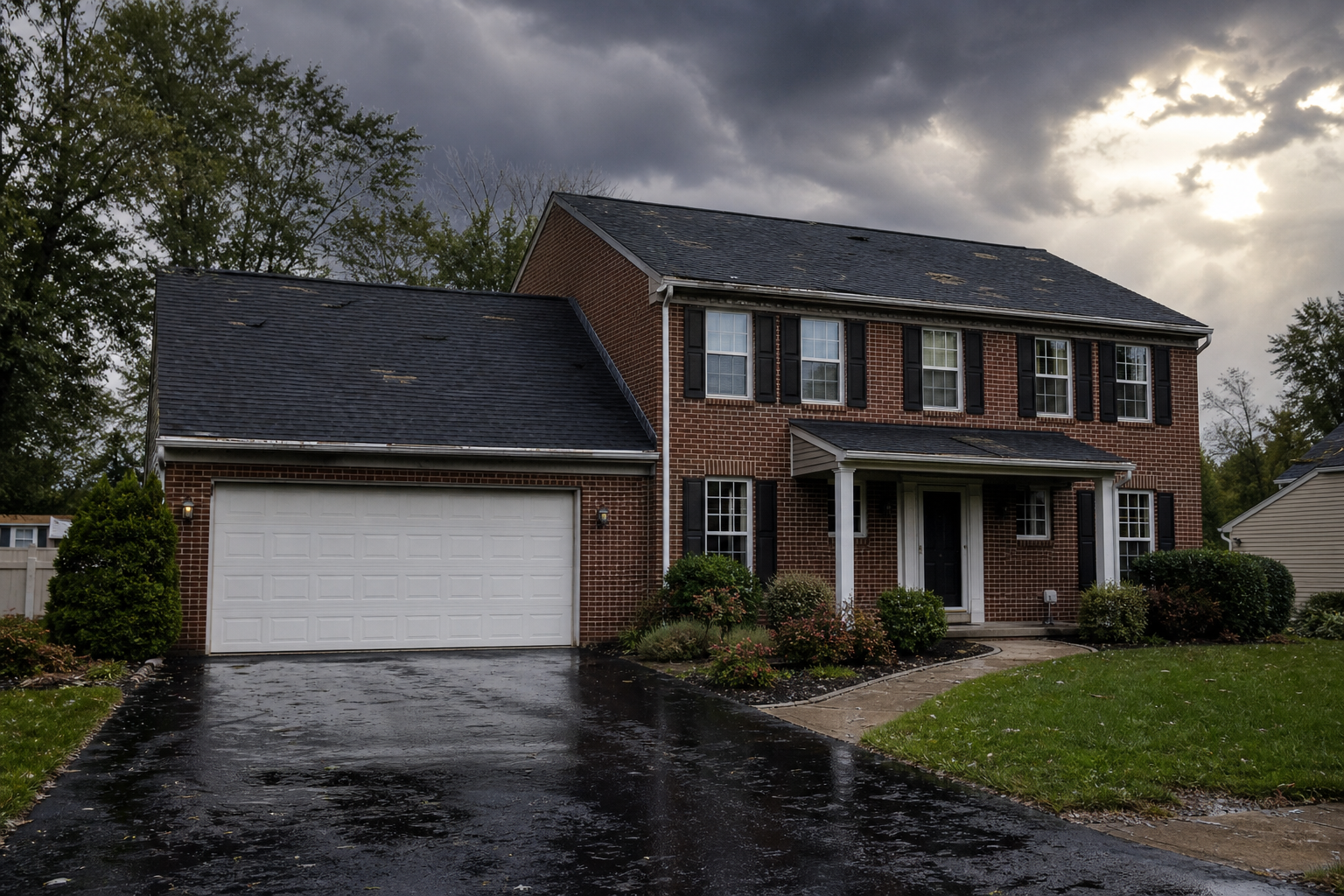
Roof Damage After Heavy Storms: Critical Signs to Check
Severe storms with 70+ mph gusts, rain and hail can cause visible damage, such as missing shingles or bent flashing, this destruction can usually be easily seen. However, storms also create less visible damage that can still let water in, but the leak may not show up until the next hard rain.

Call for a free estimate:
According to the National Weather Service’s thunderstorm safety guidance, severe thunderstorms can produce damaging winds and hail is one of the defining hazards of those storms. When gusts push past 70 mph, roof edges, ridge caps, flashing, gutters, and older shingles are often damaged.
For homeowners in storm prone areas, storm patterns matter because wind-driven rain, hail, and repeated storm cells can quickly turn a small roofing defect into recuring interior damage. They key is problem recognition, and the practical goal is not to diagnose every issue yourself. It is to recognize what likely happened, document what you can safely see, and know when a roofer should inspect the home before the next weather event.
What should you look for first after severe wind gusts and hail?
The first things worth checking are the parts most exposed to uplift and impact, including shingles, flashing, gutters, downspouts, roof penetrations, and the attic or ceilings inside the house.
Wind damage often starts at roof edges, eaves, rakes, and ridges because those areas take the strongest uplift forces. The Federal Emergency Management Agency explains in its residential wind guidance that roof coverings and edge details are especially vulnerable when wind gets under materials and pulls upward on them. A roof can lose only a few tabs or a small section of flashing and still be at risk for water entry.
From the ground, look for:
- Shingles lying in the yard or driveway
- Tabs that appear folded, creased, or out of line
- Metal flashing lifted away at chimneys, walls, or valleys
- Gutters pulling loose or filling with shingle granules
- Dents on metal vents, gutters, or downspouts that suggest hail impact
- Tree limbs on the roof or fresh debris concentrated in one area
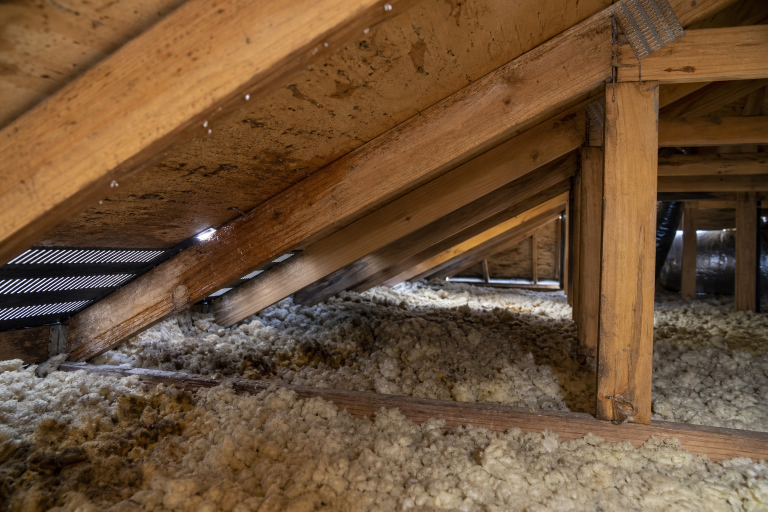
Inside the house, check ceilings, upper-floor walls, attic framing, and insulation for fresh staining, damp spots, or a musty odor that started after the storm. Leaks often show up away from the actual entry point because water can travel along roof decking or framing before it drips.
How do you tell whether shingles were actually damaged by wind?
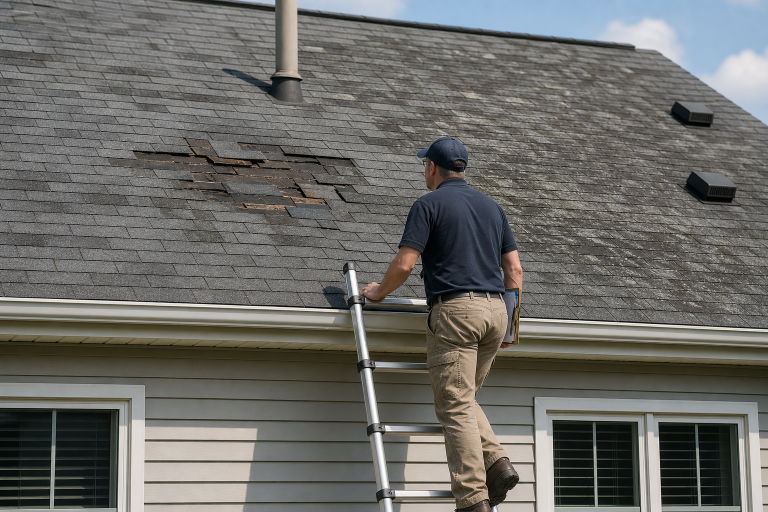
Wind-damaged shingles usually show displacement, creasing, torn seal strips, or tabs that no longer lie flat in the same plane as the surrounding roof.
Asphalt shingle manufacturers publish similar warning signs in their technical literature. CertainTeed, in its asphalt shingle application guidance, notes that shingles rely on sealant adhesion and correct fastening to resist blow-off. Once a tab lifts hard enough to crease, the shingle may not reseal reliably even if it settles back down. That is why a roof can look acceptable from the yard and still have functional damage.
Missing shingles
Bare roof deck or exposed underlayment is the clearest sign that the roofing system has been breached. Even a small exposed section can let in wind-driven rain, and the urgency goes up if more storms are expected.
Creased or lifted tabs
A horizontal or diagonal crease near the top of a shingle tab often means the tab bent backward in the wind. This type of damage can shorten the life of the shingle because the asphalt mat has been stressed and weakened.
Ridge cap damage
Caps at the roof peak take direct wind pressure. If they are cracked, shifted, or missing, water can enter at one of the most exposed parts of the roof system.
What hail damage on a roof actually matters?
Functional hail damage matters most when impact bruises or fractures the shingle surface, knocks off protective granules, or dents metal components enough to change how they shed water.
According to the Insurance Institute for Business & Home Safety hail guidance, hail can damage roofing by displacing granules, fracturing the mat, and denting soft metals that help confirm impact severity. On asphalt shingles, a bruise may feel soft under light pressure, and the granule loss can expose the asphalt layer beneath.
Not every mark is storm damage. Manufacturing variations, foot traffic, blistering, and normal wear can also leave surface marks. A roofer or qualified inspector should separate cosmetic wear from impact damage that affects service life or water shedding.
Dented metal accessories
Impacts on metal vents, flashing, gutters, and downspouts do not prove the shingles are compromised, but they are useful evidence that hail of meaningful size struck the home.
Granule loss in concentrated areas
Fresh granules collecting in gutters after a hail event can point to recent surface damage. Granule loss also occurs with aging, so the pattern matters. Storm-related loss is usually concentrated and tied to the storm date, not spread evenly as general wear.
Soft bruises or fractures
These are harder for a homeowner to verify safely from the ground. If hail was large enough to dent soft metals and neighbors are reporting claims, a professional roof inspection is the practical next step.
Which roof details commonly fail in storm conditions?
Flashing, seal points around penetrations, and roof edges are common weak spots when wind-driven rain follows strong gusts.
Call for a free estimate:
Homes often have a mix of roof features that create vulnerability during summer storms: masonry chimneys, plumbing vents, step flashing along sidewalls, valleys, skylights, and older gutter systems. The National Roofing Contractors Association, in homeowner guidance on roof systems, treats flashing as a critical water-control component because roofs do not rely on shingles alone to stay watertight.
Pay close attention to these areas:
- Chimney flashing: Look for metal pulled away from brick or sealant failure at counterflashing joints.
- Wall flashing: Step flashing at dormers and sidewalls can lift or separate under wind pressure.
- Valleys: Debris impact or lifted metal can interrupt water flow where roof sections meet.
- Pipe boots: Rubber boots can crack, and metal collars can loosen around vent penetrations.
- Drip edge and fascia: Edge metal can bend or detach, which leaves the roof perimeter more exposed.
If your roof is older, a storm may reveal a preexisting weak point rather than create a brand-new failure. That distinction matters for repair scope and possibly insurance or warranty claims, but not for your next step. A problem that now leaks still needs prompt attention.
Why do leaks sometimes show up only after the next rain?
Delayed leaks happen because storm damage can break the roof system without creating an immediate interior drip.
Water may first enter under a lifted shingle, damaged ridge cap, or loosened flashing, then travel along underlayment, decking, or rafters before reaching a visible ceiling area. The next storm often supplies enough sustained rain to reveal what the first storm damaged.
According to the International Association of Certified Home Inspectors, inspectors look for staining, active moisture signs, and insulation changes because roof leaks often become visible in attic spaces before they are obvious in living areas.
That is why an attic check after a severe storm can be more useful than waiting for a ceiling stain. If you want a deeper look at moisture clues, Abodence also covers attic moisture problems and warning signs.
What can you safely inspect yourself, and what should a roofer handle?
Ground-level observations and indoor checks are reasonable for a homeowner, but walking a storm-damaged roof is a job for a qualified roofing professional.
The Occupational Safety and Health Administration states in its fall protection guidance that falls remain a leading construction hazard, and residential roofs become more dangerous when wet, debris-covered, steep, or structurally compromised. After hail and high winds, those conditions can exist even when the surface looks stable.
Safe homeowner checks usually include photos from the yard, notes about the storm date and time, interior water signs, and visible debris or impact marks on exterior components. Binoculars or a drone can help you spot lifted tabs, displaced ridge caps, or bent flashing without leaving the ground.
What should you document for a damage claim or repair quote?
Clear photos, a storm timeline, and written notes about what changed after the event give you the most useful record for both repair decisions and insurance conversations.
Start with wide photos of each roof slope from the ground, then closer shots of any visible shingle loss, gutter dents, flashing displacement, fallen branches, and interior stains. Note the date of the storm, the first time you noticed damage, and whether water entered the house.
It also helps to gather:
- Your roof age, if known
- The shingle brand and color, if known
- Any prior roof repair records
- Photos from before the storm, if you have them
- A copy of your roofing warranty, if still active
Warranty terms can affect what is covered and what documentation a manufacturer may require. Abodence explains the basics in roof warranty terms explained.
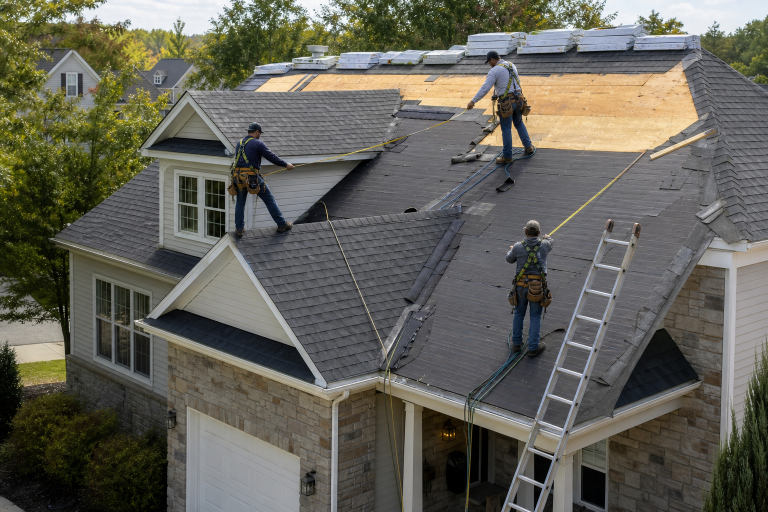
When you request quotes, ask each contractor to specify whether the scope is a spot repair, partial section replacement, or full replacement recommendation. Vague language is where confusion starts. A useful quote should identify the damaged components, the repair method, and whether matching materials are available.
How do you know whether the roof needs a repair or a full replacement?
Localized damage on a newer roof often points to repair, while widespread wind uplift, multiple compromised slopes, or significant hail bruising can justify replacement.
The deciding factors are usually the extent of the damaged area, the age and condition of the existing roof, whether replacement shingles can be matched, and whether the surrounding materials remain serviceable. A roof does not need full replacement just because a storm hit it. If damage is limited to one section and the rest of the system is in sound condition, a targeted repair may be the smarter option.
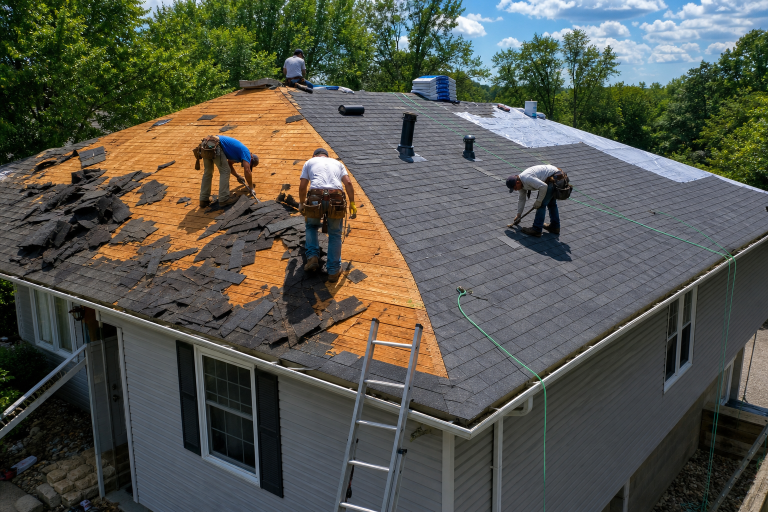
On the other hand, broad creasing across many tabs, repeated edge failures, an already aging roof, or hail damage spread across multiple elevations can can support a replacement decision. If you need context on how roofing systems differ by lifespan and warranty structure, see Abodence on roofing materials compared.
Call for a free estimate:
A contractor should explain why the proposed scope matches the observed damage. If the recommendation jumps straight to full replacement without documenting the failed areas, ask for a clearer written basis.
What mistakes do homeowners make after a major wind and hail event?
The most common mistakes are waiting for visible interior leaks, accepting a vague inspection summary, or focusing only on shingles while missing flashing and edge details.
Another common problem is assuming the roof is fine because no shingles are in the yard. Wind can break seal strips or crease tabs without blowing the pieces off. Hail can also bruise shingles in ways that do not stand out from the driveway.
Temporary tarping has a place when active water entry is happening, but it is not a substitute for identifying the failed roof component. If water is already coming in, Abodence covers immediate containment steps in what to do right now for an urgent roof leak.
One more mistake is letting a quote be too general in scope or details. Terms like “storm damage repair as needed” do not tell you what will actually be removed, replaced, or reflashed.
FAQ
Can a roof leak days after a storm instead of right away?
Yes, a delayed leak is common when wind or hail damages the roof covering but the first storm does not produce enough follow-up water to show inside. The next rain can expose a lifted shingle, damaged flashing joint, or compromised ridge area.
Does hail always leave obvious marks you can see from the ground?
No, meaningful hail damage is often subtle from the yard. Dents on metal accessories may be visible first, while bruising or granule loss on shingles usually needs closer inspection.
Should you get a roof inspection if there are no missing shingles?
Yes, an inspection can still be worthwhile after 70 mph gusts and hail because wind damage often appears as creasing, lifted tabs, or loosened flashing rather than complete shingle loss. Those problems may not leak until the next storm.
How soon should a storm-damaged roof be checked?
As soon as conditions are safe, the roof should be documented from the ground and inspected professionally if any signs of damage appear. Faster review is especially important when more rain is in the forecast.
If your home has suffere damage and you are seeing any of these signs, getting a written roof inspection and repair scope is the practical next step. Please call one of the service professionals listed for a free, no-obligation discussion.
Sources: CertainTeed asphalt shingle application instructions, National Roofing Contractors Association homeowner roof system guidance, International Association of Certified Home Inspectors attic inspection guidance