Pest Entry Point Exclusions: Proven Ways to Keep Bugs and Rodents Out
Focus Keyword: pest entry point sealing
Sealing entry points where pests gain access to a home is one of the most effective ways to reduce the chance that insects and rodents move into the residence in the first place. If pests cannot get through gaps around doors, utility lines, vents, roofs, and foundations, you are dealing with the cause of the problem, not just the pests you happen to see today.
That approach lines up with federal guidance. According to the U.S. Environmental Protection Agency’s Integrated Pest Management principles, preventing pests by blocking access, removing food and water sources, and fixing conditions that attract them is a core part of effective control. For homeowners, sealing openings is usually the most practical prevention step because it lowers the number of places pests can enter again after treatment.
Why does entry point sealing matter so much?
Blocking access works because many household pests rely on tiny openings that are easy to miss during normal cleaning or maintenance. Mice can squeeze through very small gaps, and the Centers for Disease Control and Prevention advises sealing holes and gaps inside and outside the home as part of rodent control.
Once a route is open, the same opening can serve multiple pests over time. A loose door sweep may let in ants in warm weather, then allow crickets or mice in later. A gap around a pipe can admit cockroaches, then become a moisture path that makes the area more attractive to other pests.
Sealing also helps you avoid over-treating symptoms. If the real issue is a utility penetration behind the kitchen sink, repeated sprays in the room may not solve much for long.
Where do pests usually get into a house?
Most access points are found where one building material meets another, or where something passes through the exterior shell of the house. The National Pest Management Association identifies common access areas such as cracks in foundations, gaps around utility entries, damaged screens, roof openings, and spaces around doors and windows.
Doors, thresholds, and garage edges
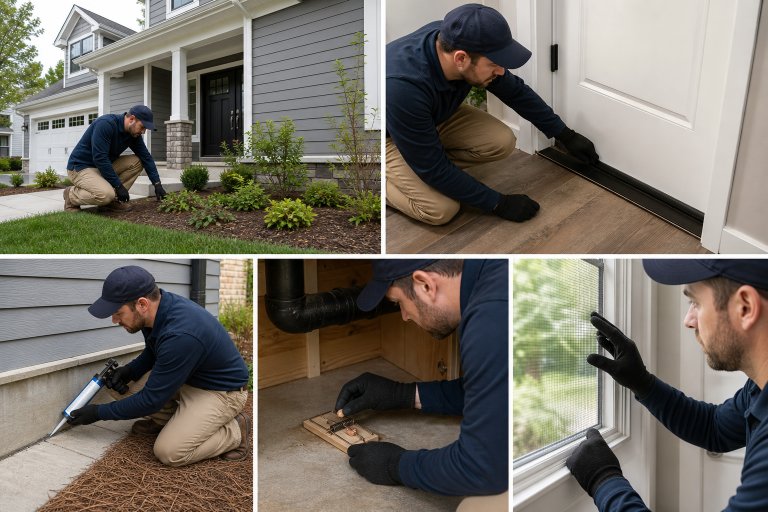
Light showing under an exterior door is a common clue that the seal has failed. Worn sweeps, warped thresholds, and side gaps around the jamb can admit crawling insects and, in some cases, rodents.
Garage doors deserve the same attention. The bottom seal often hardens, tears, or leaves an uneven edge against the slab, especially if the concrete has settled.
Window frames and screens
Failed caulk joints, loose trim, and torn screens create easy access around windows. Older wood windows are especially likely to have small cracks at corners and joints, though newer units can still develop gaps where trim meets siding.
Utility penetrations
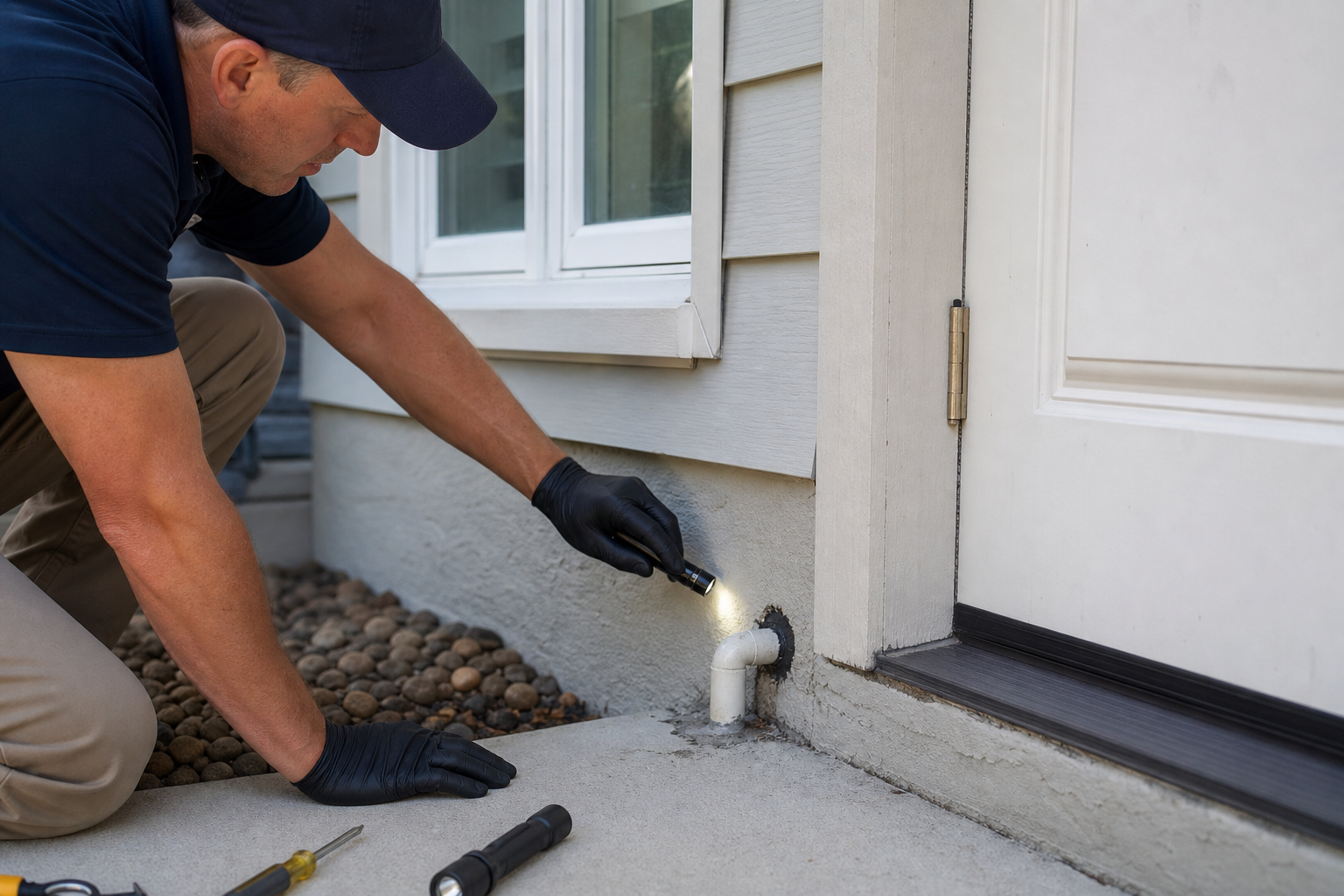
Openings around cable lines, hose bibs, refrigerant lines, gas lines, and electrical conduit are some of the most overlooked pest routes. Installers often leave a rough annular space, meaning the ring-shaped gap around the pipe or line, and that space may never get sealed properly.
Foundation and siding transitions
Cracks in masonry, gaps where siding meets brick, and openings at the base of the wall are all worth checking. According to the U.S. Department of Energy guide to air sealing your home, penetrations and joints in the building shell are common leakage points. Air leaks and pest entry points often overlap, which is why the same inspection can reveal both problems.
Rooflines, soffits, and attic vents
Loose flashing, damaged soffits, uncapped roof penetrations, and broken vent screens can allow insects, birds, squirrels, and bats to enter upper parts of the house. If you are already dealing with damp insulation or musty attic conditions, related issues may show up in areas discussed in this attic moisture guide.
What materials work best for pest entry point sealing?
The right seal depends on the size of the gap, the building material around it, and whether pests are likely to chew through it. One product does not fit every opening.
Use caulk for small, stable gaps
Paintable exterior sealant works well where trim, siding, and frames have narrow joints that do not need structural repair. For many exterior joints, manufacturers such as GE Sealants and DAP publish product guidance for weather-resistant sealing around windows, doors, and siding.
Caulk is best when the gap is small and the surrounding materials are in good condition. It is not a substitute for replacing rotted trim, failed flashing, or missing screen.
Use expanding foam carefully around penetrations
Low-expansion foam can fill irregular spaces around pipes and wiring where a neat caulk bead is hard to apply. Manufacturers such as GREAT STUFF note specific products for gaps and cracks, with separate products for windows and doors where too much expansion can distort frames.
Foam fills space well, but exposed foam is not ideal everywhere. Sunlight can degrade some products, and rodents may chew through foam if it is used alone in vulnerable spots.
Use metal mesh or hardware cloth where chewing is likely
More durable exclusion usually comes from combining a filler with a chew-resistant barrier. The CDC recommends using materials such as steel wool with caulk, and many pest professionals prefer copper mesh or hardware cloth for longer-lasting rodent exclusion in larger openings.
This is where cheaper is not better. A neat bead of sealant over a large rodent gap often looks finished but fails quickly if the opening needed metal reinforcement first.
Use door sweeps and weatherstripping for moving parts
Flexible components belong at doors and operable windows because rigid sealants will crack or interfere with movement. The International Association of Certified Home Inspectors notes that weatherstripping and door seals are standard parts of controlling unwanted air movement around openings, and the same components help close pest routes at those edges.
Which areas should you inspect first?
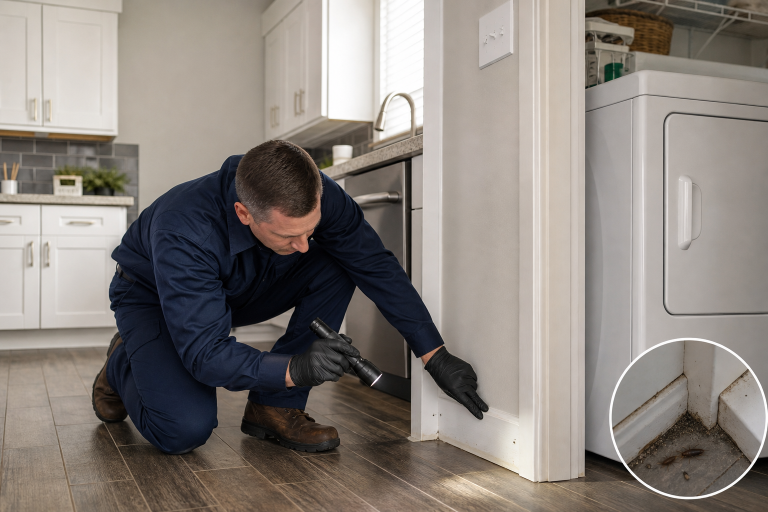
The best first targets are the openings closest to where activity keeps showing up indoors. If ants appear around a kitchen sink, begin with plumbing penetrations in the sink base and the exterior wall behind that area. If you hear scratching above a bedroom ceiling, inspect roofline and attic access points before spending time on lower-level trim.
A simple outside-in inspection usually finds the highest-value fixes fastest.
- Front, back, and side doors, including thresholds and sweeps
- Garage door bottom seal and side weatherstripping
- Pipe, wire, cable, and hose penetrations
- Window screens, frame joints, and trim gaps
- Foundation cracks and slab-edge gaps
- Attic vents, soffits, roof flashing, and chimney intersections
- Dryer, bath fan, and crawlspace vent covers
If you are trying to connect sealing work with a broader pest plan, this related pest control cost guide can help you compare what exclusion work may be bundled into a service quote.
What mistakes make pest entry point sealing less effective?
The most common failure is sealing the visible gap while missing the larger route nearby. A homeowner may caulk around an indoor baseboard crack, for example, while the real access point is the unsealed pipe chase in the cabinet next to it.
Another frequent problem is using the wrong material for the opening.
Sealing over damage instead of repairing it
Rotten wood, loose siding, failed mortar, and bent vent covers need repair or replacement, not just filler. Sealant cannot restore strength where the assembly itself has failed.
Using foam alone in rodent-prone spots
Soft filler without a tougher backing is often a short-term patch when mice or rats are involved. Exclusion contractors commonly pair mesh and sealant because the combination addresses both the shape of the gap and the need for resistance.
Blocking ventilation that should stay open
Screens and pest-resistant covers are appropriate at vents. Fully sealing an opening that is designed for combustion air, attic ventilation, or dryer exhaust is a different issue and can create performance or safety problems. The International Residential Code venting provisions require exhaust systems such as dryer ducts to terminate outdoors, which means the goal is a proper exterior cover, not closure of the vent itself.
Ignoring moisture conditions
Leaking hose bibs, condensation, and drainage issues can keep drawing pests back even after openings are sealed. Water management belongs in the same plan because damp areas support recurring activity.
Can you do pest entry point sealing yourself, or is a pro better?
Small, visible gaps around doors, trim, and simple utility penetrations are often reasonable DIY work if you can reach them safely and choose the correct material. Replacing a torn door sweep or sealing a narrow trim joint is straightforward compared with hidden wall voids, roof access points, or active rodent entry in an attic.
Professional help makes more sense when the opening is high, concealed, structurally damaged, or part of a larger infestation pattern.
That includes situations where pests are entering around roofing, soffits, chimney flashing, crawlspace vents, or inside wall cavities. It also includes cases where you can hear animals in the structure, because exclusion may require one-way devices, repairs, and follow-up inspection rather than simple closure.
How much does pest entry point sealing usually cost?
Minor sealing work can fall under a basic service visit, while larger exclusion projects often run from a few hundred dollars into the low thousands depending on the number of openings, height, and repair scope. For 2026 consumer pricing, Angi lists rodent exclusion around $200 to $600 for many projects, with more extensive work costing more, and HomeAdvisor publishes similar broad ranges for pest exclusion and sealing-related repairs.
Those figures are only rough planning numbers. Cost varies most by whether the work is limited to sealants and sweeps, or expands into carpentry, vent replacement, crawlspace work, or roof-edge repairs.
If a quote is vague, ask for the exact openings to be sealed, the materials to be used, and whether damaged components are being repaired or only covered.
What should a good pest exclusion quote include?
A useful quote should identify each target area, the material planned for that area, and any repair work that falls outside basic sealing. You should be able to tell the difference between exclusion, treatment, and building repair before you approve the job.
- A list of the specific openings or building sections to be addressed
- The sealing method for each area, such as caulk, metal mesh, hardware cloth, or new door sweeps
- Any excluded work, such as rotten trim replacement or roof repair
- Whether follow-up inspection is included
- Any warranty terms for the exclusion work itself
Watch for broad phrases such as “seal all entry points” without a map, photos, or written scope. That wording can sound complete while leaving room for disagreement later.
How do you keep sealed entry points from reopening?
A yearly exterior check catches most failures before they turn into another pest problem. Sealants shrink, sweeps wear out, screens tear, and wood trim moves with weather exposure.
Spring and fall are practical times to inspect because you can combine the walkaround with other home maintenance. Pay special attention after siding work, cable installation, HVAC replacement, or roof repairs, since new penetrations and disturbed trim often create fresh gaps.
Homes with recurring insect pressure near wet areas also benefit from fixing drainage and leak issues at the same time. If a bathroom or plumbing leak may be contributing to the conditions pests prefer, related warning signs are covered in this guide to leaking showers and tubs.
FAQ
Does pest entry point sealing really work?
Yes, sealing access routes is a core part of effective pest prevention when it is paired with sanitation, moisture control, and targeted treatment where needed. EPA Integrated Pest Management guidance supports prevention-first steps that remove the conditions pests use to survive and enter.
What is the most common place pests get in?
Utility penetrations, door bottoms, damaged screens, and gaps at foundations and rooflines are among the most common access points identified by pest industry guidance. The exact weak spot depends on the pest and the age and condition of the home.
Should every crack around the house be sealed?
No, the better approach is to seal true openings in the exterior shell while preserving designed drainage and ventilation paths. Vents, for example, usually need proper covers or screens rather than being closed off completely.
How often should pest exclusion be checked?
Most homes benefit from an exterior inspection once a year and after any major repair or installation that penetrates walls or roofing. Higher-risk homes, especially older homes or homes near heavy vegetation, may need more frequent checks.
If you want help identifying the openings that matter most, getting a written pest exclusion assessment is a practical next step. Call one of the specialists listed here, for a no-obligation discussion.
Sources: National Pest Management Association, GE Sealants, DAP, GREAT STUFF, International Association of Certified Home Inspectors, Angi, HomeAdvisor