Window Installer Research Made Easy: How to Vet Installers Before You Buy
Installer research should start before you compare prices, because the installer affects code compliance, warranty coverage, air leakage, and the long-term performance of the product you buy.

Call for a free estimate:
If you are replacing windows or exterior doors, the sales process can blur together fast. Product lines, glass packages, frame materials, financing offers, and installation methods often show up in the same conversation. The practical way to sort it out is to separate the installer from the product first. A good-looking window is not enough if the scope is vague, the labor warranty is thin, or the company cannot show the credentials your state or local jurisdiction requires.
According to the U.S. Department of Energy, heat gain and heat loss through windows are responsible for 25% to 30% of residential heating and cooling energy use, which is why both product selection and proper installation matter. For labels and performance ratings, the National Fenestration Rating Council explains that window labels provide standardized ratings such as U-factor and Solar Heat Gain Coefficient, giving you a consistent basis for comparison across brands.
This article focuses on how to research the company doing the work, what documents to ask for, and how to spot a quote that looks complete on the surface but leaves expensive details out.
What should you check before you let any installer quote the job?
The first screen is licensing, insurance, and whether the company can clearly state who is responsible for permits, measurements, installation, and warranty service.
State rules vary, so the exact license you need to verify depends on where you live. In many states, window and door replacement falls under a home improvement or residential contractor license. Your state contractor licensing board or consumer protection agency is the right place to verify whether the business is active, whether the license classification fits the work, and whether there is a public disciplinary history. If the company says a license is unnecessary, confirm that independently before moving forward.
Insurance matters for a simpler reason. You want proof of general liability coverage and, where required, workers’ compensation coverage. Ask for certificates that show the legal business name. A quote from one entity and insurance from another deserves clarification before you sign anything.
It also helps to confirm whether the company uses employees, subcontractors, or a mix of both. That is not automatically a problem either way. What matters is whether the contract says who supervises the work and who handles callbacks if trim, flashing, or operation issues show up after installation.
Before the estimate appointment, read up on permit basics so you know what questions to ask. Abodence covers that in this homeowner guide to window and door permit requirements.
How do you verify that the products being sold are actually comparable?
The cleanest way to compare products is to use standardized labels, exact model information, and the written warranty instead of relying on broad claims about efficiency or quality.
NFRC labels are useful because they give you the same core performance categories across products, including U-factor, which measures how well the window prevents heat from escaping, and Solar Heat Gain Coefficient, which measures how much solar heat comes through the glass. ENERGY STAR explains that qualification levels are climate-zone based, so a product that qualifies in one region may not be the right fit in another. According to ENERGY STAR, certified windows, doors, and skylights are independently verified and must meet performance requirements for the climate zone where they are sold.
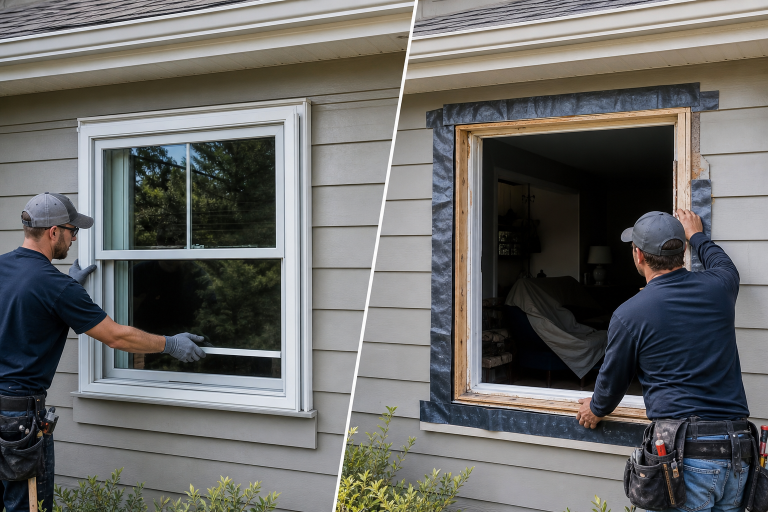
Ask each bidder for the exact product series, specific model, frame material, glass package, spacer system if specified, and whether the quote is for a full-frame replacement or an insert replacement. Those are not interchangeable scopes. Full-frame work removes the entire existing window unit to the rough opening. Insert replacement keeps the existing frame if it is sound and square. One method is not always better. The right choice depends on the condition of the current frame, the need to address water damage, and whether you want to preserve or replace interior and exterior trim.
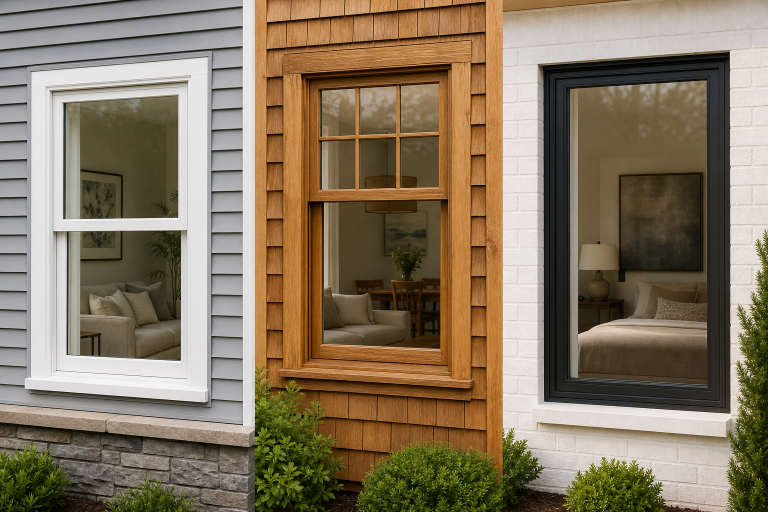
If you are still deciding among materials, Abodence also has a useful comparison of vinyl, wood, and fiberglass window frames.
What should a trustworthy quote include?
A reliable estimate names the exact scope, materials, exclusions, and warranty terms in writing so you can compare one proposal to another on equal terms.
This is where many homeowners lose the ability to compare bids. One company may price insert replacements with minimal trim work, while another may price full-frame replacements with exterior flashing and interior finishing. The lower number is not useful if the scope is smaller and the difference is hidden in vague wording like “install new windows as needed.”
Look for these items in the written quote:
- Exact number of windows or doors being replaced
- Product series and size information
- Frame material and glass package
- Full-frame or insert installation method
- Interior trim work and exterior trim or cladding details
- Flashing, sealant, insulation, and disposal language
- Who pulls the permit, if required
- Start window and estimated project duration
- Labor warranty length and what it covers
- Payment schedule and change-order process
The installation instructions published by Andersen for replacement windows and patio doors, and similar manufacturer instructions from other major brands, typically require specific flashing, sealing, shimming, and fastening practices. If a quote is vague about those basics, ask how the company installs to the manufacturer’s written instructions and how that will be documented.
How can you tell whether an installer understands code and manufacturer requirements?
The strongest sign is specificity, because qualified companies can explain how they handle permits, flashing, egress, tempered glass locations, and final inspections without drifting into general sales language.
Building code details depend on your jurisdiction, but certain issues come up often in replacement work. Bedrooms may involve emergency escape and rescue opening requirements. Some locations near doors, tubs, showers, or walking surfaces may require safety glazing. Historic districts or homeowner associations may add appearance restrictions. An installer does not need to recite code sections from memory. They should be able to identify where code review may affect your project and explain who confirms the final requirement.
Call for a free estimate:
Manufacturer warranty terms also deserve close attention. Pella’s written limited warranty documents, for example, separate product coverage from labor coverage and define exclusions such as improper installation, finishing, or maintenance. Many homeowners assume “lifetime warranty” means every future issue is covered, including labor. The written terms often say otherwise. Ask for the actual warranty document for the product being quoted, not a brochure summary.
You should also ask whether service after installation is handled by the installer, the manufacturer, or both. That distinction matters when a sash adjustment, water leak, or hardware issue appears months later.
How many quotes should you get, and what should you compare?
Three written quotes are usually enough to reveal whether one company is missing scope, overselling upgrades, or simply pricing a different job.
More quotes do not always produce a better decision. After three reasonably detailed proposals, patterns usually emerge. You can compare installation method, product line, warranty terms, lead time, and permit handling without turning the project into a month-long bidding exercise.
Compare the bids on a simple worksheet. Put each company in a column and list the same categories down the side: license status verified, insurance received, exact product series, NFRC-rated performance data, installation method, trim scope, permit responsibility, labor warranty, total price, and exclusions. Once the information is lined up, the outlier often becomes obvious.
If one estimate is much lower, ask what has been excluded. Common gaps include rotten wood repair, interior painting, exterior trim replacement, permit fees, disposal, and post-installation touch-up work. Those items can turn a low bid into a high final bill.
For broad remodeling price context, the 2024 Remodeling Cost vs. Value Report lists a national average cost of $20,091 for vinyl window replacement and $24,376 for wood window replacement, based on its published 2024 methodology. Those figures are project averages, not a per-window rule, but they are useful as a reality check when a whole-house quote appears far outside the expected range. The same report also shows how much regional variation can affect project economics.
What review and reputation checks are actually useful?
The most useful reputation checks are the ones that confirm how the company handles contracts, scheduling, and service after the sale, not just whether the first appointment went well.
Online reviews can help, but they should be filtered carefully. Look for patterns in complaints rather than a single dramatic story. Repeated comments about missed appointments, surprise change orders, poor communication, or unresolved service calls are more useful than broad statements that a company was “great” or “terrible.”
Ask for recent local references for projects similar to yours. A patio door replacement is not the same as a full-house window project, and neither is the same as a historic wood-window replacement. When you speak with references, ask whether the final price matched the contract, whether the crew protected the home well, and whether any callback issues were resolved.
The Better Business Bureau can show complaint patterns and whether the business responds, but it should be one data point rather than the deciding factor. Local building departments may also tell you whether permit records are public, which can help confirm that the company regularly performs the type of work it is selling.
What are the biggest red flags before you sign?
Pressure, vagueness, and missing paperwork are the clearest reasons to slow down or walk away.
Be cautious if a salesperson insists the price is only valid during the appointment, refuses to leave a copy of the quote, or will not identify the exact product being sold. The same goes for contracts that promise broad results without naming model lines, installation method, or labor warranty terms.
Another common problem is scope creep hidden behind allowances. If the contract says extra charges may apply for trim, rot repair, or code items but gives no unit prices or process for approval, you have no practical way to control the final cost. A fair contract explains how changes are documented and approved before additional work proceeds.
Watch for warranty language that sounds stronger in conversation than it does on paper. If labor coverage, glass breakage coverage, transferability, or service-call terms matter to you, they need to be in the written documents.
When is the cheapest option reasonable, and when is it a mistake?
The lowest bid can be reasonable when the scope, product specifications, and warranty terms truly match the others, but it is a mistake when the savings come from omitted work or unclear responsibility.
There are cases where a less expensive option is the sensible one. If your existing frames are sound, square, and dry, an insert replacement may meet your goals without the added cost of full-frame work. If a premium glass package offers only a marginal benefit for your climate and orientation, the standard package may be enough. The point is to pay for the conditions your house actually has, not for the most expensive package in the showroom.
By contrast, a cheaper quote is a bad value if it avoids needed frame repair, excludes finishing work you assumed was included, or relies on vague labor warranty language. Savings that come from a smaller scope are not true savings unless that smaller scope still solves the problem you are hiring to solve.
FAQ
Do window installers need a license?
In many states they do, but the exact requirement depends on your state and sometimes your city or county. Verify the business through the relevant licensing board or consumer protection agency before you sign a contract.
Should you get a permit for replacement windows or doors?
Many jurisdictions require one, especially when the work affects egress, structural openings, or safety glazing requirements. The installer should state in writing whether a permit is required and who is responsible for obtaining it.
Call for a free estimate:
Is a full-frame replacement better than an insert replacement?
Neither method is automatically better, because the right choice depends on the condition of the existing frame and the scope you want. Full-frame replacement is often appropriate when there is frame damage or you want to address the opening completely, while insert replacement can be a sound lower-cost option when the existing frame is in good condition.
How long should a labor warranty last?
Terms vary widely, so the useful question is what the labor warranty covers and who performs the service. A shorter but clearly written labor warranty can be more valuable than a longer promise with broad exclusions.
Can you trust online reviews when choosing a window company?
They can help when you use them to spot patterns in communication, scheduling, and service resolution. Reviews work best when combined with license verification, written quotes, proof of insurance, and recent references.
If you want help with quotes or understanding which installation scope fits your home, please call a listed service provider.
Sources: Andersen replacement window and patio door installation instructions, Pella written limited warranty documents, Remodeling 2024 Cost vs. Value Report