Urgent Roof Leak: What to Do Right Now Before the Damage Gets Worse
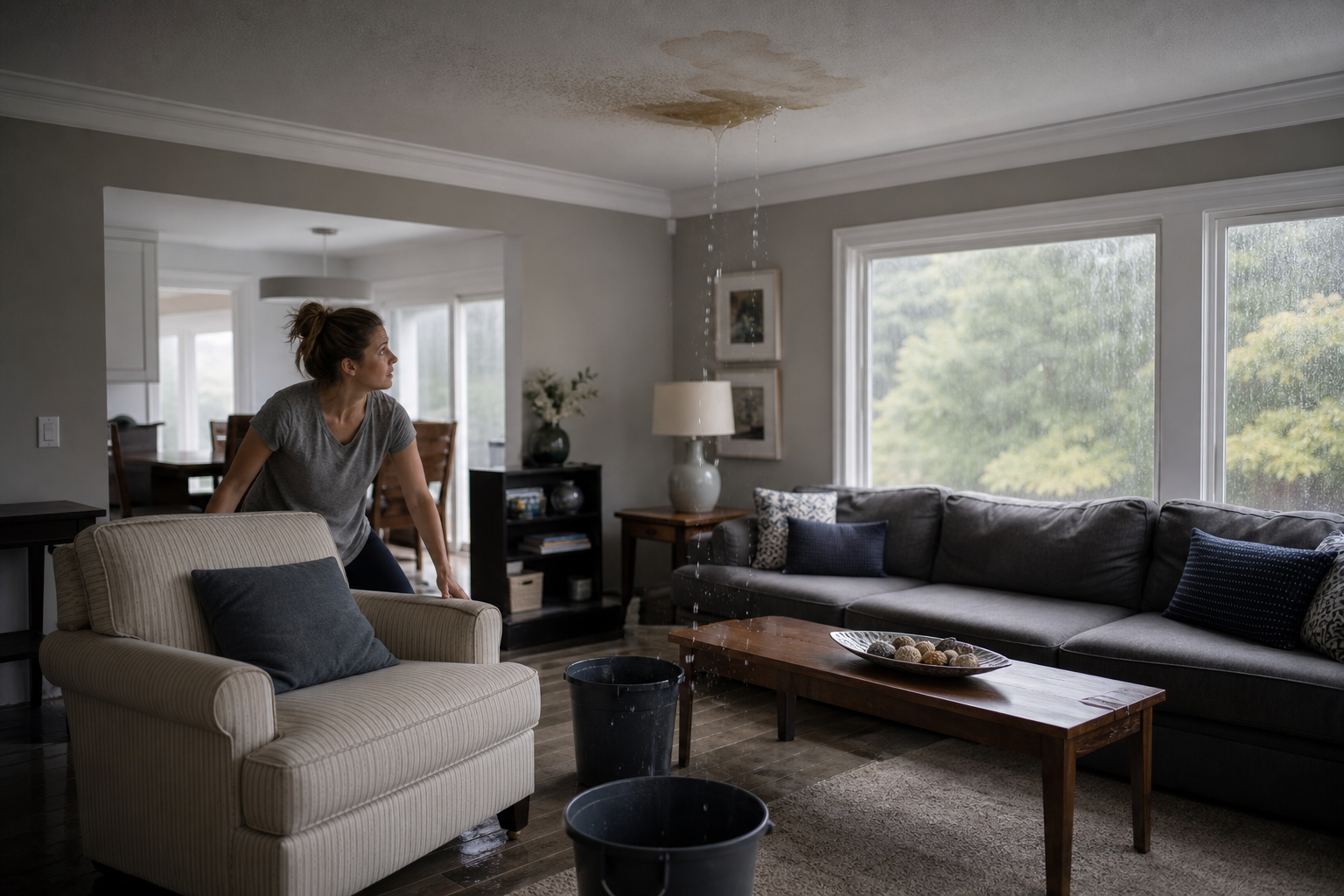
Urgent roof leak problems call for fast damage control, not a DIY repair attempt. If water is actively coming through the ceiling or running down a wall, your job right now is to protect people, shut down nearby electrical risk if it is safe to do so, contain the water, and call a qualified roofing professional for emergency service.

Call for a free estimate:
An active leak is a safety issue first and a repair issue second. According to the Occupational Safety and Health Administration, contact with electricity around wet conditions raises shock risk. According to the Federal Emergency Management Agency, you should avoid floodwater or water near electrical equipment and turn off utilities only if it is safe. Those principles apply inside the house during a roof leak too.
The biggest mistake is climbing onto a wet roof in rain or wind. A second common mistake is waiting to call because the drip seems small. Water often travels before it shows itself indoors, so the visible spot is not always the actual entry point.
This guide only provides suggestions on what to do immediately, what not to do, how roofers usually trace the problem, and how to think about repair versus replacement once the home is stable.
What should you do in the first 10 minutes of an urgent roof leak?
Your first priority is keeping people away from the leak area and move valuables out of the water path. If water is dripping near light fixtures, outlets, appliances, or your electrical panel, the National Fire Protection Association, in NFPA 70E electrical safety guidance, treats water around energized equipment as a serious hazard and supports shutting power off only when it can be done safely from a dry location.
- Move people, pets, electronics, and furniture away from the active leak.
- Place buckets, storage bins, or deep pans under drips.
- Use towels or a plastic sheet to protect flooring and nearby furniture.
- If a ceiling is bulging, stay clear of it because trapped water can bring part of the ceiling down.
- If it is safe to reach and touch your breaker panel without contacting water, shut off power to affected rooms.
- Call a licensed roofing contractor that offers emergency leak service.
Take clear photos once the area is safe. Photos can help with insurance documentation and can also help the roofer understand whether the leak appears tied to shingles, flashing, a vent penetration, or a storm event.
What should you avoid during an active roof leak?
The safest choice is to stay off the roof and out of the attic during the leak event. The National Institute for Occupational Safety and Health identifies falls as a leading cause of serious injury in construction, and wet roof surfaces sharply increase that risk.
Do not use caulk, roofing cement, or a tarp as a substitute for emergency service if the situation is dangerous due to wet, dark, windy, or stormy conditions. Temporary coverings have a place, but they are not worth a fall. Do not puncture a stained ceiling just to release water unless a professional tells you to do so and you can do it safely, because you can spread damage or hit wiring.
Also avoid turning on fans in a room where water is entering through a ceiling fixture or near exposed wiring. Drying the area matters later. Electrical safety comes first.
How can you limit interior damage while waiting for the roofer?
Containment works best when you focus on the water path you can see and the materials most likely to be ruined by saturation. The Insurance Institute for Business & Home Safety advises quick protective steps after water intrusion, including moving belongings, collecting water, and documenting damage before cleanup changes the scene.
Protect floors, finishes, and belongings
Use buckets for direct drips and towels around the bucket to catch splash. Slide plastic bins under wider drips. Move rugs, lamps, paper goods, and small furniture first, then pull larger pieces away from the wall if possible.
If water is running down a painted wall, place a towel at the baseboard and move nearby furniture several feet away. Hardwood, laminate, and drywall can all be damaged by continued exposure, so reducing contact time matters.
Watch for a ceiling bulge
A sagging ceiling means water may be pooling above the drywall or plaster. Keep everyone out from under it. Ceiling failure can happen suddenly, and the situation gets much worse if someone is standing there when it gives way.
When is an urgent roof leak an emergency call, not a standard repair appointment?
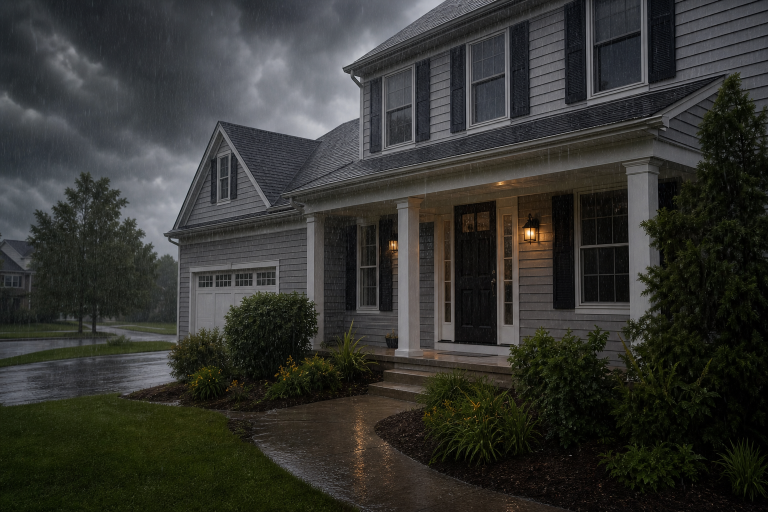
Immediate service can be appropriate when water is entering fast, electrical components are nearby, part of the ceiling is sagging, or the leak started during a storm that may have torn off roofing materials. Those conditions raise the chance of structural damage, electrical danger, or rapidly expanding interior loss.
Call for emergency roofing help if you notice any of these signs:
- Water dripping through a light fixture or around recessed lights
- Ceiling drywall bowing or bulging
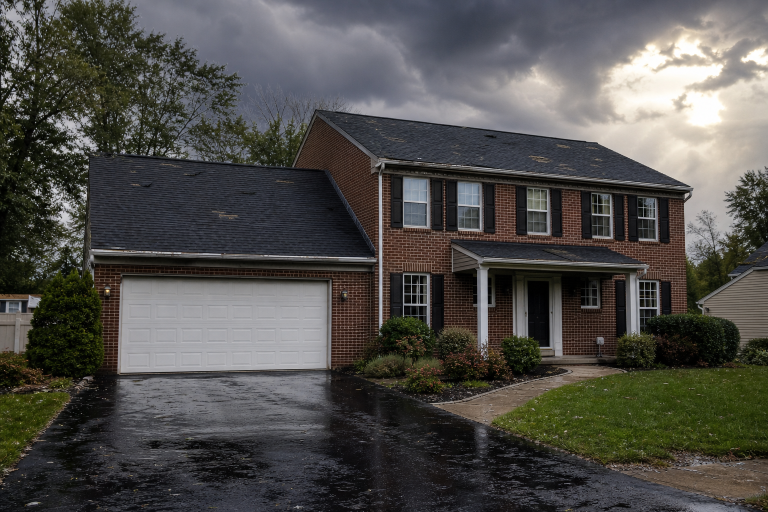
- Visible missing shingles, lifted flashing, or debris impact after a storm
- Water reaching multiple rooms or both ceiling and wall surfaces
- Leakage near the attic access, furnace, or air handler
- Any sign that the roof deck may be exposed
If the leak is minor, fully contained, and weather has already cleared, you may prefer to schedule the next available repair slot rather than after-hours emergency service. That cheaper option is often enough when the home is dry enough to wait safely.
What usually causes an urgent roof leak?
Most active leaks come from failed flashing, damaged shingles, penetrations, or water backup at roof details rather than from a broad failure across the whole roof. The National Roofing Contractors Association explains in homeowner guidance that roof leaks commonly develop around penetrations, flashings, and transitions, which is why leak diagnosis is often more detailed than spotting a stain on the ceiling.
Flashing failures
Metal flashing around chimneys, skylights, sidewalls, and valleys is a common leak point. If flashing loosens, corrodes, or was installed poorly, water can enter even when nearby shingles still look acceptable from the ground.
Call for a free estimate:
Damaged or missing shingles
Wind can crease, lift, or remove shingles. Hail can damage the roof covering in ways that are not obvious from inside the house until the next heavy rain.
Roof penetrations
Plumbing vents, exhaust vents, satellite mounts, and other penetrations create joints that rely on boots, sealants, and flashing details. When one of those details fails, water can follow the penetration path into the attic or wall cavity.
Clogged drainage and overflow
Blocked gutters can contribute to water backup at the roof edge. If you want the prevention side after the emergency is handled, Abodence covers that in this gutter cleaning schedule guide.
How do roofers usually handle an active leak call?
The first visit is often about stopping water entry and identifying the likely source, not completing every permanent repair on the spot. The exact process depends on weather, roof access, roof type, and whether materials are available that day.
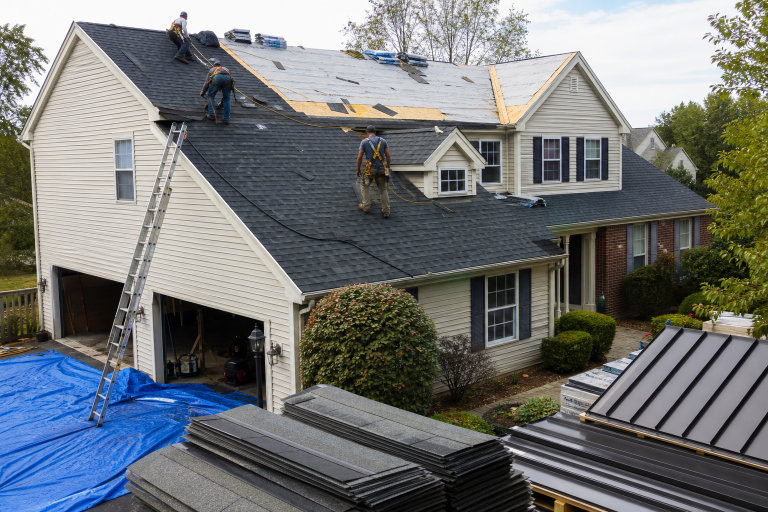
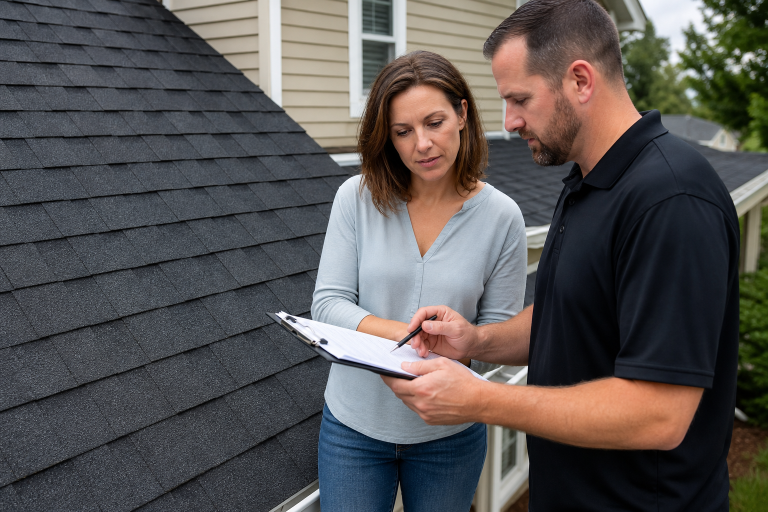
Many contractors start with an exterior visual check when conditions are safe, then inspect the attic or ceiling area to trace the water path. They may install a temporary tarp, replace a small number of missing shingles, secure lifted flashing, or seal an exposed penetration if the problem is isolated and conditions allow. If the leak involves storm damage, saturated decking, or a larger failed section, the permanent repair may need a return visit.
Ask for a written description of what was done temporarily and what still needs permanent correction. Vague language is where confusion starts. A clear scope should separate emergency stabilization from follow-up repair.
How much does urgent roof leak repair usually cost?
Emergency roof leak service commonly costs more than a standard daytime repair visit because it may involve after-hours dispatch, temporary tarping, or storm response. Exact pricing varies by region and scope, and strong national published pricing for emergency leak calls is limited. When methodologically stronger sources do not isolate this service, marketplace estimates are the practical fallback.
Based on 2025 published marketplace estimates from Angi, roof leak repair commonly falls in the low hundreds to low thousands depending on cause and extent, while emergency tarping or after-hours response can add separate charges. Use that as a starting range only, not a final budget, because the real number depends most on roof height, roof type, accessibility, and whether decking or interior materials were also damaged.
If the contractor starts talking about full replacement on the first leak visit, ask what specific condition makes repair unreasonable. A localized flashing failure or a few storm-damaged shingles do not automatically mean you need a new roof.
How do you know whether repair is enough or replacement is the smarter move?
A targeted repair is usually the right move when the leak source is isolated and the rest of the roof system is still serviceable. Replacement becomes more reasonable when the roof covering is near the end of its expected service life, when damage is widespread, or when repeated leaks point to larger system failure.
Ask the contractor to show you the evidence in photos. Useful proof includes failed flashing, torn shingles, exposed fasteners, deteriorated decking, or multiple problem areas across different roof sections. If the explanation stays broad and does not identify the actual failed components, get another opinion.
For a broader look at materials, lifespan, and warranty language, Abodence covers the comparison points in this roofing materials guide.
What should you ask the roofing contractor before approving work?
A good emergency roofing conversation should leave you with a clear scope, a clear temporary plan, and a clear next step for permanent repair. Keep the questions practical:
- What is the most likely entry point, and what evidence supports that?
- Is today’s work temporary stabilization, permanent repair, or both?
- What materials are being installed right now?
- Is any decking or underlayment visibly damaged?
- What interior materials should be checked after the roof is sealed?
- Will you provide photos before and after the repair?
- What warranty applies to this specific repair?
What should you do after the leak is stopped?
Once the roof is dry and sealed, the next step is checking hidden moisture in the attic, insulation, ceiling cavity, and nearby wall surfaces. Lingering moisture can keep damaging materials even after the drip stops.
Look for wet insulation, staining that continues to spread, peeling paint, or trim that swells over the next few days. If the leak affected the attic, it is worth reviewing whether moisture is being trapped there for other reasons too. Abodence explains those warning signs in this attic moisture guide.
Keep all invoices, photos, and contractor notes together. If insurance becomes part of the process, organized records make the conversation much easier.
FAQ
Can a small ceiling drip wait until morning?
A contained drip can sometimes wait for the next available daytime appointment if it is far from wiring, the ceiling is not sagging, and weather has already cleared. If any of those conditions are not true, consider calling for emergency service.
Should you put a tarp on the roof yourself?
Waiting for a professional is the safer choice during rain, wind, darkness, or steep-roof conditions. Temporary tarping can help, but a wet roof is a fall hazard and is not usually worth the risk.
Will homeowners insurance cover a roof leak?
Coverage depends on the cause of loss and your policy terms. Sudden covered events may be treated differently from wear, deferred maintenance, or long-term deterioration, so document the damage and ask your insurer how the claim will be evaluated.
Call for a free estimate:
Can one leak mean the whole roof has failed?
A single active leak often comes from one vulnerable detail such as flashing or a penetration rather than total roof failure. The decision should be based on documented condition, not on the fact that water appeared indoors once.
If you have an urgent roof leak and need help sorting out whether it looks like a localized repair or a larger roofing problem, you can contact on of the listed services for a quote or an assessment that fits your situation.
Sources: NFPA 70E, National Roofing Contractors Association, Insurance Institute for Business & Home Safety, Angi