Home Security After a Break-In: Critical First Steps Experts Recommend
Home security post breakin, starts with personal safety, police documentation, and securing the property before you think about upgrades. The first priority is to get to a safe place and call 911 if the intruder may still be nearby. After that, the practical order is straightforward: preserve evidence, notify your insurer, make temporary repairs, and then decide which security improvements actually fit the weak points the break-in exposed.
That sequence lines up with public guidance from the Cybersecurity and Infrastructure Security Agency home security checklist, which advises homeowners to secure doors and windows, improve lighting, and review entry-point vulnerabilities, and with loss-documentation guidance from the U.S. government insurance guidance, which tells homeowners to document damage and contact their insurance company promptly after a loss.
Since its a very emotional time, a break-in can push people into rushed purchases. The better move is to treat the first 24 to 72 hours as two separate jobs: stabilize the house, then evaluate what failed.
What should you do first after a break-in at home?
Your immediate job is to protect people and preserve the scene. If you think someone may still be inside, do not enter. Call 911 from a safe location. If the home is clearly empty and law enforcement says it is safe to go in, avoid touching disturbed areas until officers tell you what they need photographed or left in place.
According to the International Association of Chiefs of Police burglary prevention guidance, reporting the crime quickly and documenting missing property are core first steps. In practice, that means writing down what appears stolen, taking photos of damage, and pulling together serial numbers, receipts, or product registrations if you have them.
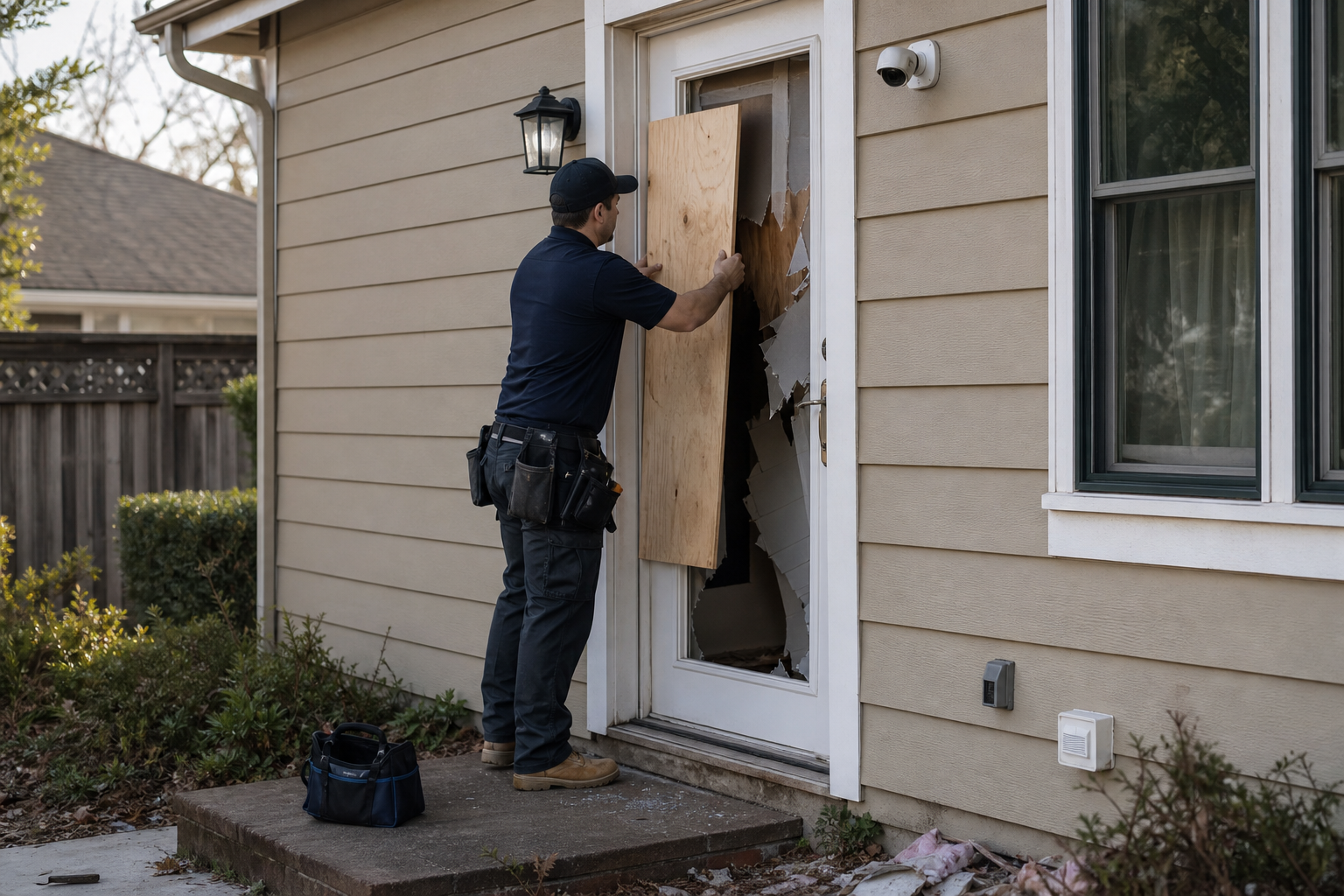
Broken glass, damaged locks, pry marks, and scattered belongings may all matter for the police report and your insurance claim. Once law enforcement has finished on site, you can move to temporary protection such as boarding a broken window or arranging an emergency door repair.
Who should you call after the police?
Your insurer is usually the next call, followed by the professionals needed to secure entry points that day. Most homeowners policies require prompt notice of a loss, and the policy conditions explain what documentation the carrier may ask for. The Insurance Information Institute explains that homeowners insurance commonly covers theft and vandalism subject to policy terms, deductibles, and limits, which is why the claim process starts with an inventory and photos rather than guesses about value.
If a door will not latch, a lock cylinder is damaged, or a window no longer closes securely, the next practical calls are a locksmith, glazier, door company, or emergency board-up service depending on the damage. If an alarm or camera system was cut, contact the monitoring company or installer so they can confirm whether the system is still communicating and whether any tamper alerts were triggered.
Keep every invoice, including temporary work.
Temporary repairs can matter to the claim because they show you took reasonable steps to prevent further loss. Save photos from before and after each repair, plus written notes on the date, time, and contractor involved.
How do you secure the house the same day?
The fastest same-day security work is to restore physical barriers at the exact entry point that failed. If the burglar came through a kicked-in door, replacing batteries in a camera is not the first fix. The first fix is making that door frame, strike area, and locking hardware functional again.
Doors and frames
The most common urgent issue is a compromised latch area or split frame. The Door and Hardware Institute publishes standard industry guidance on door hardware performance and installation, and the practical takeaway for homeowners is simple: if the frame is cracked or the strike area is torn out, replacing only the lock may leave the opening weak. Ask the contractor to state in writing whether the slab, jamb, strike reinforcement, hinges, and threshold were all inspected.
For sliding doors, verify that the latch works, the track is not bent, and the panel cannot be lifted out easily. A damaged slider often needs more than a new handle set.
Windows and glass
Shattered or pried windows need either immediate replacement glass or a secure board-up until replacement can be scheduled. The National Glass Association advises that safety and weather protection come first when glazing is broken. If the sash, frame, or lock rail is damaged, ask whether the whole unit needs repair rather than assuming new glass solves the problem.
Garage access
An attached garage deserves the same urgency as the front door. The International Door Association’s homeowner safety materials emphasize that garage doors are large moving systems and should be serviced by qualified technicians when hardware, tracks, or openers are damaged. If the garage was the entry point, have the opener, side door, emergency release area, and any interior access door checked as part of the same visit.
What evidence and records should you keep?
A complete paper trail makes both the police report and the insurance claim easier to support. Start one folder, digital or physical, and keep everything related to the incident in it.
- Police report number and responding agency
- Photos and video of every damaged area before repair
- List of stolen items with serial numbers, model numbers, and estimated age
- Receipts, credit card statements, warranty registrations, or product photos
- Invoices for board-up, lock changes, glass replacement, and cleanup
- Any alarm logs, camera clips, or monitoring notifications
The same U.S. government insurance guidance cited earlier advises documenting losses thoroughly before disposing of damaged property when possible. If something must be removed for safety, photograph it first and ask the adjuster whether they need any additional documentation.
Which home security upgrades actually make sense after a break-in?
The right upgrades are the ones that address the entry method, sightlines, and daily habits that made the break-in easier. A burglary through a rear window points to different improvements than package theft at the front porch or unauthorized garage access.
According to the CISA home security checklist, practical layers include solid-core or metal exterior doors, quality deadbolts, exterior lighting, visible house numbers, and trimmed landscaping that removes hiding spots near doors and windows. Those are broad standards, but your next purchase should still be specific to what happened at your house. This is also a good time to do a full security assessment.
When a better lock is enough
A targeted hardware upgrade can be the right answer when the door and frame are otherwise sound. If the report and repair inspection show that the old deadbolt failed, replacing it with a properly installed grade-rated product may solve the real problem without turning the project into a full smart-home overhaul.
When cameras are worth adding
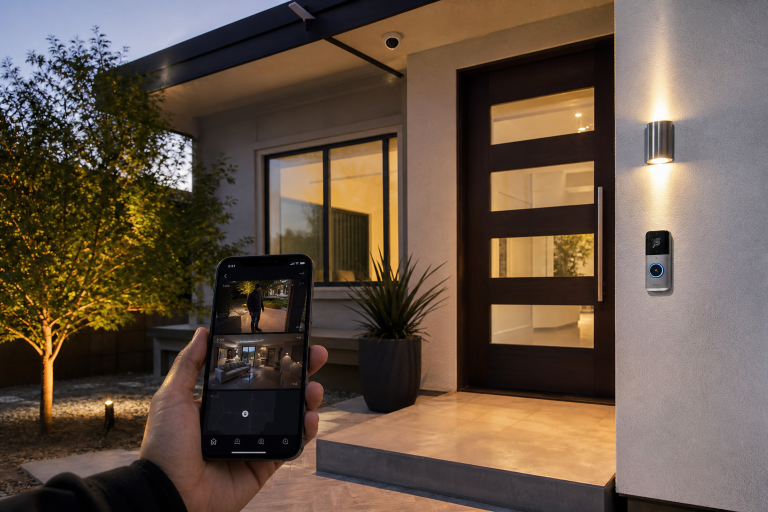
Recorded video helps most when it covers the approach to the home, the main entry points, and package or vehicle areas with usable lighting. Camera placement matters more than camera count. If you are comparing options, Abodence’s security camera installation cost guide covers the cost variables that usually affect pricing.
When lighting should come first
Exterior lighting is often the simpler fix when the vulnerable area is dark, screened by shrubs, or outside the view of neighbors. Motion-activated fixtures, pathway lighting, and lighting at side yards and garage entries can improve visibility without requiring a full monitored system.
When a monitored system is justified
Professional monitoring makes more sense when the house is vacant for long stretches, prior alarm equipment was bypassed, or you want dispatch support rather than self-monitored alerts. Before signing, ask for the full contract term, cancellation terms, equipment ownership terms, and what happens if internet or power service is interrupted. Vague monitoring language is one of the easiest ways for a quote to look cheaper than it really is.
How much do post-break-in security repairs and upgrades cost?
Costs range from under $200 for a basic lock replacement to several thousand dollars for door replacement, glazing work, and a new monitored security setup, depending on the damage and scope. For labor pricing context, the U.S. Bureau of Labor Statistics Occupational Employment and Wage Statistics provides 2025 national wage data for trades such as locksmith-related work, glaziers, and security and fire alarm systems installers, but your actual invoice will vary by region, emergency timing, and material choice.
For equipment pricing, manufacturer and retailer listings show that smart video doorbells, cameras, motion lighting, and smart locks span a wide range even before installation. That is one reason rushed bundled packages can be poor value. If the break-in exposed one weak side door, a reinforced repair plus focused lighting may do more than a whole-home package built around gadgets you will not use.
Ask every contractor for a written scope that separates emergency stabilization from optional upgrades. That keeps the urgent work clear and makes it easier to compare later proposals on equal terms.
How do you choose a security company or contractor without feeling pressured?
The safest way to buy is to separate repair work from long-term security sales and have a clear scope of work in writing. Emergency situations create the exact conditions where vague promises and add-on charges often show up.
- Ask what problem each line item solves at your house
- Request model numbers for locks, cameras, sensors, and control panels
- Get the monitoring term, monthly fee, and cancellation terms in writing
- Ask whether equipment is owned, financed, or leased
- Confirm who services the system after installation
- Check whether cloud storage or app access requires separate subscriptions
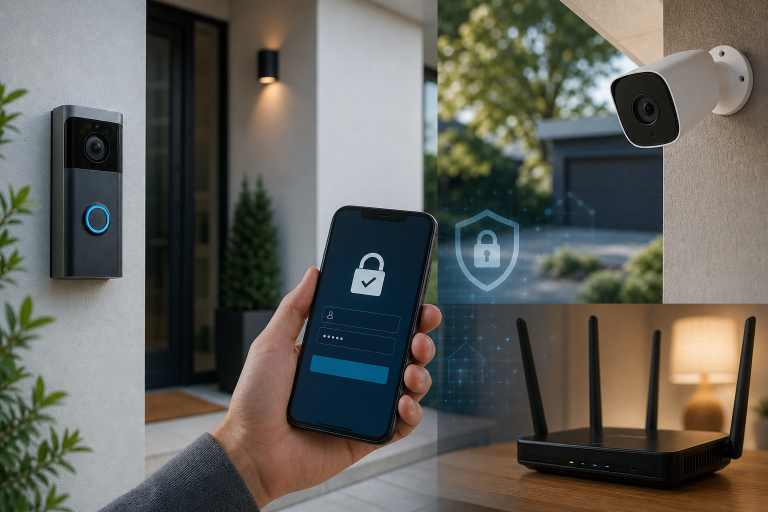
If you are considering a smart front-entry setup, Abodence’s video doorbell installation guide explains the basic setup choices that affect placement and performance.
What mistakes do homeowners make after a break-in?
The biggest mistake is buying broad security upgrades before fixing the exact point of failure. A second common mistake is throwing away damaged items or cleaning up before the scene is documented. Another is assuming insurance will cover every stolen item at replacement cost without checking policy limits, deductibles, and any special sublimits for jewelry, firearms, electronics, or cash.
Some homeowners also overcorrect with visible tech while ignoring routine habits. If a break-in involved an unlocked gate, hidden spare key, or overgrown side yard, correcting those conditions belongs in the plan too. The best post-break-in response is usually layered, but still selective.
How can you make the house feel secure again without overspending?
A measured plan usually works better than a total reset. Start with the breach point, then address visibility, then decide whether alerts or recording add meaningful protection for how you use the home.
For many households, the sensible sequence is physical repair first, exterior lighting second, and cameras or monitoring only where they solve a defined problem. That order keeps money on the parts of security that physically stop access before moving to tools that mainly record or notify.
If the home has multiple vulnerabilities, ask for a written assessment that prioritizes them by urgency and function. You do not need every available device on day one. You need the weak points closed, documented, and addressed in the right order.
FAQ
Should you change the locks after a break-in?
New locks are usually appropriate when keys are missing, lock cylinders are damaged, or you cannot confirm who may still have access. If the frame or strike area is broken, ask for the surrounding door hardware and structure to be inspected too, because a new lock alone may not secure the opening.
Can homeowners insurance cover a break-in?
Many homeowners policies cover theft and vandalism subject to deductibles, exclusions, and coverage limits. The practical next step is to review your policy terms, file the claim promptly, and support it with photos, a police report, and an itemized list of losses.
Is a security system necessary after a burglary?
A monitored system can be worthwhile when the house is empty often or when you want dispatch support, but it is not automatically the first purchase. If the break-in happened because of a failed door, broken window, or dark side yard, fixing that condition may matter more than adding subscriptions right away.
Should you stay somewhere else after a break-in?
Leaving temporarily can make sense if doors or windows cannot be secured the same day or if law enforcement tells you the property is not safe to occupy yet. Once the home can be locked properly and urgent repairs are complete, the decision becomes a personal comfort issue rather than a standard requirement.
If you need help sorting repair priorities or comparing security upgrade quotes for your specific situation, Abodence can help you find the right next step.
Sources: Insurance Information Institute, Door and Hardware Institute, National Glass Association, International Door Association