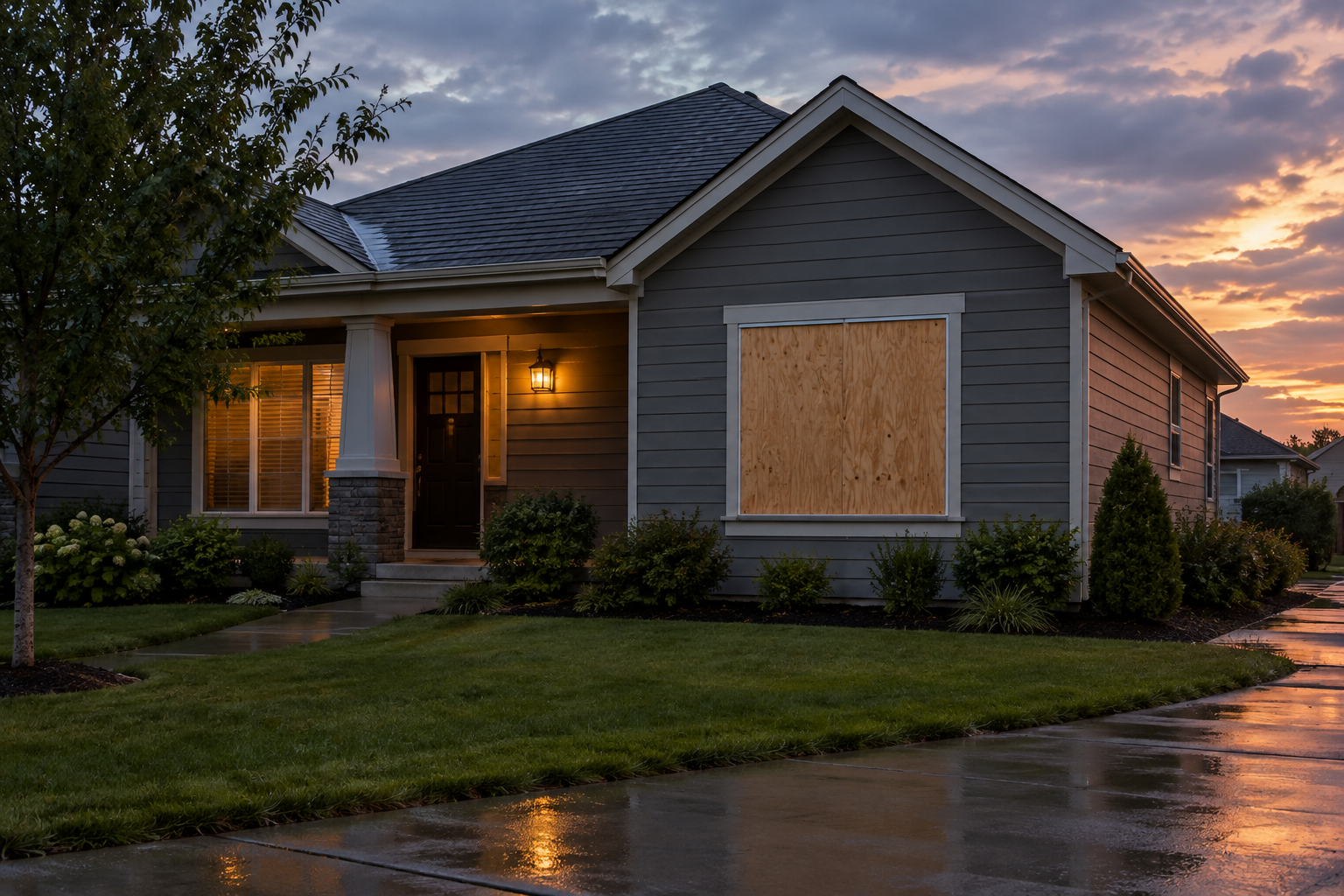
Emergency Board-Up of a Broken Window: How and Who
A broken window leaves a home exposed to rain, wind, unauthorized entry, and further property damage. Whether the cause was a break-in, a storm, or an accident, securing the opening promptly is the first priority, but handling loose glass and working around a damaged frame can create its own risks.

Call for a free estimate:
If someone may still be on the property, or if the damage is part of an active break-in, call emergency services first. Once the scene is safe, an emergency glass or board-up company is usually the safer choice, especially for an upper floor opening, a large pane, or a damaged sash.
Who should secure a broken window?
A 24-hour glass company or emergency property-restoration service is the appropriate first call when glazing is shattered, the opening is accessible from outside, or the window frame may be damaged. The company can remove unstable material, cover the opening, and assess what must be ordered for a permanent repair without asking you to work near sharp fragments, broken wood or twisted metal.
Start with local companies that explicitly offer emergency board-up or emergency glass service, then confirm that a real person can provide the business name, dispatch process, service area, and a written description of the work. Ask whether the company holds the contractor or home-improvement license required in your state or locality, if one applies to this work. Request proof of liability insurance and workers’ compensation coverage where applicable. A legitimate provider should also explain whether its visit includes only temporary securing, glass removal, measuring, cleanup, or a later replacement appointment.
Technician dispatch time depends on storm volume, time of day, road conditions, distance, and whether first responders have restricted access to the property. Ask for the current estimated arrival time, whether the company has a technician on call, and what to do if conditions change before help arrives. Treat an estimate as an estimate, not a guarantee.
- Confirm the company’s full business name, callback number, and physical service area.
- Ask what temporary material it uses and whether it will protect the opening from weather as well as entry.
- Request a written work order that separates the emergency visit from permanent window or glass replacement.
- Ask whether the technician will photograph the opening and provide an invoice suitable for an insurance claim.
- Get the total after-hours charge, trip charge, materials charge, and any minimum before authorizing work.
When is a professional board-up the safer choice?
Call a professional immediately when the opening is elevated, the remaining glass is cracked or hanging, the frame is bent, the damaged window is in a door, or the broken pane is unusually large. These conditions raise the chance of falling, cutting yourself, or turning a glass-only repair into damage to the sash, cladding, siding, or interior trim.
The Occupational Safety and Health Administration requires appropriate eye and face protection where workers face flying particles or similar eye hazards under 29 CFR 1910.133. That is a workplace rule, but it illustrates why a household board-up is not a casual task: shattered glazing can leave unstable fragments in a frame, on flooring, and in surrounding ground cover.
Do not try to preserve a damaged window by pushing on cracked glass, closing a distorted sash, or applying pressure to a pane that is still partly seated. A good approach is to keep people away from the opening and restore a weather and security barrier.
A broken window after forced entry also deserves a broader security check. Review how the intruder entered, preserve relevant evidence for law enforcement, and avoid disturbing the area more than necessary before it is documented. For the follow-up work, this guide to home security after a break-in covers practical next steps beyond the immediate opening.
Can a homeowner temporarily board up the opening?
Only a low-risk, accessible opening with no loose glass may be suitable for a homeowner to cover temporarily, and calling an emergency service remains the safer course. The request for a plywood panel, masking tape, and fasteners sounds straightforward, but the correct panel size, fastening location, and fastener length depend on the window construction, wall finish, and condition of the frame.
For that reason, a self-installation procedure is not usually appropriate for a broken window. Fasteners driven through the wrong part of a vinyl, wood, aluminum, or composite window assembly can crack trim, puncture weather-resistive layers, split framing, or leave the temporary covering insecure. A cover that appears secure from indoors may still detach in wind or expose sharp fastener points outside.
Masking tape should not be treated as a structural repair or a substitute for professional removal of fractured glass. Tape may hold small surface fragments together in limited circumstances, but it does not make a compromised pane safe to handle, nor does it create a reliable weather barrier.
Until help arrives, keep people and pets out of the room, move loose belongings away from the opening if they can be moved without entering the debris field, and close an interior door where possible. If rain is entering, protect nearby furnishings only from a safe distance. Do not lean through the opening or climb outside to cover it and always watch for electrical risks.
What should the temporary work order specify?
The work order should state that the opening will be secured without unnecessary damage to the existing frame or exterior finish, then identify who is responsible for final glass disposal and follow-up repair. It should also say whether the temporary material remains the homeowner’s responsibility after the visit and whether a return trip is included.
A service that offers only a cover may be the right, lower-cost solution when the frame is intact and replacement glass must be ordered. Full window replacement is not automatically necessary because a pane broke. The repair scope depends on whether the existing sash, frame, seals, and operating hardware remain serviceable.
How should broken glass be handled and contained?
Keep the area isolated and leave glass removal to a qualified glass professional when fragments are loose, spread across a room, or embedded in landscaping. The injury risk does not end when the visible large pieces are gone, since small fragments can remain in carpet, window tracks, thresholds, and soil.
Do not use bare hands, ordinary household gloves, or a household vacuum as a substitute for the equipment and containment methods appropriate to the site. Avoid sweeping debris toward yourself or allowing children and pets near the indoor or outdoor area. If fragments are in a walkway, mark off the area rather than trying to make it passable quickly.
Outdoor cleanup needs the same caution. Glass can settle into mulch, gravel, shrubs, and lawn edges, where it is difficult to see and easy to spread with a rake, mower, or leaf blower. Tell the emergency provider where debris landed so the cleanup scope includes both sides of the window.
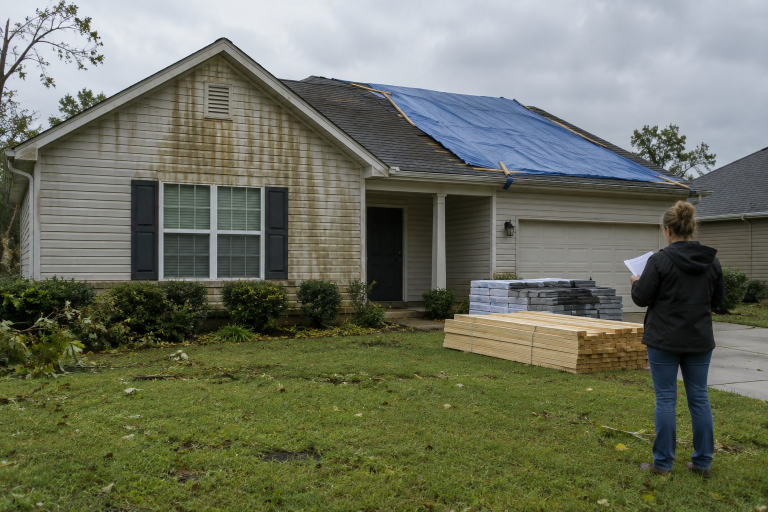
After a storm, the Federal Emergency Management Agency advises documenting damage and making only necessary temporary repairs to prevent further damage, while keeping records and receipts for the insurer. Its home repair and reconstruction guidance is a useful reminder that temporary protection and claim documentation should happen together.
Call for a free estimate:
What should you document for insurance and replacement?
Photograph the opening, damage to the frame or surrounding finishes, visible debris, and any water entry before cleanup or board-up changes the scene, provided doing so does not put you near unstable glass or at other risk. Save the time and date, police report number if there was a break-in, weather information if relevant, and every invoice, receipt, and work order.
Contact your insurer or agent promptly to report the loss and ask what it needs before permanent work begins. The Insurance Information Institute explains that homeowners coverage varies by policy and cause of loss, so a storm claim, an accidental breakage claim, and a theft-related claim can be handled differently. The insurer can also explain the deductible and whether it wants an adjuster to inspect related damage.
Do not delay necessary emergency protection while waiting for a coverage decision. Documented mitigation is different from authorizing broad upgrades. Keep the emergency board-up invoice separate from quotes for replacement glass, sash repair, trim repair, or a new window, since each item may have a different scope.
How do you choose the permanent repair?
Get the technician’s written finding on whether the repair involves glass only, an insulated-glass unit, a sash, or the full window assembly. A failed insulated unit may need replacement glass, while a warped frame or damaged operating hardware may justify a larger repair. Matching tint, grids, safety glazing, energy features, and the existing exterior profile may also affect the final choice.
Before signing for a replacement, compare written scopes rather than accepting a vague promise to “fix the window.” This guide on how to vet door and window installers can help you review installation details, warranties, and contractor questions after the immediate emergency has passed.
FAQ
Should a broken window be boarded up right away?
Yes, an accessible broken opening should be secured promptly once police or emergency responders have released the area. A professional board-up reduces exposure to weather and unauthorized entry while permanent repair is arranged.
Will insurance pay for emergency board-up?
Coverage depends on the policy, deductible, cause of damage, and insurer’s claim decision. Keep photos, receipts, and the emergency work order, then ask the insurer specifically whether it covers reasonable temporary protection for this loss.
Can a glass company replace the window on the same visit?
Sometimes, but replacement depends on whether the needed glass or sash is a standard stocked size and whether the frame is intact. Custom insulated glass, specialty safety glass, and nonstandard sash components may require measurement and a later installation date.
Should the entire window be replaced after one pane breaks?
Not usually, a broken pane alone does not establish that the entire window needs replacement. Ask for a written assessment of the glass, sash, frame, seals, and hardware before agreeing to a larger scope.
If you need help comparing an emergency board-up scope with a permanent repair quote, contact a qualified local glass or window professional for an assessment of the specific opening. Please call a listed specialist for a free, no-obligation discussion.
Sources: Insurance Information Institute, homeowners insurance coverage guidance.