Questions to Ask a Window or Door Installer
New windows and doors are a major home investment, and product selection is only part of a smart strategy. A well-made unit can still underperform if the opening, flashing, sealants, insulation, or finish work are handled poorly. Asking detailed questions before signing gives you a way to compare companies on scope and accountability.

Call for a free estimate:
Bring the same questions to every appointment and ask for answers in writing when they affect the quote, schedule, warranty, or product selection. Start with this related guide on how to vet door and window installers before you buy if you are still building a short list.
What should you verify about credentials, licensing, and local experience?
A contractor should be able to identify their legal business name, applicable license, insurance coverage, and the person responsible for your project before work begins. Licensing rules, permit procedures, and adopted building codes vary by jurisdiction, so confirmation should come from your local building department rather than a general assurance that permits are “handled.”
- “What license or registration applies to this project, and can I verify it?” Ask for the license number and the issuing agency. Then confirm that the name on the license matches the company named in the contract.
- “Will you provide a current certificate of general liability insurance and workers’ compensation coverage?” Request the certificate before signing. It should identify the insured business and the coverage in force, rather than simply stating that the company is insured.
- “Who obtains the permit, and whose name will be on it?” The answer should establish who submits the application, pays the fee, coordinates inspections, and responds if an inspector requests a correction.
- “Which local code requirements affect this opening?” Ask specifically about safety glazing, emergency escape and rescue openings where applicable, weather exposure, structural changes, and historic-district review if your property is subject to it. The International Code Council publishes model codes, but local governments decide what version and amendments apply.
- “Are you certified by the window manufacturer, and what does that certification actually cover?” Ask for the program name and whether it affects product access or warranty eligibility. Certification is useful only if the proposed product and installer are both covered by the program.
- “Can you show comparable local projects and provide recent references?” Look for projects with similar wall construction, window style, and exposure to weather. A replacement in a brick opening may call for different planning than a standard frame-wall opening.
Local experience is most useful when it produces a specific answer about your house. “We work in this area” says little. A helpful response identifies the permitting path, the conditions likely to affect the scope, and how the installer plans to document changes. Do not accept a license claim as a substitute for a written scope of work.
How will the installation team protect the house and manage the work?
A written plan should name who performs the labor, explain how the home will be protected, and define how unexpected issues will be addressed. This is where a low quote can leave out work that later becomes an added charge.
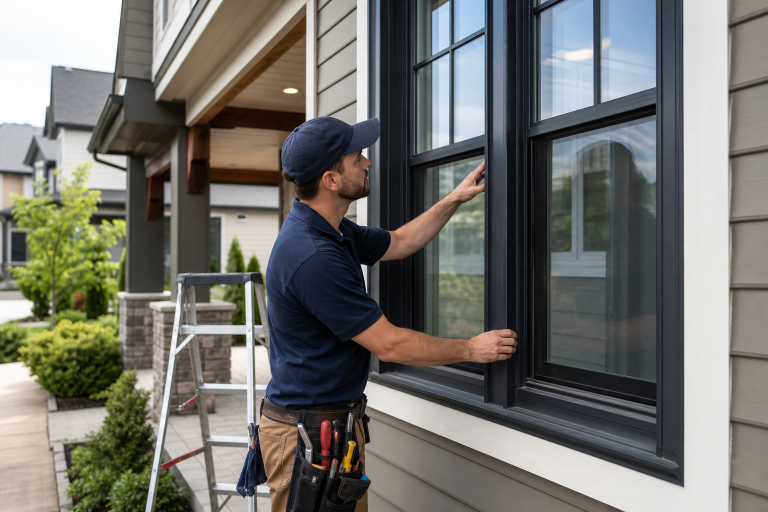
Ask whether the people on site are company employees, subcontractors, or a mix of both. Either staffing model can be workable, but you need one named company that is responsible for supervision, scheduling, site damage, cleanup, and warranty callbacks. Ask who will be your day-to-day contact and who has authority to approve a change order.
- “Who will perform the installation, and who supervises the crew?” Get the business name of any subcontractor and the project manager’s contact information.
- “How will you protect floors, furniture, landscaping and exterior finishes?” The response should describe coverings, moving procedures, debris control, and any areas the crew needs you to clear before arrival.
- “What will you inspect after the old unit comes out?” Ask how the crew will handle hidden rot, water damage, out-of-square framing, or a damaged sill. The contract should say whether discovery work requires your written approval before extra costs are incurred.
- “How will you manage flashing, drainage, insulation, sealant, and interior trim?” ASTM International’s ASTM E2112, Standard Practice for Installation of Exterior Windows, Doors and Skylights, addresses installation planning around water management, flashing, sealants, and integration with the wall. Ask the installer to explain the proposed method for your wall type rather than accepting a generic promise to “seal it up.”
- “What happens if rain is forecast while an opening is exposed?” A credible plan addresses temporary weather protection and the order of work.
- “What does cleanup include?” Confirm removal of old units, broken glass, packaging, nails, dust, and exterior debris. Also ask whether dumpster placement, disposal, and final sweep-up are included in the price.
Take dated photos of each room and exterior elevation before work starts, especially existing trim, siding, flooring, and landscaping. They create a clear record if a damage question arises later.
Which product specifications should be written into the quote?
The right selection begins with an exact product line and a documented performance label, not a broad description such as “premium vinyl window” or “energy-efficient glass.” Request the manufacturer, series, operating style, dimensions, frame color, grille configuration, glass package, hardware finish, and screen type for every opening.
The National Fenestration Rating Council (NFRC) label reports standardized window performance ratings, including U-factor and solar heat gain coefficient. Ask to see the label or a product document for the exact configuration quoted, because glass, size, and options can change the rating.
According to the U.S. Department of Energy’s Energy Saver guidance, a lower U-factor indicates better resistance to heat flow. Solar heat gain coefficient describes how much solar heat passes through a window, so the preferable value depends on climate, orientation, shading, and comfort goals. Ask the installer to explain the target ratings for each exposure, particularly large west- and south-facing glass areas.
- “What frame material and product line are you proposing, and why does it fit this opening?” Ask for the exact material, reinforcement details if offered, and the manufacturer’s written warranty for that line. Do not pay for a material upgrade until the installer explains what it changes in your project.
- “Is this double-pane or triple-pane glass, and what are the published ratings for this exact unit?” Triple-pane glass may suit some homes, but it is not automatically the best purchase for every opening. Compare the documented U-factor, solar heat gain coefficient, price difference, available size, and whether the added thickness or weight affects the selected style. See Abodence’s triple-pane versus double-pane window guide for the product-level tradeoffs to raise during that conversation.
- “What glass coating and gas fill are included?” Low-emissivity, or Low-E, coatings are designed to manage radiant heat transfer. The Department of Energy also identifies inert gas fills, including argon, as part of insulated glazing options. Ask where the coating is placed, whether argon is included in every quoted unit, and which warranty provision addresses insulated-glass seal failure.
- “Can I see the NFRC ratings and the ENERGY STAR qualification, if applicable?” ENERGY STAR certification is configuration-specific. The ENERGY STAR windows, doors, and skylights program publishes climate-zone criteria, so a contractor should be able to identify the relevant product qualification rather than applying the label loosely to an entire brand.
What should the warranty, service, and payment terms say?
The agreement should separate product coverage, glass coverage, installation labor coverage, service responsibility, and the payment schedule in plain terms. A manufacturer warranty and an installer labor guarantee are different promises, often made by different parties, so neither should be assumed to fill a gap in the other.
Ask for the complete manufacturer warranty before ordering. Look for the covered components, exclusions, transfer rules, claim procedure, remedies, and whether labor, removal, shipping, or finishing work is included when a covered product issue occurs. Then ask for the installer’s own labor warranty in writing, including its duration and the contact route for a service request.
- “Who handles a service call after installation, and how do I submit it?” The answer should identify whether you contact the dealer, installer, manufacturer, or a third-party service company.
- “What work is covered by your labor guarantee?” Ask about leaks at the installation interface, operational adjustments, trim, sealant, and finish work. Have exclusions stated in the contract rather than discussed only verbally.
- “What is the payment schedule, and what must be complete before the final payment?” Tie payments to clear milestones: signed agreement, ordered materials, installation, required inspection if applicable, punch-list completion, and final cleanup. Keep every approved change order in writing with its price and schedule effect.
- “What could change the quoted price?” The contract should identify foreseeable allowances and how hidden conditions will be documented and approved. A vague right to charge more for “unforeseen work” gives you little ability to control the final bill.
The Federal Trade Commission’s home improvement scam guidance warns consumers about high-pressure sales, demands for full payment upfront, and contractors who cannot provide written details. A clear contract and a payment schedule linked to work completed are practical protections, not signs that you distrust every contractor.
Before hiring, confirm that you can answer five points from the paperwork: who is responsible, what exact products are being installed, how the opening will be protected, what the price includes, and who will respond if service is needed. If any answer remains verbal or vague, ask for a revised scope before you commit.
If you want help sorting competing proposals, request a detailed quote or assessment that lists the product configuration, installation scope, warranty terms, and payment milestones. Please call a listed specialist for a free, no-obligation discussion.
FAQ
How many window installation quotes should a homeowner get?
Two or three detailed written quotes usually provide a useful comparison, provided each contractor prices the same product level and scope. A third quote is especially useful when the first two disagree about permits, framing repairs, flashing, trim, or the need for additional work.
Call for a free estimate:
Should a window installer pull the permit?
The contract should clearly identify who pulls the permit and manages inspections when a permit is required locally. Having that responsibility stated in writing avoids confusion over fees, scheduling, and corrections requested by the building department.
What is the most useful window performance number to compare?
U-factor is a central comparison point because it measures resistance to heat flow, but it should be reviewed with solar heat gain coefficient and the exact glass package. The NFRC label makes those comparisons more meaningful than a general claim that one window is more efficient.
Can a manufacturer warranty cover poor installation?
Product warranties and labor warranties often address different issues, so the written documents control. Ask the installer to identify exactly which company addresses installation-related water entry, operational problems, or finish defects, and keep that answer with the contract.