Insert vs Full-Frame Window Replacement: A Guide to Selecting Your Best Option
Insert vs full-frame window replacement is the choice that determines whether your project stays simple or turns into a deeper repair or upgrade. The right answer depends less on brand or sales language and more on the condition of the existing frame, sill, trim, flashing, and surrounding wall opening.

Call for a free estimate:
If the existing frame is sound, square, and dry, an insert replacement can be appropriate. If the frame is damaged, out of square, leaking, or you need to change the size or style in a way the old frame cannot support, a full-frame replacement is usually the better path.
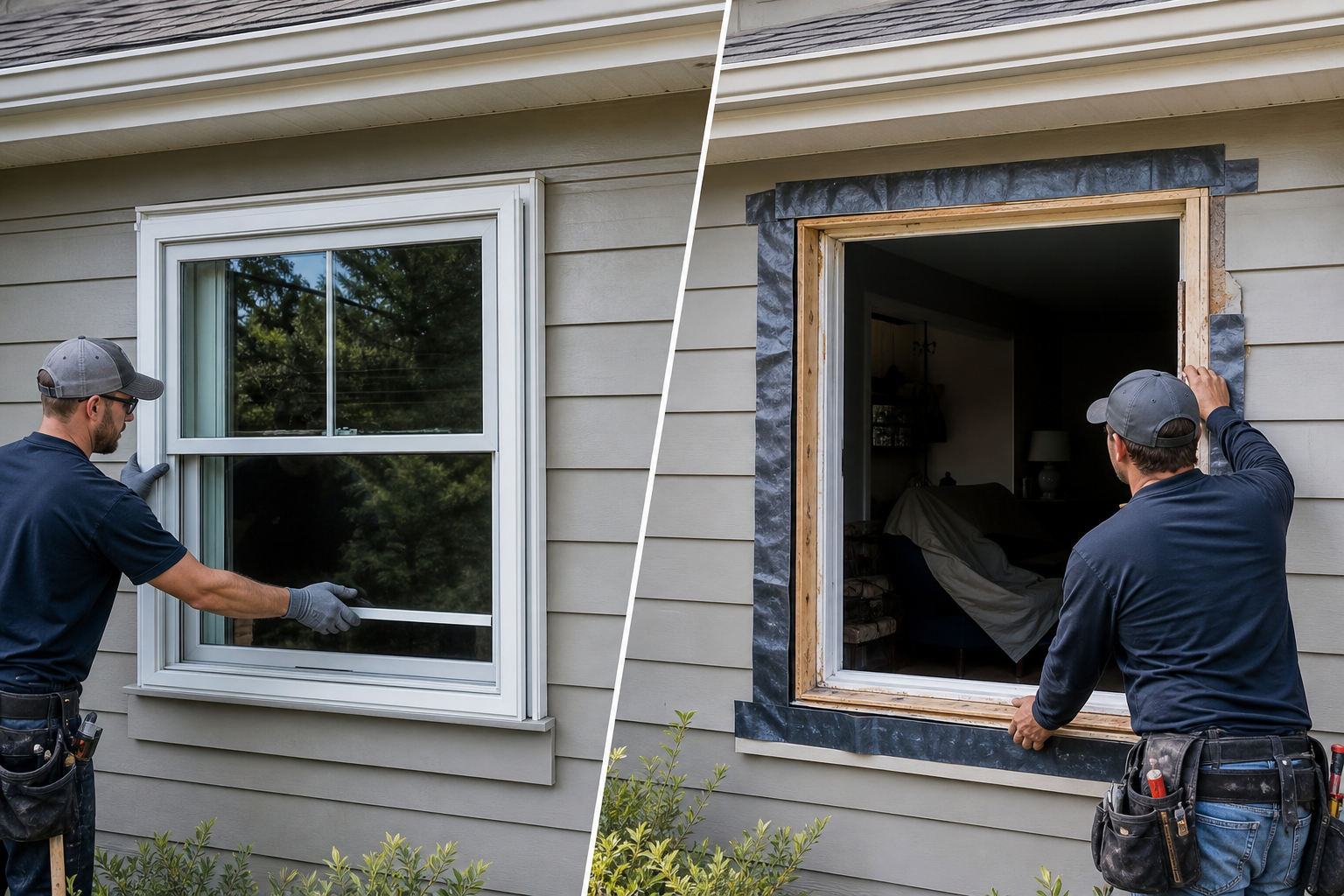
According to the U.S. Department of Energy, replacement windows can be installed as pocket or insert units within an existing frame, or as full-frame units when the entire window and frame are replaced. The department also notes that the best choice depends on the condition of the existing frame and surrounding materials.
For homeowners, the practical goal is simple: keep a good frame if it is truly good, and remove a bad frame before new work hides an old problem.
How do you know an insert replacement is enough?
A sound, dry, and square opening is the clearest sign that a smaller-scope replacement may work. Insert windows fit inside the existing frame, so they rely on that frame to remain structurally solid and weather-resistant.
This option is commonly used when the old frame is still in good condition and you want to replace the sash and glass without opening up the surrounding wall. The National Association of Home Builders describes insert replacement as a method that leaves the original frame in place while fitting a new window unit inside it.
That usually makes the job faster and less invasive. Interior trim and exterior finishes may need less change, which can matter if you have finished casing, siding details, or masonry that you would rather not rebuild.
Signs your existing frame may be suitable
The strongest case for an insert replacement is when the opening has held up well over time and the problem is mainly with the moving parts of the old window.
- The frame shows no visible rot, swelling, or soft spots.
- The sill appears dry and intact.
- The opening is square enough for the manufacturer’s installation tolerances.
- The old window’s main issues are failed seals, hard operation, or worn sash components.
- You do not need to enlarge, reduce, or reshape the opening.
Andersen’s replacement window installation guidance states that the existing frame must be structurally sound and suitable for the product being installed. If a contractor recommends an insert without confirming that condition, the quote is incomplete.
When is full-frame window replacement the better choice?
Hidden damage, shape problems, or planned design changes usually point to removing the entire old unit. Full-frame replacement takes the window down to the rough opening, which gives the installer access to the frame, sill, insulation gap, and flashing area.
This is often the better choice when water intrusion has affected the old frame or adjacent wall materials. A full-frame approach also allows the installer to correct issues that an insert cannot address, such as a failed sill, deteriorated jambs, or improper flashing from an earlier installation.
According to installation and flashing guidance from the American Architectural Manufacturers Association, now part of FGIA, proper water management at the opening is a core part of replacement work when the assembly is exposed. In plain terms, if the opening itself is the problem, the opening has to be addressed.
Full-frame replacement is also the practical route if you want to change the operating style in a way that requires a different frame configuration, or if the old frame dimensions are limiting performance and appearance.
Signs you should lean toward full-frame
Several conditions make a frame-in-frame replacement risky because they leave the underlying problem untouched.
- Rot, staining, or softness in the sill, jambs, or head.
- Past leaks around the window or signs of water damage in nearby drywall or trim.
- A visibly out-of-square opening or a window that has shifted.
- Draft complaints that appear related to the rough opening, not just the sash.
- A plan to change size, shape, or major style.
- Exterior cladding or trim details that need repair anyway.
Sometimes the more expensive option is unnecessary. If the frame is genuinely sound and the opening is stable, a full tear-out may add cost without fixing anything that was actually wrong.
What problems can reviews reveal before you hire an installer?
Patterns across reviews can tell you more about installation quality than star ratings alone. A useful review trail mentions the process: measuring accuracy, communication about scope, cleanliness, punch-list follow-through, and whether surprise damage was documented clearly rather than used as pressure.
Look for repeated comments about fit issues, trim damage, missed appointments, or warranty callbacks. One angry review proves very little. Ten reviews that describe the same problem in similar terms usually point to a pattern.
Reviews are most useful when they help you separate product complaints from installation complaints. Condensation between panes on an insulated glass unit is a product or seal issue. Interior casing gaps, water entry around the perimeter, or a window that binds after installation are more likely scope, measurement, or installation issues.
Call for a free estimate:
Abodence covers the broader screening process in Window Installer Research Made Easy: How to Vet Door and Window Installers Before You Buy. For this specific decision, reviews should help you verify that the installer knows when an insert is appropriate and when a full-frame tear-out is justified.
What review language should make you cautious?
Vague praise is less useful than specific detail, and repeated complaints about scope changes deserve attention.
- “Price changed after demo” with no explanation of documented hidden damage.
- “They pushed full-frame on every opening” even where no frame issues were described.
- “Insert install still leaked” or “drafts never improved.”
- “Could not explain permit or inspection requirements.”
- “Warranty service was slow or disputed.”
A careful installer should be able to explain why each opening is being treated one way or the other. If every window gets the same answer in every house, that is a warning sign.
How much more does full-frame replacement usually cost?
Full-frame replacement usually costs more because it adds labor, disposal, trim work, and sometimes repair to the opening. Based on 2024 national figures from Angi, replacement windows commonly range from about $180 to $2,100 per window installed, with project cost varying by window type, frame material, and labor scope. For this decision, the important point is that full-frame work sits higher because the scope is larger, not because the window is automatically better.
That range is broad because labor conditions, window size, and exterior finish details vary a lot by region. A simple insert in a clean opening is one kind of job. A full-frame replacement in rotted trim or older siding is another.
For related pricing context, Abodence also explains how to read contractor pricing in Walk-In Shower Conversion Cost: Smart Questions to Ask Before You Remodel. The principle is the same here: a quote is only useful when the scope is clear.
What should an installer inspect before recommending one option?
A credible recommendation should come after the installer checks the frame condition, opening measurements, operation, visible water history, and exterior integration. If that inspection does not happen, the recommendation is mostly a sales approach.
At minimum, the installer should examine interior and exterior trim, sill condition, frame squareness, and whether the proposed product matches the manufacturer’s allowed installation method. Pella’s replacement installation documentation states that the existing frame and wall condition must be suitable for the selected method, and that condition should be verified before installation proceeds.
Good installers also explain what they cannot confirm until trim or cladding is opened. The honest version of that conversation sounds like this: the visible frame appears suitable for an insert, but concealed deterioration could change the scope after removal. That is very different from using “possible hidden damage” as a catchall excuse for vague pricing.
Questions worth asking during the estimate
A short list of direct questions usually reveals whether the recommendation is based on inspection or a sales approach.
- What condition did you see that makes insert or full-frame the right choice here?
- Will I lose visible glass area with this insert option, and by how much on the quoted product?
- If hidden damage appears, what unit price or repair method will apply?
- What trim, flashing, insulation, and finish work is included in writing?
- Will this project require a permit or inspection in my jurisdiction?
Do permits or code issues affect the choice?
Local rules can affect the scope, especially when the opening size changes or surrounding components are disturbed. Permit requirements are set by your local building department, not by the salesperson at the kitchen table.
According to the International Code Council, code adoption and enforcement happen at the state and local level, which is why permit rules for replacement windows vary by jurisdiction. In many areas, like-for-like insert work may be treated differently from a full-frame replacement that changes the opening, egress characteristics, or exterior envelope details.
If you are already sorting through permit questions, Abodence has a related guide at Smart Window Permit Requirements: The Clear Homeowner Guide to Door and Window Rules.
How do warranties differ between insert and full-frame work?
Coverage depends on both the product warranty and the installer’s labor warranty, and those are separate documents. You need both in writing.
Most manufacturers limit product coverage when installation does not follow their published instructions. That means the method chosen for your house must be one the product allows. If a manufacturer allows insert installation only under certain conditions, and those conditions are not met, the warranty may be considered void by the manufacturer.
Labor warranties matter just as much because many homeowner complaints involve fit, finish, air sealing, or water management rather than the glass unit itself. A short verbal promise is not enough. The proposal should state who handles service calls, how long labor is covered, and whether interior or exterior touch-up is included.
Watch for language that sounds broad but says very little, such as “lifetime warranty” without naming whose warranty, on what parts, and under what exclusions.
What is the best way to decide between insert and full-frame?
The best choice comes from matching the installation method to the condition of each opening, not from picking one method for the whole house by default. Some homes need a mix.
Call for a free estimate:
That is common in older houses where one elevation has taken more weather than another. Front windows may be good insert candidates while a rear opening with past leakage needs full-frame work.
Use a simple standard. Keep the old frame only when the installer can show that it is dry, stable, and suitable for the product. Remove it when there is visible damage, suspected hidden deterioration, or a design change that the old frame cannot support.
When you compare bids, focus on evidence. The stronger proposal will explain the condition found at each opening, the installation method proposed, the exact scope included, and the cost of any foreseeable repair if conditions change after removal.
FAQ
Can one house need both insert and full-frame replacement?
Yes, mixed-scope projects are common when some openings are still sound and others show damage or design limits. The right method should be chosen window by window based on condition and scope.
Does full-frame replacement always perform better?
No, better performance comes from a sound opening, a compatible product, and correct installation. A full-frame unit is the better choice when the old frame or opening needs correction, not as an automatic upgrade.
Will insert replacement reduce the size of the glass?
Usually, yes, because the new unit fits inside the old frame. The exact reduction depends on the product’s frame dimensions, so ask for visible glass measurements on the quote.
Should you trust reviews when choosing a window installer?
Yes, if you read them for patterns about measurement accuracy, scope clarity, warranty follow-up, and problem resolution rather than just star counts. Specific, repeated comments are more useful than general praise.
Is a cheaper insert quote always the better value?
No, lower price only helps if the existing frame is truly suitable. Saving money upfront does not help if hidden damage is left in place and the opening still needs repair later.
If you want help comparing quotes or sorting out whether your windows call for insert or full-frame work please call a listed specialist for a free, no-obligation discussion.
Sources: National Association of Home Builders, Andersen replacement window installation guidance, FGIA/AAMA installation and flashing guidance, Angi 2024 replacement window cost data, Pella replacement installation documentation