Critical HVAC Troubleshooting: Common Blower Motor Issues Simply Explained
HVAC troubleshooting and safety starts with one practical fact: the blower motor is the part that moves heated or cooled air through your ducts, so when it struggles, the whole system can seem unreliable even when the furnace or air conditioner function normally.

Call for a free estimate:
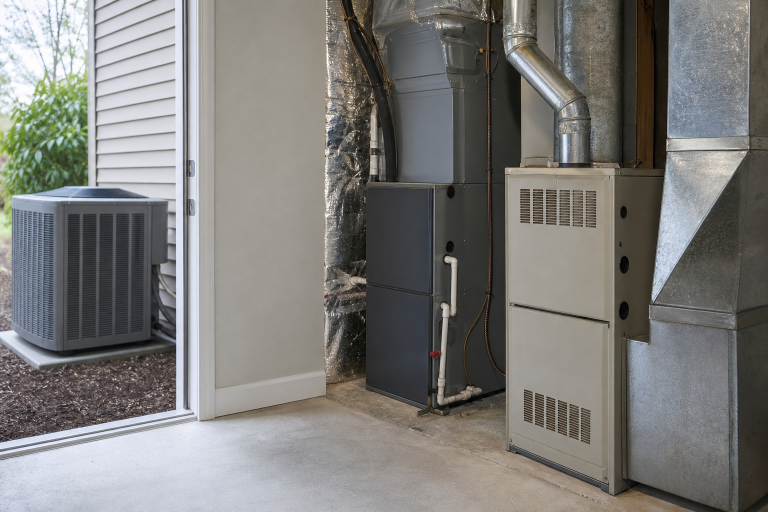
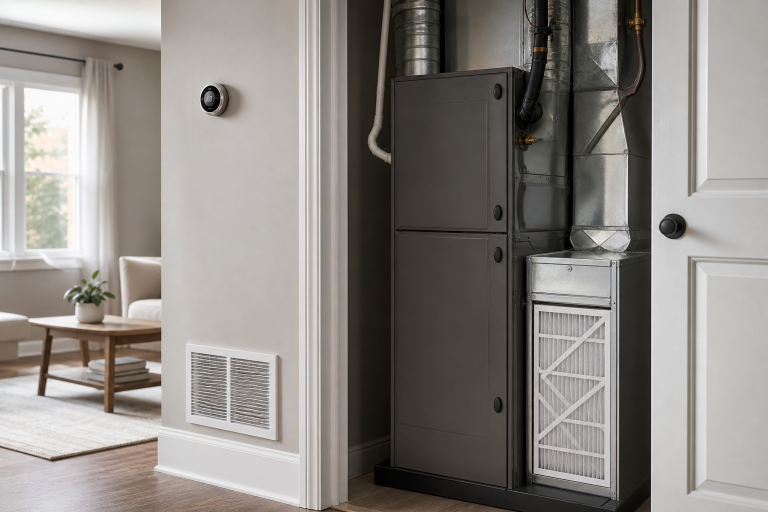
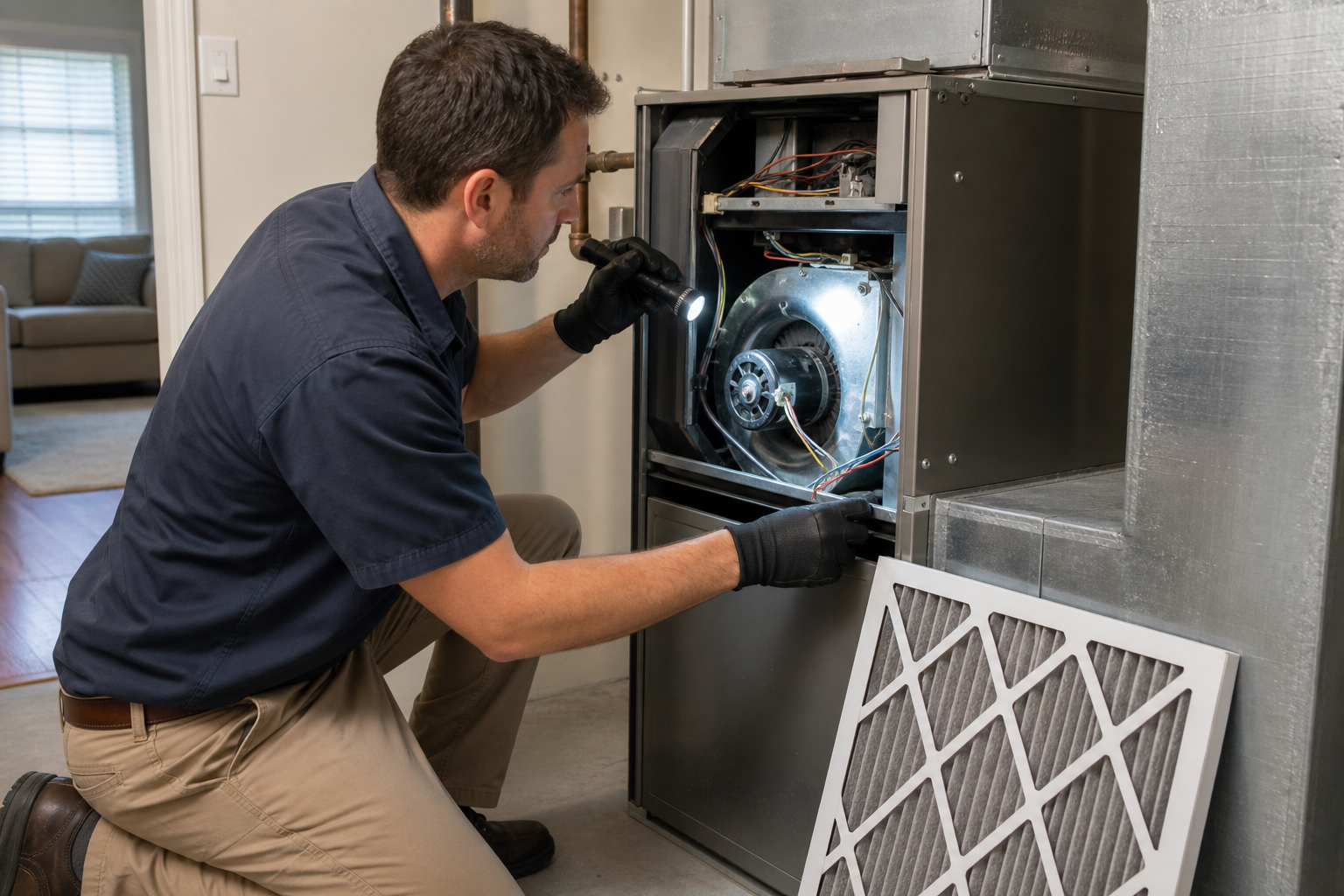
The blower motor sits in the indoor air handler or furnace cabinet and powers the fan that pushes air across the heat exchanger or evaporator coil and into the home. According to the U.S. Department of Energy, dirty filters and blocked airflow reduce system performance and can increase operating costs. That makes airflow problems the first place to look when a blower-related issue appears.
Some blower problems are minor. Others involve overheating, damaged wiring, or failed controls and should not be treated as a DIY repair. This guide focuses on symptom recognition, likely causes, and the safety line between a simple homeowner check and a service call.
What does a blower motor actually do in an HVAC system?
In a furnace, the blower pushes air across the heated section and into the duct system. In central air, it moves air across the indoor cooling coil. In a heat pump, it does both jobs depending on demand. The motor may be a traditional PSC motor, which uses a run capacitor, or an ECM motor, which is an electronically commutated motor with built-in controls. Carrier product literature and Trane service documentation both distinguish these motor types because symptoms, replacement parts, and control behavior differ.
What are common signs of blower motor issues?
Weak airflow, unusual noise, intermittent fan operation, and a system that runs but does not circulate air are the most common warning signs tied to the blower section.
Those symptoms usually show up in a few recognizable ways:
- Air is coming from the vents, but it feels much weaker than usual.
- The system starts, then shuts down before the house reaches the set temperature.
- You hear humming, squealing, rattling, or scraping from the indoor unit.
- The thermostat calls for heating or cooling, but the fan does not start.
- The blower runs constantly, even when that setting was not expected.
- Some rooms get airflow while others barely get any.
According to the U.S. Department of Energy, forced-air systems depend on proper airflow and distribution to deliver heat efficiently. When the blower side is compromised, comfort complaints often show up before a complete breakdown does. If the issue includes a burning smell, visible sparks, or repeated breaker trips, stop using the system and arrange professional service.
Why does an HVAC blower motor stop working or work only sometimes?
Intermittent fan performance usually points to a failed capacitor, overheating motor, control problem, or power issue rather than a mystery defect inside the equipment.
Capacitor problems on PSC motors
A weak or failed run capacitor can keep an older blower motor from starting properly. Lennox installation and service literature for PSC-based air handlers identifies the capacitor as part of the blower motor circuit, and when it fails, the motor may hum, start slowly, or not start at all.
Overheating from restricted airflow
A clogged filter or blocked return can cause the motor to run hotter than intended. The DOE guidance on maintaining air conditioners specifically calls out filter maintenance because airflow restriction reduces performance. On some systems, overheating can trigger protective shutdowns that make the problem look random.
Worn bearings or internal motor failure
Grinding, scraping, or high-pitched squealing can point to bearing wear or a damaged wheel assembly. Rheem and Goodman service materials both treat those noises as mechanical faults, not normal aging sounds to ignore.
Control board or relay faults
The fan may also fail because the control board or relay is not sending the proper signal. This is more common on newer variable-speed equipment, where motor behavior depends on electronic communication rather than a simple on-off power call.
Loose wiring or power interruptions
Electrical connections can loosen over time, especially in equipment that vibrates during operation. According to the U.S. Consumer Product Safety Commission, damaged electrical components and loose connections are fire concerns in home electrical systems. Inside HVAC equipment, that moves the issue out of routine troubleshooting and into professional repair.
Which blower motor problems can you check yourself?
A few basic checks are reasonable for a homeowner, but they should stay on the safe side of the cabinet and stop short of electrical testing or parts replacement.
Start with the thermostat setting. Make sure the system is calling for heating or cooling, and check whether the fan is set to Auto or On. Then inspect the air filter. If it is visibly loaded with dust, replace it with the correct size and type listed for the equipment. The same DOE maintenance guidance supports regular filter checks because airflow depends on it.
Next, look at supply and return vents. Closed registers, blocked return grilles, or furniture pushed against returns can reduce circulation enough to make the system seem weaker than it is.
You can also check the breaker panel for a tripped breaker, but if it trips again after reset, leave it off and call for service. Repeated trips point to an electrical fault, not a normal nuisance.
Do not remove access panels, touch wiring, spin the blower wheel by hand, or test capacitors. According to the Occupational Safety and Health Administration, electrical hazards include shock, burns, and fire risk. HVAC cabinets combine stored electrical energy, moving parts, and sharp metal edges, which is why deeper diagnosis belongs to a trained technician.
When is a blower motor issue a safety problem instead of just a comfort problem?
Electrical smell, smoke, sparks, hard starting, or repeated shutdowns move a blower complaint into the safety category because the fault may involve overheating components or damaged controls.
Call for a free estimate:
There are a few situations where the right move is to stop using the system:
- Burning or melting-plastic odor from the indoor unit
- Visible smoke or sparking
- Breaker trips that immediately re-trip
- Loud metal-on-metal noise
- No airflow during furnace operation, especially if the unit tries to fire repeatedly
- Water around the air handler combined with electrical symptoms
For flood-related concerns, water exposure changes the risk completely. If your indoor equipment has been wet, the safer next step is to follow a flood-specific HVAC restart process such as the guidance covered in this Abodence article on AC flood safety checks.
On gas furnaces, blower failure can also affect how heat is delivered and how safety controls respond. The exact sequence depends on the furnace design, but unusual cycling or shutdown behavior should be evaluated promptly rather than guessed at.
How do technicians usually diagnose common blower motor issues?
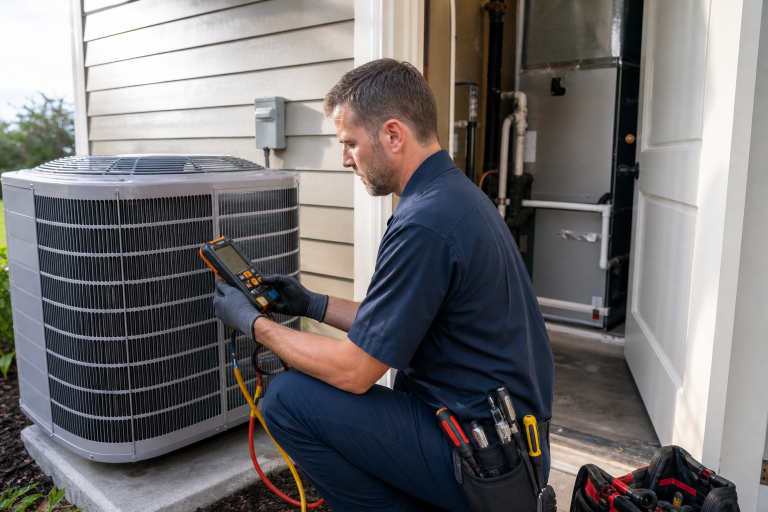
A proper diagnosis typically confirms airflow, power, control signals, capacitor condition where applicable, motor amp draw, and physical condition of the wheel and bearings.
This matters because “bad blower motor” is often used as shorthand before the actual fault is proven. ACCA, the Air Conditioning Contractors of America, publishes service and maintenance standards that center on measured performance rather than guesswork. In practice, that means a technician should verify whether the motor itself failed, whether a capacitor failed, whether a control board stopped sending the fan call, or whether airflow restrictions pushed the system into protective shutdown.
For homeowners, the useful takeaway is simple: ask what was tested, what readings supported the diagnosis, and whether the failed part is the motor, the module, the capacitor, or the control. Vague answers are a warning sign, especially when a quote jumps straight to full system replacement without a clear explanation of what failed.
How much does blower motor repair or replacement usually cost?
About $150-650 is a common 2026 repair range for capacitor, relay, or minor electrical fixes, while blower motor replacement often lands around $300-2,000 depending on motor type, warranty status, and labor, based on 2026 marketplace estimates published by Angi and HomeAdvisor.
The wide range exists for real reasons. A standard PSC blower motor is usually less expensive than an ECM or variable-speed motor. Labor can also rise if the motor is hard to access or if the blower wheel must be cleaned or replaced at the same time. Manufacturer warranty terms from Carrier and Lennox commonly separate parts coverage from labor coverage, so a “warranty replacement” may still leave you with a service bill.
If a quote includes both a motor and a control module, ask whether the equipment uses an ECM design with integrated electronics. On those systems, replacing the wrong component first can waste money.
For broader heating-side repair context, this Abodence furnace repair guide explains what should appear in a clear service diagnosis and quote.
Should you repair the blower motor or replace the whole HVAC system?
A targeted repair is often the better choice when the rest of the system is in good condition and the diagnosis is specific, documented, and limited to the blower section.
Replacement becomes more reasonable when several major components are failing, parts are obsolete, or the equipment is already near the end of its expected service life. AHRI, the Air-Conditioning, Heating, and Refrigeration Institute, and major manufacturers such as Trane and Carrier all separate matched-system performance from individual part replacement, which is why a blower repair does not automatically mean the entire system should be replaced.
There is no honest one-size-fits-all age cutoff. A single failed capacitor on an otherwise solid system is a repair case. A failed variable-speed motor on an older system with control issues, coil problems, and refrigerant-related concerns may justify a replacement discussion.
If replacement does come up, compare equipment type, blower design, warranty terms, and documented load calculations rather than choosing by brand name alone. This Abodence guide to HVAC brand comparisons can help you sort those differences.
What can help prevent future blower motor issues?
Regular filter changes, clear return airflow, and scheduled professional maintenance are the most practical ways to reduce avoidable blower strain.
According to ENERGY STAR, proper HVAC maintenance helps equipment operate as intended, including airflow-related performance. A service visit should include inspection of blower components, electrical connections, and overall system operation, not just a quick filter glance. Manufacturer maintenance checklists from Goodman and Carrier also support routine inspection of the indoor fan assembly and related components.
For a current overview of maintenance priorities, this Abodence HVAC maintenance snapshot covers what homeowners should expect from modern service visits.
One more point is worth keeping simple. If the system still delivers normal airflow after a fresh filter and stable thermostat settings, there may be no reason to replace parts at all.
FAQ
Can a bad blower motor cause no air from the vents?
Yes, a failed blower motor or failed motor-related component can leave you with little or no airflow even when the furnace or AC seems to start normally. The exact cause could be the motor, a capacitor, a relay, or a control board, which is why measured diagnosis matters.
Call for a free estimate:
Is a humming blower motor dangerous?
A humming indoor fan can be a warning sign when the motor does not start, because that pattern can point to a failed capacitor or an electrical problem. If the sound is new or the fan is not moving air, turn the system off and have it checked.
Can a dirty filter damage a blower motor?
Restricted airflow can add strain and heat to the blower section, and DOE maintenance guidance supports filter replacement to maintain performance. A dirty filter is not proof of motor damage, but it is a credible cause of avoidable stress.
How long do HVAC blower motors usually last?
Service life varies by motor type, runtime, airflow conditions, and maintenance history, so there is no reliable universal number to use as a promise. Manufacturer literature discusses design and warranty coverage more consistently than lifespan guarantees.
Should you replace just the capacitor first?
Replacing only the capacitor makes sense only when testing shows the capacitor failed and the motor itself is still sound. Guessing at parts is how small repairs turn into repeated service calls.
If you are dealing with weak airflow, strange fan noise, or a system that runs without circulating air properly, getting a written diagnosis and quote is the practical next step. Please call a listed professional for a free, no-obligation discussion.
Sources: Carrier product literature and warranty documents, Trane service documentation, Lennox installation and service literature, Rheem service materials, Goodman maintenance checklists, ACCA service and maintenance standards, AHRI manufacturer and matched-system guidance, Angi 2026 marketplace estimates, HomeAdvisor 2026 marketplace estimates