An HVAC Maintenance Snapshot: Critical 2026 Trends Homeowners Should Know
Focus Keyword: HVAC maintenance

Call for a free estimate:
HVAC maintenance is still one of the simplest ways to protect comfort, efficiency, and warranty coverage, but the 2026 snapshot looks more technical than it did a few years ago. Homeowners are seeing more variable-speed equipment, tighter efficiency rules, more attention to airflow and controls, and higher service expectations around documentation. The useful question is not whether maintenance matters. It does. The real question is what counts as meaningful service now, and what is just routine sales language.
According to the U.S. Department of Energy page on maintaining your air conditioner, regular maintenance such as cleaning or replacing filters, cleaning coils, and keeping fins and drains in working order helps an air conditioner operate effectively and efficiently. That basic guidance still holds in 2026. What has changed is how much modern equipment depends on correct setup, clean airflow paths, and controls that are checked properly during service.
What does the current HVAC maintenance snapshot show?
Today’s service landscape shows a shift from simple seasonal tune-ups to system-specific maintenance that matches the equipment in your home. A single checklist no longer fits every system well, because a single-stage split system, a heat pump with inverter technology, and a communicating furnace and thermostat package do not have the same service priorities.
One reason is the federal efficiency transition. The U.S. Department of Energy efficiency standards for residential central air conditioners and heat pumps explain the current SEER2 and HSPF2 framework, which changed how equipment performance is rated and sold. Higher-efficiency equipment often uses more advanced fans, electronics, and refrigerant management. That does not automatically mean it is fragile. It does mean maintenance has to be more precise.
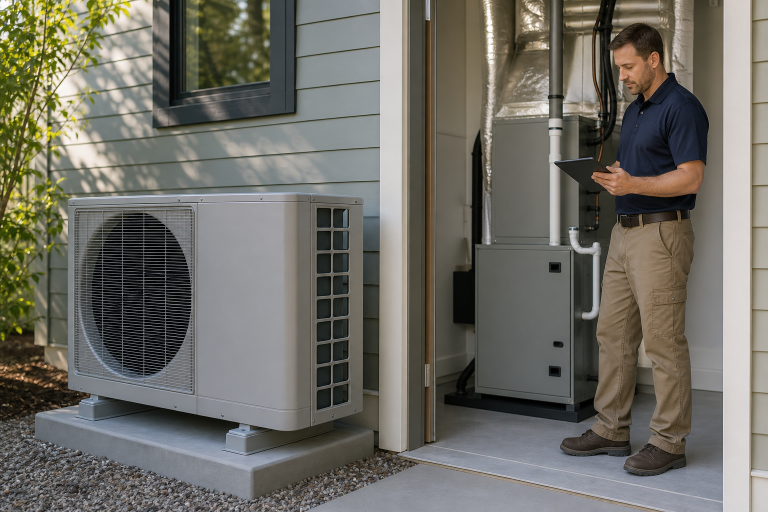
Another visible trend is the rise of heat pumps in more climates. According to the same DOE standards, both central air conditioners and heat pumps are covered by updated minimum efficiency standards. For homeowners, that means maintenance planning increasingly needs to account for year-round operation instead of a cooling-only schedule.
Documentation is also becoming more important. Manufacturer warranty terms commonly require proper installation and may exclude failures tied to lack of maintenance or poor system conditions. For example, Carrier’s published warranty documents and installation literature specify installation and application requirements that affect warranty treatment. When maintenance is performed ensure you have documentation to record it.
How often should HVAC maintenance be scheduled?
Most central systems are best served with professional maintenance once a year at minimum, and heat pumps often justify two seasonal visits because they provide both heating and cooling. That timing aligns with broad industry practice and with manufacturer maintenance guidance that calls for regular inspection of filters, coils, drains, electrical components, and operating performance.
The ENERGY STAR heating and cooling guidance says heating and cooling equipment should be checked by a qualified contractor each year. For many homes, that means one cooling-focused visit for an air conditioner paired with furnace service before heating season, or two visits for a heat pump that runs heavily in both modes.
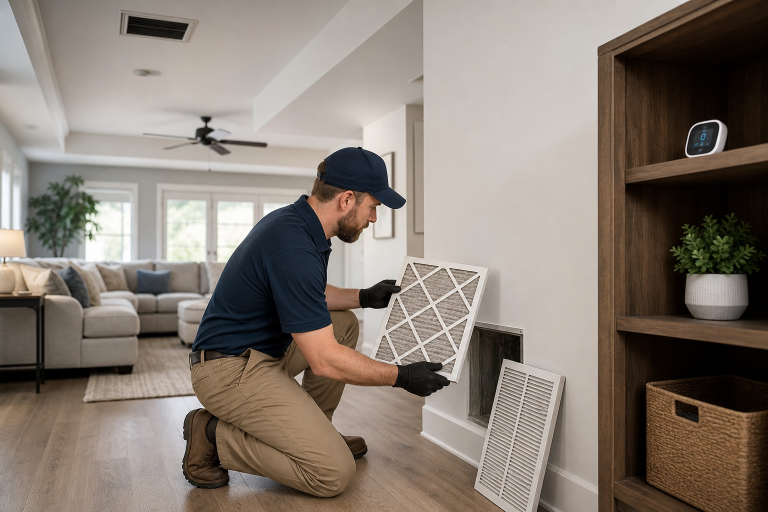
Filter inspection is often more frequent than professional service. The same DOE maintenance guidance says filters should be cleaned or replaced as recommended by the manufacturer, and in many systems that means checking monthly during heavy use. A clogged filter is a maintenance issue. It is not a reason by itself to replace otherwise sound equipment.
Homes with pets, renovation dust, heavy system use, or known airflow issues may need shorter filter intervals and closer follow-up. The right schedule depends less on a generic calendar and more on how the system is actually operating in your house.
What should a real HVAC maintenance visit include?
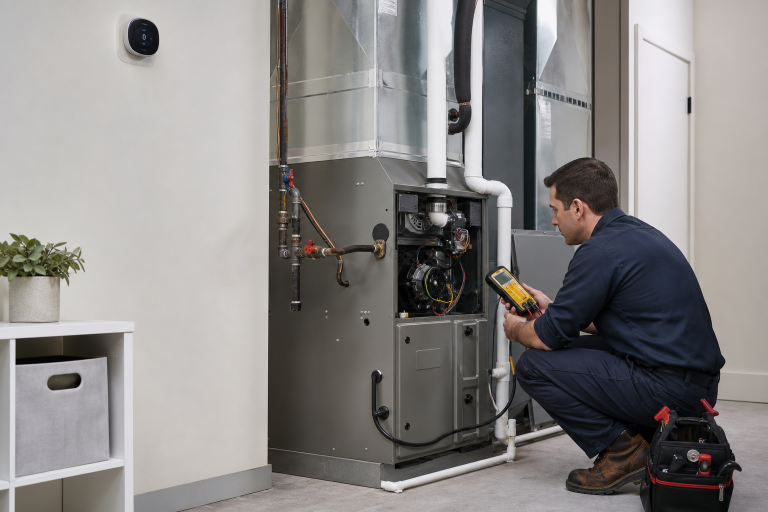
A worthwhile service visit should include inspection, cleaning, testing, and documented readings, not just a quick visual pass. If a contractor cannot explain what will be measured, the scope may be too thin to tell you much about system condition.
According to ACCA, the Air Conditioning Contractors of America, maintenance procedures should verify operating performance rather than relying only on appearance. In practical terms, a solid visit often includes:
- Filter inspection and replacement recommendation
- Thermostat and control check
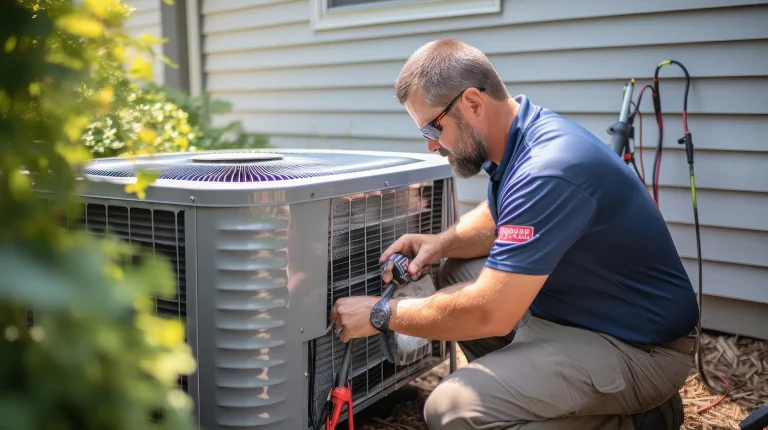
- Evaporator and condenser coil condition review
- Condensate drain inspection
- Electrical connection and component check
- Blower performance review
- Temperature split or other basic performance measurement
- Refrigerant evaluation when readings indicate a problem
You should also expect the technician to note what was not done. If the indoor coil was inaccessible, if static pressure was not measured, or if the system could not be fully tested because of outdoor temperature, that should be stated plainly on the invoice or report.
Which 2026 HVAC maintenance trends matter for homeowners?
The biggest trends are higher-efficiency equipment, stronger focus on airflow, more control integration, and more scrutiny around refrigerant handling. Those are the changes most likely to affect what you pay for and what you should ask during a service call.
Why is airflow getting more attention?
Restricted airflow can undermine comfort and efficiency even when the major equipment parts are still functional. ACCA manuals and manufacturer service literature treat airflow as a core operating condition because blower settings, duct restrictions, coil cleanliness, and filter choice all affect how the system performs.
This is one reason why homeowners are hearing more about static pressure testing. Static pressure is a measurement of how hard the blower is working against resistance in the duct system. If a contractor recommends expensive equipment replacement without discussing airflow on a comfort complaint, the diagnosis may be incomplete.
How are smart controls changing maintenance?
Connected thermostats and communicating systems can provide more data, but they also create more points that need verification. Wiring, software settings, sensor accuracy, and equipment pairing now matter more than they did on simpler systems.
That does not mean every home needs a fully communicating upgrade. If your basic non-communicating thermostat and equipment are working properly, adding smart controls should be done for a purpose, not simply because it was suggested by a technician. Homeowners comparing equipment types can get more context in this guide to HVAC variable-speed systems.
Call for a free estimate:
What about refrigerant changes?
Refrigerant transition is a real market issue, and it affects service language, equipment choices, and training requirements. The U.S. Environmental Protection Agency Section 608 (on refrigerant rules) require proper handling of refrigerants and prohibit venting during service, maintenance, repair, or disposal.
For homeowners, the practical point is narrower than many sales pitches suggest. A system does not necessarily need replacement simply because refrigerant rules evolved. If the equipment is operating correctly, the right response is routine maintenance and an honest repair assessment when a fault appears.
How much does HVAC maintenance cost in 2026?
About $70-250 for a single maintenance visit is a common 2026 consumer-market range, while annual plans can run higher depending on visit count and included benefits. HomeAdvisor 2026 marketplace pricing and Angi 2026 pricing both publish this range for HVAC tune-up service, though actual local pricing varies by region, system type, and scope.
Those figures are useful for rough budgeting, not for judging value by price alone. A lower-priced visit may cover only a basic inspection. A higher-priced visit may include cleaning, measurements, minor parts, priority scheduling, or service credits. Ask what readings will be taken, whether coil cleaning is included, and whether repairs are quoted separately.
For larger efficiency questions, maintenance is only one part of the picture. If high utility bills are the main concern, a broader review like the one covered in this HVAC energy audit guide may be more useful than paying repeatedly for tune-ups alone.
What are common HVAC maintenance mistakes homeowners should avoid?
The most common mistakes are paying for vague service plans, ignoring documentation, and treating every comfort problem like an equipment failure. Those errors cost money because they blur the line between maintenance, diagnosis, and replacement sales.
One frequent problem is unclear scope. “Tune-up” can mean very different things from one company to another. If the quote does not say what will be inspected, cleaned, and measured, you do not have much basis for comparison.
Another mistake is skipping small corrective work after maintenance identifies it. A clogged drain, weak capacitor, dirty coil, or failing blower motor may start as a repair issue, not a replacement issue. If blower concerns are part of the diagnosis, this blower motor guide can help you understand what the service notes mean.
A third mistake is assuming a maintenance membership always saves money. Some plans do. Others mainly pre-sell future work. The useful test is whether the plan includes clear service tasks, pricing terms, and a written process for approving repairs.
When is maintenance enough, and when is a repair or replacement discussion justified?
Routine service is enough when the system is meeting temperature setpoints, airflow is acceptable, and the technician finds maintenance-related issues rather than major component failure. In that case, cleaning, adjustment, or a modest repair may be the right next step.
Repair becomes the more likely conversation when testing shows a failed electrical part, a motor problem, drainage trouble, or a verified refrigerant-related fault. A proper diagnosis should identify the failed part or operating condition, not just the symptom you noticed.
Replacement is more reasonable when the equipment has a major failure, poor parts support, repeated breakdown history, or performance limits that cannot be corrected economically. Manufacturer literature and contractor design standards make one point clear: replacement decisions should be based on system condition and application, not on age alone.
What should you ask before booking HVAC maintenance?
A few direct questions will tell you whether the service is likely to be useful or mostly promotional. The goal is to understand scope, documentation, and who decides when a simple maintenance visit turns into a billable repair call.
- What exact tasks are included in this HVAC maintenance visit?
- Will the technician record readings such as temperature split, amperage, or static pressure if needed?
- Is coil cleaning included, or quoted separately?
- How are repairs approved if a problem is found?
- Will I receive a written report before any replacement recommendation?
If a company cannot answer those questions clearly, keep looking. Clear scope is a better sign of quality than a coupon price.
FAQ
Is HVAC maintenance really necessary every year?
Annual professional service is the standard baseline for most systems, according to ENERGY STAR guidance, and it helps catch operating issues before they turn into larger repairs. Heat pumps often justify closer seasonal attention because they run in both heating and cooling modes.
Can HVAC maintenance lower energy use?
Clean filters, coils, and properly operating components can help a system run more efficiently, according to the U.S. Department of Energy maintenance guidance. The actual savings depend on the condition of the system before service and whether airflow or control problems are also corrected.
Does HVAC maintenance include refrigerant refill?
Refrigerant should be evaluated only when system readings indicate a problem, because air conditioning systems do not consume refrigerant during normal operation. If a charge is low, the proper job is diagnosis and repair of the fault, not just adding refrigerant and leaving.
Are maintenance plans worth it?
Some plans are worthwhile when they include defined visits, documented service tasks, and transparent repair pricing. Others are less useful when the benefits are vague or the plan mainly functions as a sales funnel for future work.
Should you get maintenance before replacing an HVAC system?
Recent service records and measured system conditions make replacement quotes more credible because they show whether the current problem is maintenance-related, repairable, or truly a system-limit issue. That information can keep you from replacing equipment for the wrong reason.
Call for a free estimate:
If you want help sorting through HVAC maintenance recommendations, repair notes, or replacement quotes, please call a listed specialist for no-obligation information.
Sources: Carrier published warranty and installation literature, ACCA maintenance and system performance guidance, HomeAdvisor 2026 HVAC tune-up pricing, Angi 2026 HVAC maintenance pricing