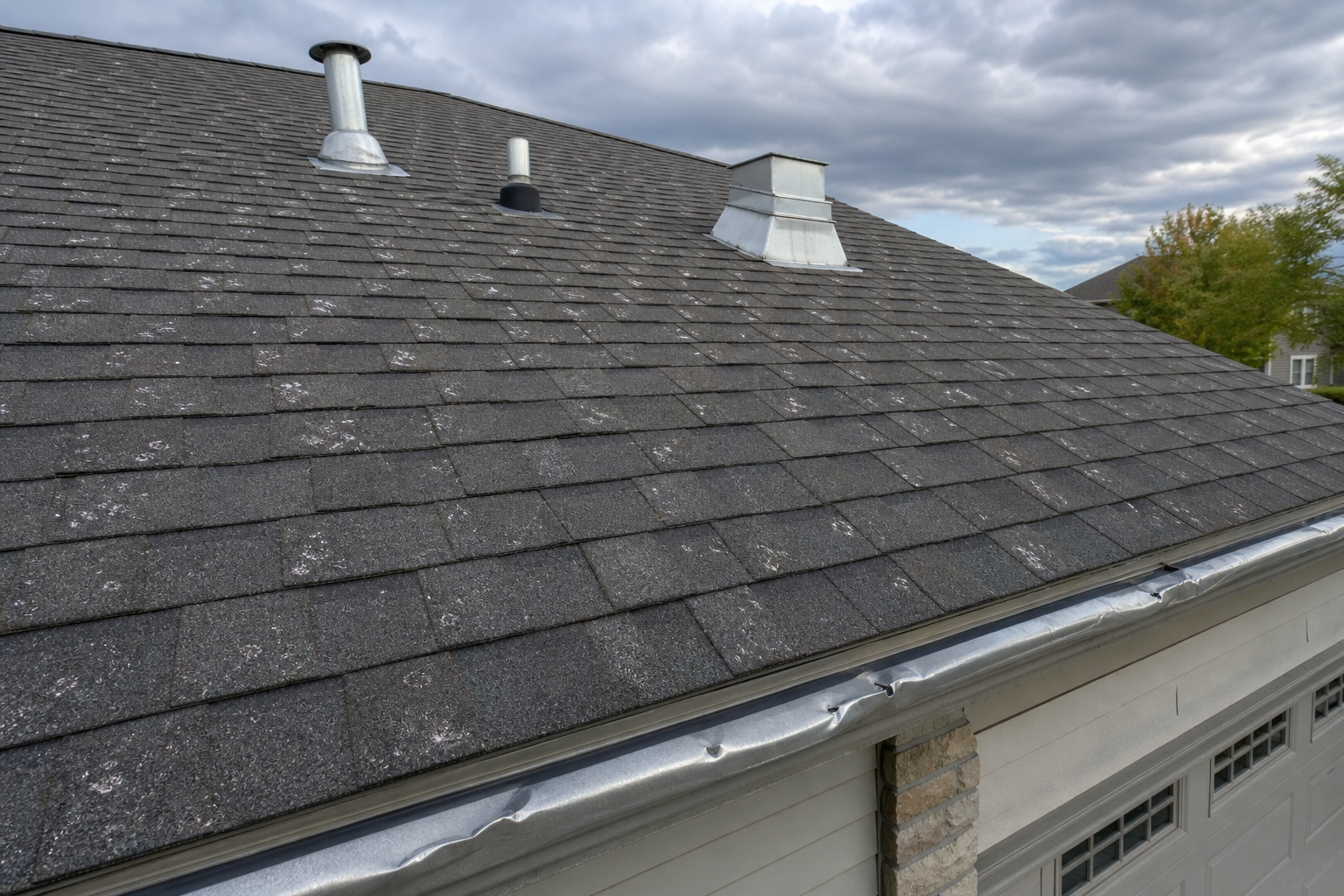
Roof Hail Damage: Critical Signs That May Effect Your Insurance Policy
Insurance coverage for roof hail damage usually depends on three things: whether a covered storm caused the damage, whether the damage is documented well enough to distinguish it from wear, and what your policy says about settlement for an older roof.

Call for a free estimate:
A roof can show real impact marks and still lead to a dispute if the insurer believes the condition was mostly age-related, poorly maintained, or cosmetic rather than functional. The practical goal is to understand what insurers and roofing standards actually look for before you file a claim.
This article explains the signs that commonly support coverage, the policy language that can change the outcome, and mistakes that can weaken a valid claim.
What damage usually counts as covered hail damage?
Functional damage to roofing materials is the type likely to support coverage when a covered storm caused it. According to the National Association of Insurance Commissioners, homeowners policies generally cover sudden and accidental direct physical loss from covered issues, subject to exclusions, conditions, deductibles, and settlement terms in the policy.
On an asphalt shingle roof, that often means impact damage that changes the shingle itself, not just a visible mark. Haag Engineering, in its residential roof inspection guidance, distinguishes hail-caused damage from normal aging by looking for displaced ashpalt granules, bruising or fracturing of the mat, and damage patterns that align with the storm event. NRCA, the National Roofing Contractors Association, also treats storm damage as a separate issue from ordinary wear, maintenance problems, or end-of-life deterioration.
In plain terms, insurers are usually looking for evidence that hail shortened the roof’s water-shedding ability or service life.
Signs adjusters and roof inspectors often document
Several indications of damage tend to matter because they help connect the loss to a specific storm rather than to long-term aging.
- Fresh granule loss with defined impact points on asphalt shingles
- Soft bruising or fractures in the shingle mat, as described in Haag Engineering guidance
- Random impact pattern across roof slopes that faced the storm
- Collateral hits on soft metals such as vents, downspouts, gutters, flashing, or metal caps
- Broken or cracked tile, slate, or brittle roofing components where impact is consistent with hail size
- Damage to accessories such as skylight components, ridge caps, or roof vents that occurred in the same storm path
Collateral damage matters because it can support timing and direction. If soft metal components show fresh impact marks from the same event, it becomes easier to argue that roof damage came from hail rather than simple aging.
What damage often does not lead to full coverage?
Cosmetic marks, long-term wear, and maintenance-related problems are the issues likely to limit or defeat a hail claim. The Insurance Institute for Business & Home Safety, in its homeowner guidance on roof damage and resilience, separates storm-caused damage from age-related deterioration and stresses the value of documented roof conditions prior to the loss.
That distinction matters because many roofs have more than one issue at once. A storm may happen when shingles are already brittle, curled, or losing granules from age. If the insurer can show the roof was near the end of its useful life before the hail event, payment may be reduced under actual cash value terms or denied for areas where no storm-created functional damage is found.
Common problem areas are:
- Uniform granule loss across the roof from normal weathering
- Blistering, cracking, curling, or thermal splitting associated with age
- Mechanical damage from foot traffic, tools, or prior work
- Leaks tied to flashing defects, installation errors, or deferred maintenance
- Purely cosmetic dents where the roofing system still performs as intended
Some policies also have endorsements or state-specific provisions that treat cosmetic roof damage differently, especially on metal roofing. If a policy excludes cosmetic loss, visible dents alone may not trigger payment unless they affect function.
How does roof age change a hail insurance claim?
Older roofs often face a settlement issue rather than an automatic coverage issue. The policy may still cover hail damage, but the amount paid can change sharply depending on whether your loss is settled at replacement cost value or actual cash value.
According to the Insurance Information Institute, replacement cost coverage pays the amount needed to repair or replace damaged property with materials of like kind and quality, while actual cash value reflects depreciation for age and condition. For an aging roof, that difference can be substantial.
Some insurers also use roof-surface schedules, age-based endorsements, or actual-cash-value-only terms for older roofs. Those terms are policy-specific. They are not universal, and they are one of the first things to check before assuming what a claim will pay.
Why age and condition are reviewed together
Insurers do not usually look at age in isolation. They compare age with maintenance history, prior repairs, installation quality, ventilation-related wear, and the roof’s overall condition before the storm.
If a 17-year-old shingle roof was in good condition before a documented hail event, coverage may still be straightforward. If the same roof already had widespread brittleness, prior patchwork, and visible deterioration, the insurer may argue that only a limited portion of the observed condition came from hail.
What policy language should you check before filing?
The most important terms are the ones that define how the roof loss is valued and what kinds of damage are excluded or limited. The Texas Department of Insurance explains that coverage depends on the policy’s declarations, exclusions, deductibles, and endorsements, which can change standard coverage significantly.
Call for a free estimate:
Look closely at these items in your policy packet:
- Whether the roof is covered at replacement cost or actual cash value
- Whether there is a separate wind or hail deductible
- Any cosmetic damage exclusion or limitation
- Any endorsement that changes settlement on older roofs
- Your duties after loss, including prompt notice and protection from further damage
- Any matching language that affects partial replacement disputes
A separate wind or hail deductible can be much higher than the standard deductible, often expressed as a percentage of the dwelling limit rather than a flat dollar amount. That can change whether a small claim makes financial sense.
How can you tell whether the damage is hail or normal roof wear?
Pattern, material response, and supporting storm evidence are what usually separate hail from ordinary deterioration. NRCA technical guidance and Haag Engineering inspection methods both focus on whether the marks are consistent with impact and whether they appear alongside collateral damage from the same event.
On asphalt shingles, a true hail strike often leaves a more discrete impact area than general aging does. On metal components, fresh hail dents often appear with directional consistency. On tile or slate, breakage patterns can help distinguish impact from foot traffic or handling damage. The inspector should also consider local weather records, date of loss, slope orientation, and whether the damage appears on multiple components exposed to the same storm.
If the explanation you receive is vague, ask for the specific basis for the conclusion. “Old roof” is not a technical finding by itself. A useful inspection explanation identifies the material condition observed and why that condition is or is not consistent with hail.
For broader background on roofing life expectancy, materials, and warranty differences, Abodence has also covered roofing materials compared and roof warranty terms.
What should you document right after a hailstorm?
Clear, dated evidence collected early gives a valid claim a better chance of being evaluated on facts rather than assumptions. The Federal Emergency Management Agency, in its disaster insurance guidance, advises policyholders to document damage thoroughly and contact the insurer promptly after a loss.
Start with what can be recorded safely from the ground. Photograph all roof elevations you can see, gutters, downspouts, vents, skylights, siding, window screens, outdoor equipment, and any interior water intrusion that appears after the storm. Save the date and time. If hailstones can be photographed safely before they melt, include a size reference such as a ruler or coin.
Records that strengthen a claim file
Useful documentation is usually straightforward and specific.
- Date and approximate time of the storm
- Photos and video of visible exterior impacts
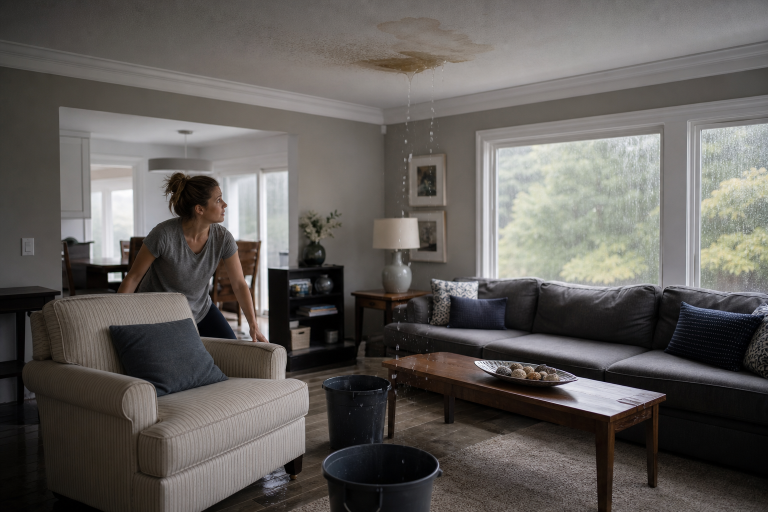
- Interior leak photos if water entered after the storm
- Prior roof inspection reports, if available
- Receipts for maintenance or repairs completed before the storm
- The insurer’s estimate, adjuster notes, and contractor inspection report
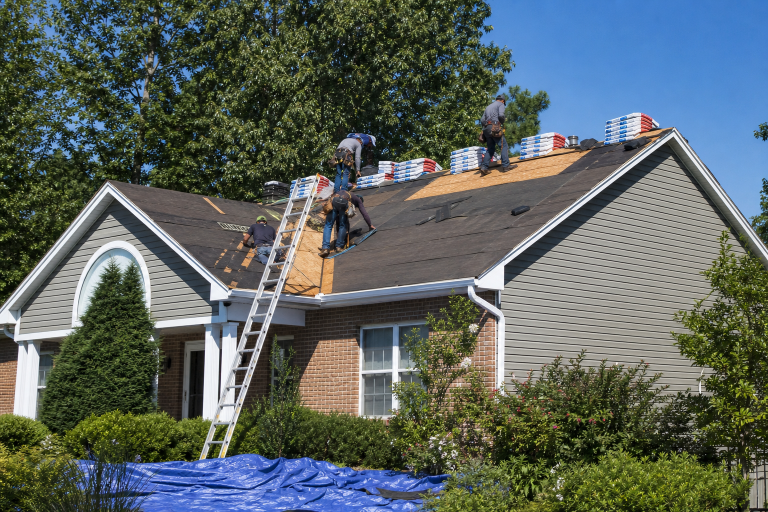
- Any temporary protection costs, such as tarping, if needed to limit further damage
If active leaking starts after the storm, preventing further water entry is usually part of your policy duties after loss. For immediate leak-response basics, Abodence also has a guide on what to do right now for a roof leak.
When should you bring in a roofer or public adjuster?
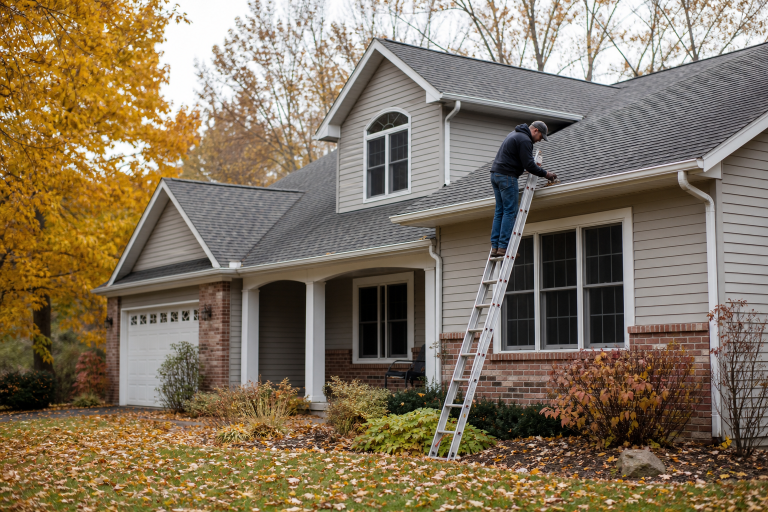
A qualified roof inspection is often useful early, especially when the roof is older or the damage is disputed. The goal is not to create a bigger claim. It is to get a specific assessment of what components were affected, what the storm likely did, and whether the observed damage is functional.
Choose a contractor who will describe findings in material terms, not in sales language. A strong inspection report should identify the roof type, slope locations, observed impacts, collateral damage, repairability concerns, and whether the damage appears consistent with a recent hail event. Vague promises that “insurance will buy you a new roof” are a warning sign, not a qualification.
A public adjuster may be worth considering if the claim is large, technical, or already disputed. Rules for public adjusters vary by state, so check your state insurance department before signing an agreement. For many straightforward claims, a good roofer’s inspection and a careful review of the insurer’s estimate are enough.
What mistakes can weaken a roof hail claim?
Late reporting, poor documentation, and unclear scope disputes are the issues that most often undermine otherwise legitimate claims. They create room for disagreement about timing, cause, and extent.
Three mistakes show up repeatedly. First, waiting too long can make it harder to connect damage to a specific storm, especially if the roof sees more weather before inspection. Second, accepting a verbal opinion without a written scope leaves you with nothing concrete to compare. Third, focusing only on the roof surface can miss related items such as flashing, vents, gutters, and other components that may help establish storm impact.
Another common problem is signing a contract before you understand the insurer’s position and the contractor’s scope. If the paperwork is vague about supplements, change orders, or what happens if only partial replacement is approved, the dispute can shift from insurer versus evidence to homeowner versus contractor.
How much might you pay out of pocket even if the claim is covered?
Your out-of-pocket cost can range from the deductible alone to many thousands of dollars if depreciation, exclusions, or non-covered upgrades apply. The amount depends most on the policy terms and the approved scope, not just on whether hail occurred.
As of 2025, the Insurance Information Institute explains that wind and hail deductibles are often separate from standard homeowners deductibles and may be percentage-based. In practice, a 1 percent deductible on a home insured for $400,000 means $4,000 out of pocket before insurance pays covered damage. If the roof is settled on an actual cash value basis, depreciation can increase that amount further.
Call for a free estimate:
Building code upgrades can also affect the final bill when older roof systems are involved. Some policies include ordinance or law coverage for code-required extra work, while others limit it. If your estimate includes decking replacement, ice barrier, or ventilation changes required by local code, verify whether those items are covered under your policy.
FAQ
Will insurance cover a roof that was already old before the hailstorm?
Coverage can still apply to an older roof if a covered storm caused direct physical damage, but the payment may be reduced by depreciation.
Can cosmetic hail damage be denied?
Many policies can limit or exclude purely cosmetic roof damage, especially on metal surfaces, if the marks do not affect function and the policy includes that limitation.
How soon should a hail claim be filed?
Prompt notice is the safer approach because policies require timely reporting and delay can make storm cause harder to prove, especially after additional weather exposure.
Do you need a roofer before the insurance adjuster comes out?
A contractor inspection can help if the roof is older or the damage is subtle, but the more important point is getting a written, specific assessment rather than relying on a verbal opinion.
Will the insurer pay for a full roof replacement after hail?
Full replacement is usually paid only when the covered damage and repairability issues justify it under the policy terms, not simply because hail occurred in the area.
If you are sorting through a hail claim and the roof condition is part of the dispute, getting a written inspection and a line-by-line review of the policy terms is the practical next step. If you need help understanding the roofing side of that decision, please call one of the listed specialists for a no-obligation discussion.
Sources: Haag Engineering Residential Roof Inspection guidance, National Roofing Contractors Association technical guidance