Attic Moisture Problems: Warning Signs and Ventilation Fixes for Homeowners
Attic moisture problems usually start quietly: damp insulation, rusty nails, stained roof sheathing, or frost that shows up in cold weather and disappears later. Left alone, that moisture can shorten roof life, reduce insulation performance, and create repair work that is much larger than the original cause.

Call for a free estimate:
According to the U.S. Department of Energy Building America Solution Center, attic moisture control depends on managing air leakage, providing the right roof and attic assembly, and using ventilation correctly for that assembly. The same source explains that ventilation is not a substitute for sealing major air leaks from the living space into the attic.
That is the point many homeowners miss. If warm, humid indoor air is leaking around light fixtures, bath fan housings, attic hatches, plumbing penetrations, or duct openings, adding more vents alone may not solve the problem.
This guide explains what attic moisture and ventilation problems usually look like, what commonly causes them, and which fixes are worth discussing before anyone tries to sell you a larger roofing or insulation project.
What are the most common signs of attic moisture problems?
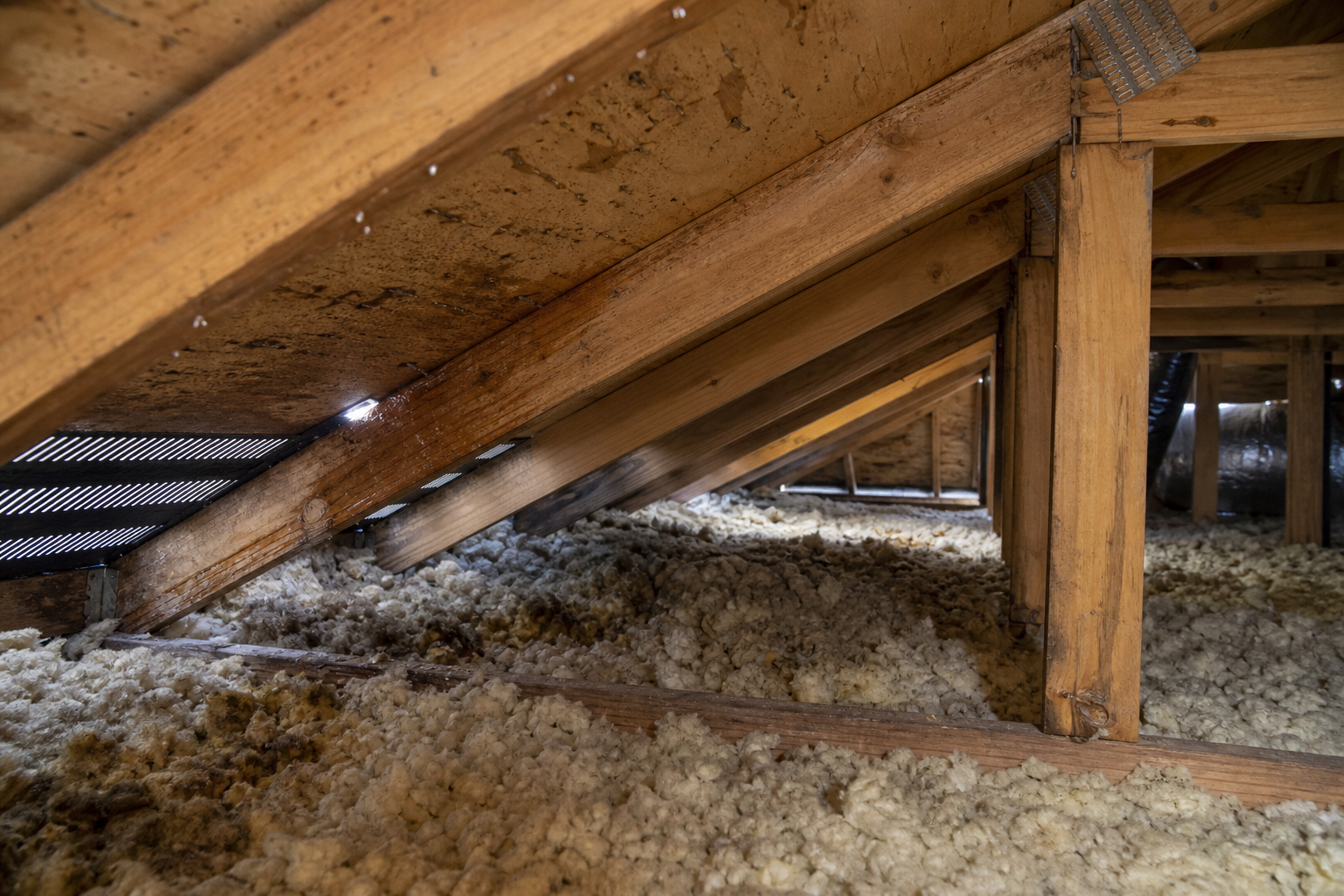
Staining, condensation, frost, mold-like surface growth, and insulation that looks compressed or damp are the most common signs that moisture is collecting where it should not. In many homes, the first clue is actually rusted roofing nails or metal connectors visible from inside the attic.
According to the Federal Emergency Management Agency Home Builder’s Guide to Coastal Construction, condensation can form when warm, moist air contacts cooler building surfaces. That basic building-science principle applies to attics in every climate, not just coastal homes.
Look for these signs and consider that they may be caused by multiple sources, even if in the same general area:
- Darkened or blotchy roof sheathing
- Water droplets on nails, ducts, or framing
- Frost on the underside of the roof in winter
- Insulation that is matted down or unevenly damp
- Musty odor that is strongest near the attic access
- Peeling paint or drywall stains on ceilings below
A single stain near a chimney or valley may point to a roof leak, not a ventilation issue. Widespread dampness across the attic usually points more toward indoor air leakage, humidity load, or an attic system that is not working as intended.
Why does attic moisture build up in the first place?
Indoor air leakage is one of the most common reasons moisture accumulates overhead, especially during cold weather when warm air rises into a cooler attic. When that air reaches cold framing or roof sheathing, condensation can form.
According to the U.S. Department of Energy Energy Saver guidance on air sealing, gaps around plumbing, wiring, recessed lights, chimneys, flues, and attic hatches are common leakage paths between the house and the attic. The agency also notes that sealing those openings can improve comfort and reduce unwanted heat loss.
Ventilation problems can add to the issue, but they are not always the root cause. If soffit vents are blocked by insulation, outside air may not move the way the attic was designed to. If internal exhaust fans terminate in the attic instead of outdoors, they can dump moisture directly into the space. If flexible ducts are disconnected or poorly insulated, they can create local condensation around the duct run.
Flashing failures, damaged shingles, ice dam effects, and old roof penetrations can all introduce water from above. If moisture appears only after rain, or is concentrated below one roof feature, the problem may have little to do with attic ventilation.
How can you tell the difference between condensation and a roof leak?
Pattern is usually the clearest clue: condensation tends to appear across broad areas or on cold fasteners and sheathing, while a roof leak is often concentrated below a specific roof defect. Timing helps too. Moisture that shows up during cold snaps, then fades when temperatures change, often points toward condensation.
According to CertainTeed’s residential roofing ventilation guidance, balanced intake and exhaust ventilation is intended to help reduce heat and moisture buildup in attics, while water intrusion from damaged roofing components is a separate problem that must be repaired at the roof system itself. That distinction matters because replacing vents will not fix failed flashing.
There are a few practical clues worth checking:
- Rusty nails across much of the attic often suggest condensation
- Wet insulation directly below one penetration often suggests a leak
- Frost on sheathing in winter usually points to indoor moisture reaching cold surfaces
- Stains that worsen after storms usually point to roof water entry
If the evidence is mixed, a contractor should inspect both the roof covering and the attic floor air barrier before proposing a fix. Vague language like “you need more ventilation” is not enough on its own.
What ventilation problems show up most often in attics?
Blocked intake vents, mismatched exhaust vent layouts, and fans that vent into the attic are among the most common ventilation defects. In many homes, the attic technically has vents, but the airflow path with these problems would be impaired.
According to the building guidance summarized by Fine Homebuilding, effective vented attics depend on a continuous path for air to enter low and exit high. The publication also notes that short-circuiting can happen when exhaust venting is added without adequate intake.
Call for a free estimate:
Blocked soffit vents
Baffles or rafter vents are often needed to keep insulation from covering the intake path at the eaves. When that path is blocked, outside air cannot move up through the attic the way the design intended.
Too much exhaust and too little intake
Power vents, roof louvers, or ridge vents can underperform if the attic does not have enough low intake area. In some cases, one exhaust device can even pull air from another opening instead of from the soffits.
Bathroom fans ending in the attic
Moist air from showers should terminate outdoors through a proper roof cap or wall cap, based on the fan manufacturer’s installation instructions. Dumping that air into the attic is a direct moisture source, not a minor defect.
Disconnected or poorly insulated ductwork
Cold duct surfaces can collect condensation, and loose connections can release moist air where it does not belong. This is especially common around older flex duct runs and improvised repairs.
What fixes usually solve attic moisture problems?
The right fix usually starts with air sealing and source control, then addresses ventilation defects that are actually present. A larger project is only justified when inspection shows broader roof or insulation failure.
In practical terms, the most common fixes are targeted:
- Seal attic floor penetrations around wiring, plumbing, and top plates
- Weatherstrip and insulate the attic hatch or pull-down access
- Route bath fan exhaust all the way outdoors
- Open blocked soffit vents and install baffles where needed
- Repair disconnected ducts or replace damaged insulation around them
- Fix roof leaks at flashing, penetrations, or damaged roof coverings
According to Owens Corning attic insulation guidance, insulation performs best when it stays dry and evenly installed, and air sealing should be handled before adding more insulation. That is why simply blowing in more insulation over damp material is often the wrong first move.
If the attic already has a balanced vent design and the moisture source is indoor air leakage, adding more roof vents may add cost without solving the problem. On the other hand, if intake is blocked or a fan is terminating in the attic, those are straightforward defects worth correcting.
If your home has broader comfort or airflow issues, Abodence’s HVAC category can help connect attic conditions to the rest of the house. Duct leakage and humidity control often overlap with attic moisture patterns.
How much do attic moisture and ventilation repairs usually cost?
About $300-1,500 is a common 2026 range for smaller attic moisture corrections such as bath fan vent rerouting, hatch weatherstripping, basic air sealing, or clearing blocked intake paths, while larger repairs involving roof leak correction, insulation replacement, or extensive ventilation rework can run much higher depending on scope. This range is based on 2026 marketplace pricing published by Angi for attic fan, roof vent, insulation, and related home ventilation work, and on 2025-2026 contractor pricing patterns reported in HomeAdvisor cost guides.
The lower end typically covers isolated defects. The upper end moves quickly if wet insulation must be removed, if roof decking has deteriorated, or if multiple trades are involved.
For example, a bathroom fan duct that ends in the attic may be a modest correction if access is easy. A widespread condensation problem that soaked insulation across a large attic can become a much more expensive cleanup and restoration project. Cost varies most by the amount of damaged material and whether roof repairs are part of the scope.
If a quote jumps straight to powered attic ventilation, ask what defect that fan is solving. Powered attic fans can be appropriate in some situations, but they should not be treated as a universal answer to moisture.
What should you ask before approving attic ventilation work?
A good quote should identify the moisture source, the affected materials, and the exact repair scope before it recommends equipment or added vent area. If that explanation is missing, the proposal is incomplete.
Use these questions to keep the conversation specific:
- What evidence points to condensation versus a roof leak?
- Is the attic designed to be vented or unvented?
- Are the soffit vents open and connected to a clear airflow path?
- Are any bath fans, dryer ducts, or HVAC ducts terminating in the attic?
- Will wet insulation be removed, dried, or replaced?
- What code or manufacturer guidance supports the proposed vent layout?
- Does the quote include air sealing, or only added ventilation?
- What materials are being repaired versus replaced?
Clear answers help you compare scope, not just price. They also make it easier to spot pressure tactics, especially when a contractor uses broad warnings but does not show where the moisture is entering or condensing.
Can attic moisture problems be prevented after the repair?
Consistent source control and periodic inspection prevent many repeat problems, especially after weather events or roof work. Once the original defect is corrected, the goal is to keep indoor moisture out of the attic and keep the attic assembly working as designed.
Check the attic after the first cold stretch of winter and after major storms. Look for fresh staining, damp insulation, disconnected ducts, or new rust on fasteners. If roof work is done later, confirm that soffit pathways were not blocked and that any existing vent strategy was preserved. If you are comparing roofing choices, Abodence’s roofing materials guide is a useful companion for understanding how roof system details affect long-term performance.
Call for a free estimate:
Small maintenance steps matter here. Replacing a failed bath fan duct connection or resealing an attic hatch is far cheaper than replacing soaked insulation and damaged sheathing later.
FAQ
Can attic moisture go away on its own?
Temporary condensation can dry out when weather changes, but the underlying source usually remains until the leak, air bypass, or venting defect is corrected.
Is mold in the attic always a ventilation problem?
Surface growth can be associated with poor ventilation, but indoor air leakage and roof leaks can create the same visible result, so the cause has to be identified before choosing a fix.
Should you add a powered attic fan for moisture?
Powered fans are only appropriate when they match the attic design and intake capacity, and they should not be used as a substitute for sealing major air leaks or fixing roof defects.
Does wet attic insulation need to be replaced?
Material that stays damp, compresses, or loses shape often needs replacement, while lightly affected insulation may be salvageable if the moisture source is corrected quickly and the material dries fully.
If you need help sorting out whether the problem is roof-related, ventilation-related, or coming from the house below, Abodence can help you find the right next step and request a quote for your specific situation. Just call one of the specialists listed herein.
Sources: CertainTeed residential roofing ventilation guidance, Owens Corning attic insulation guidance, Angi cost guides, HomeAdvisor cost guides, International Residential Code published by the International Code Council, Fine Homebuilding